
Free visual inspection and a written scope of work before any mitigation begins - photos, moisture readings, and drying logs go in your claim file
The scope we write is the scope we bill. Anything new gets shown to you, in writing, before we touch it.
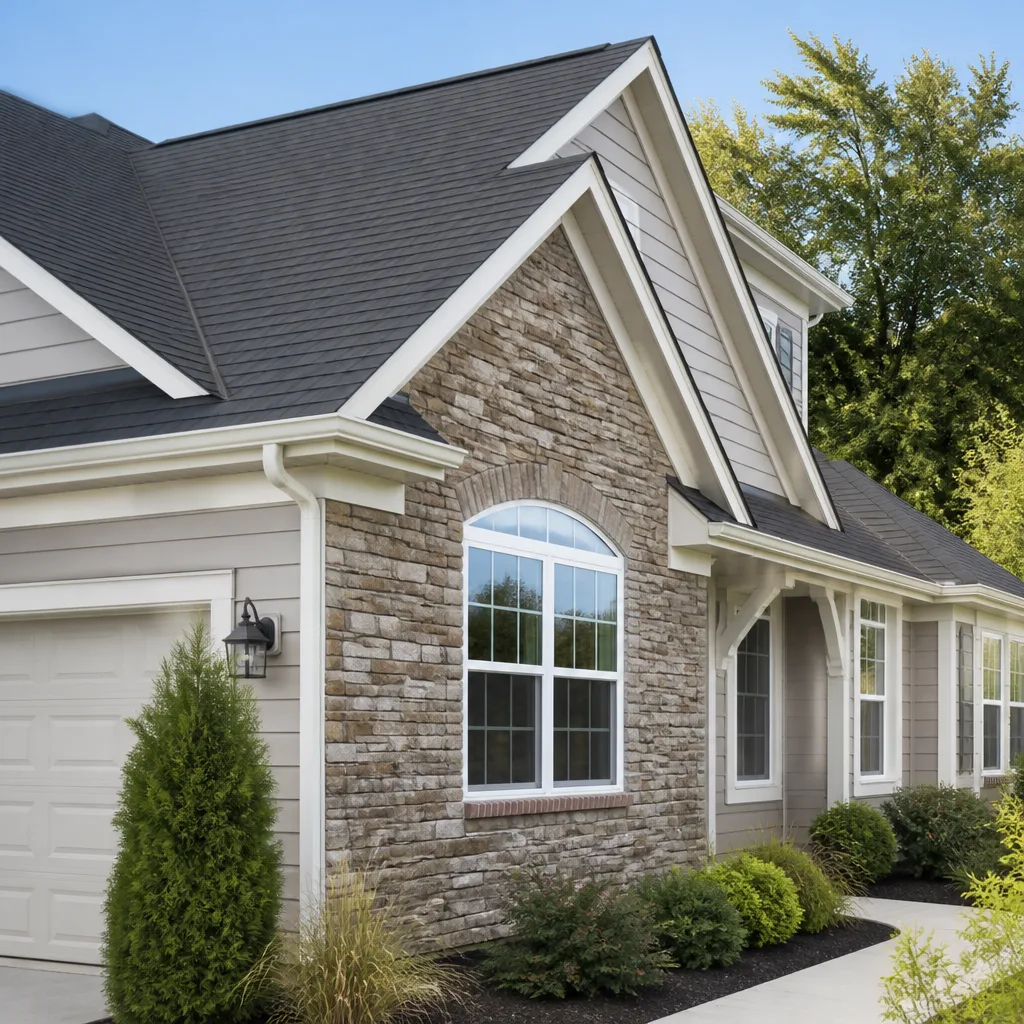
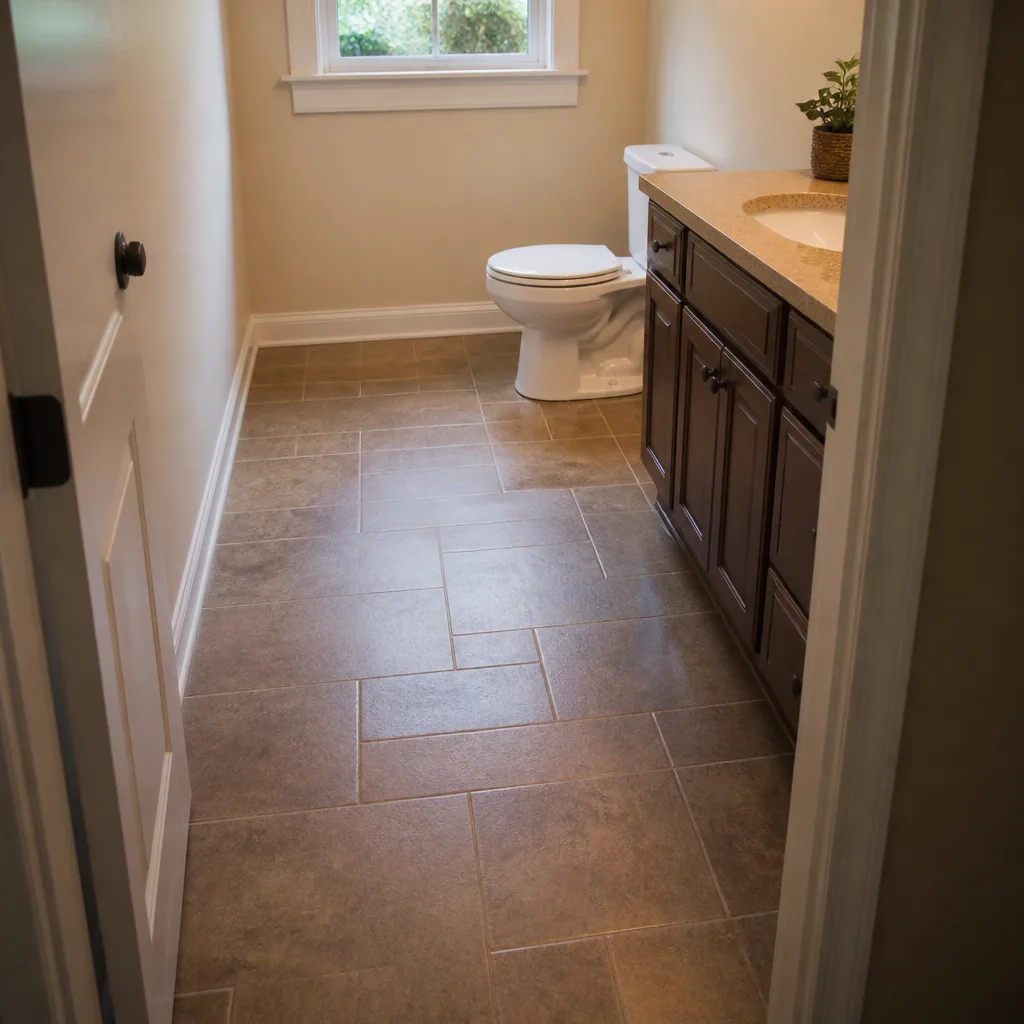
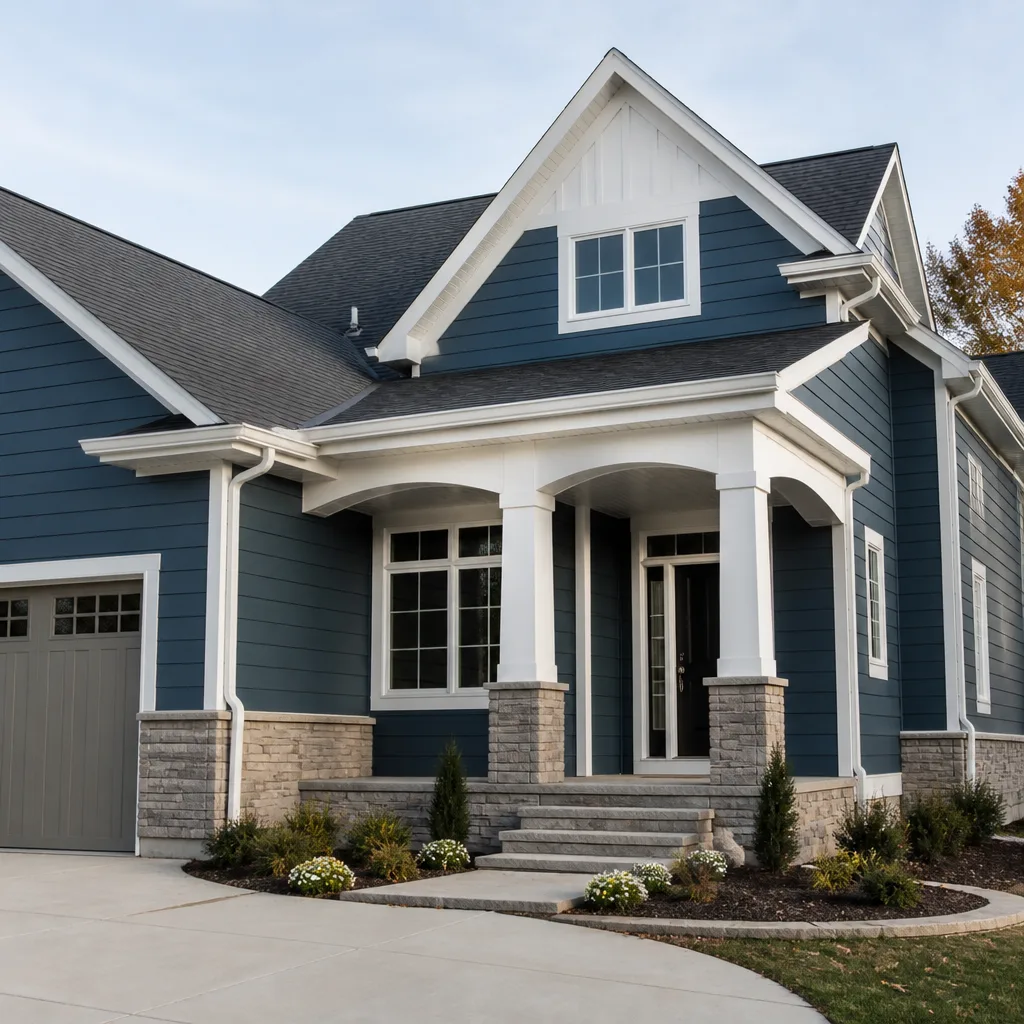
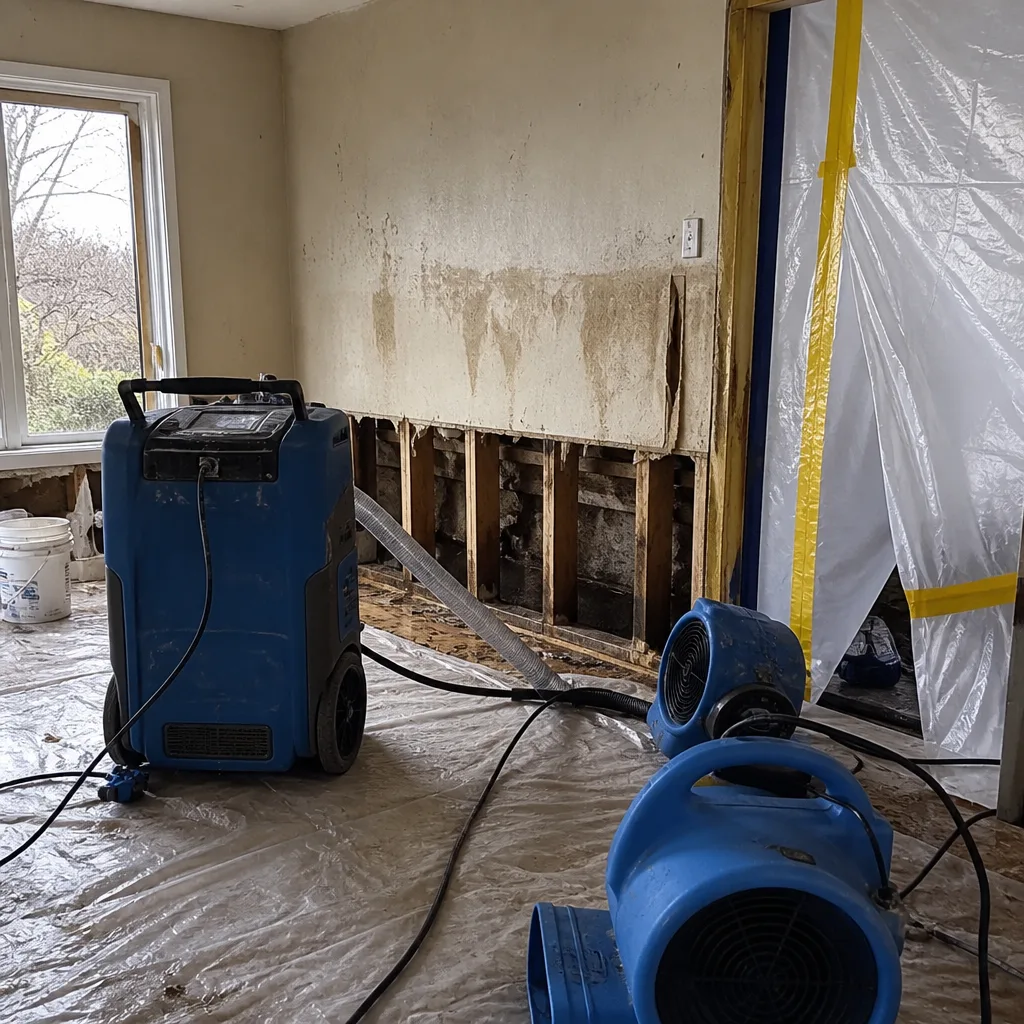 Before
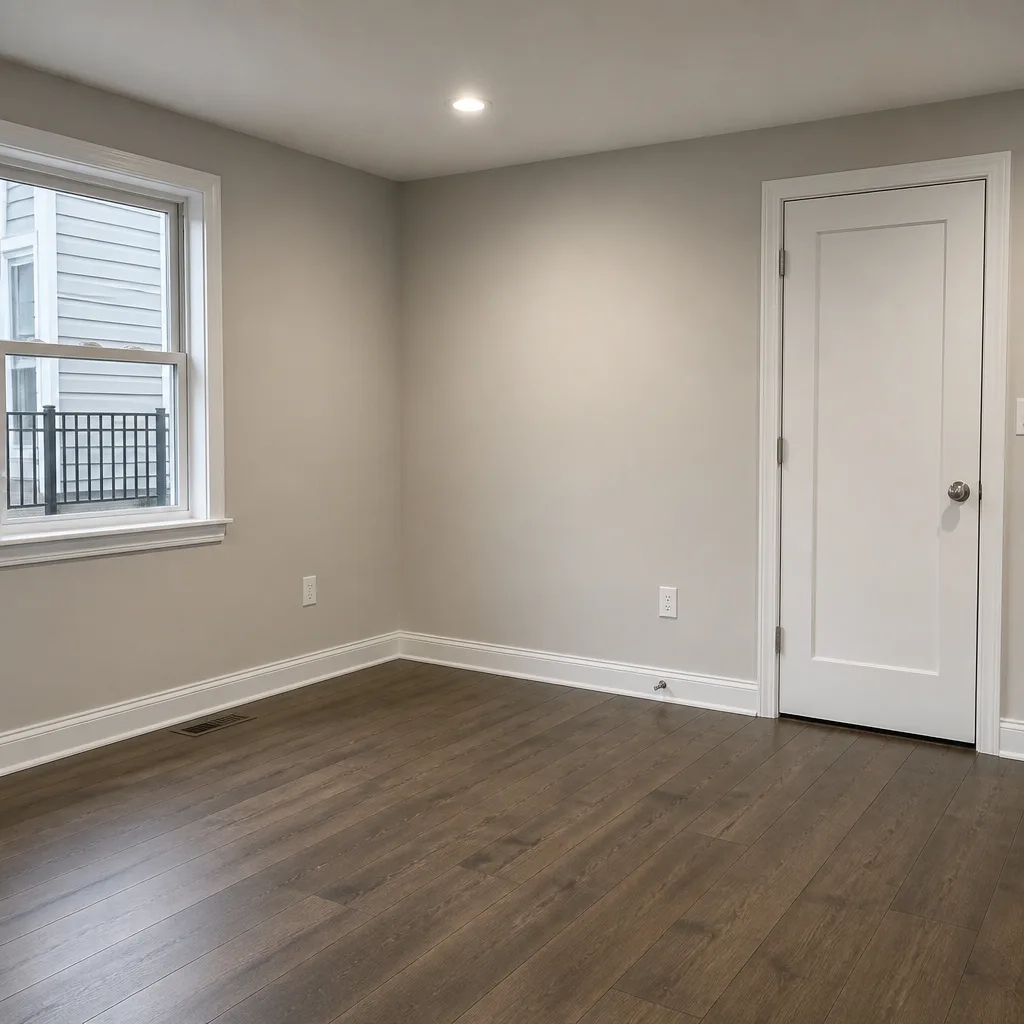 After
After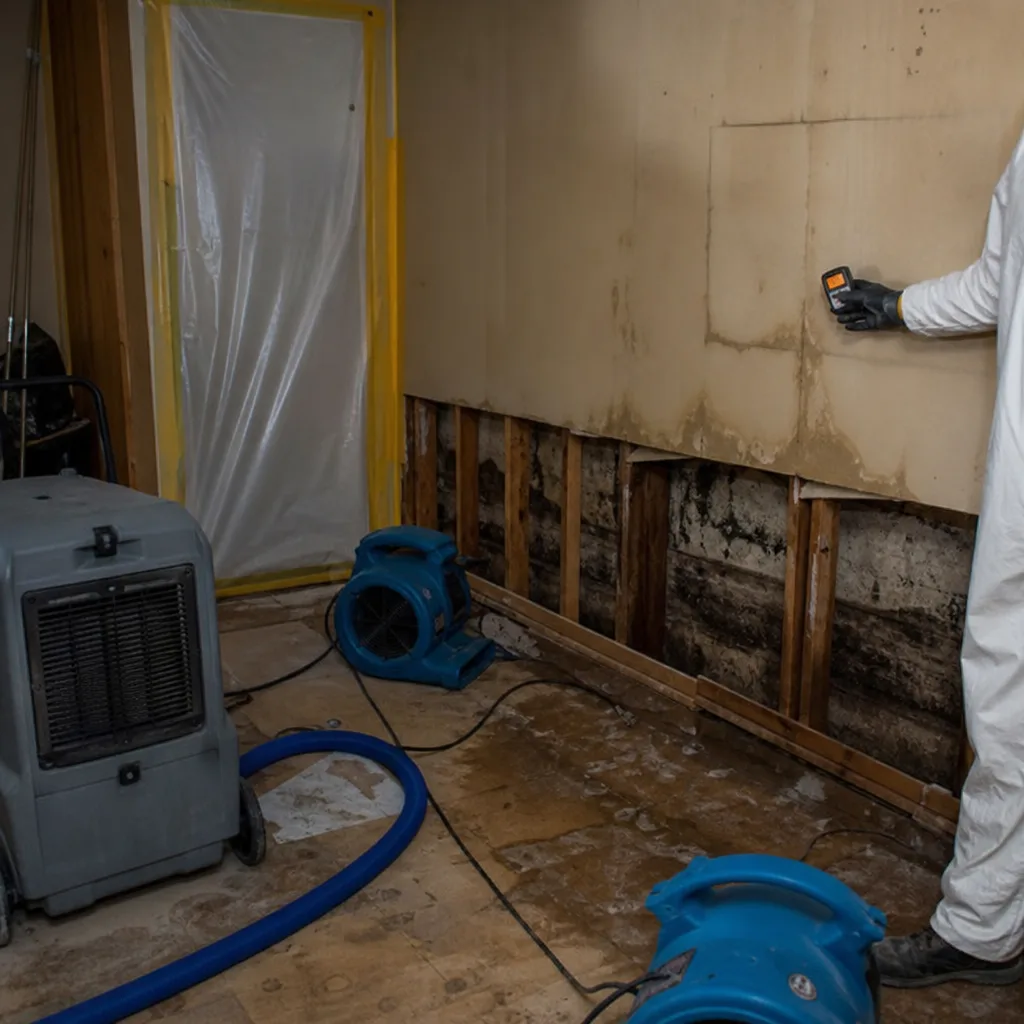 Before
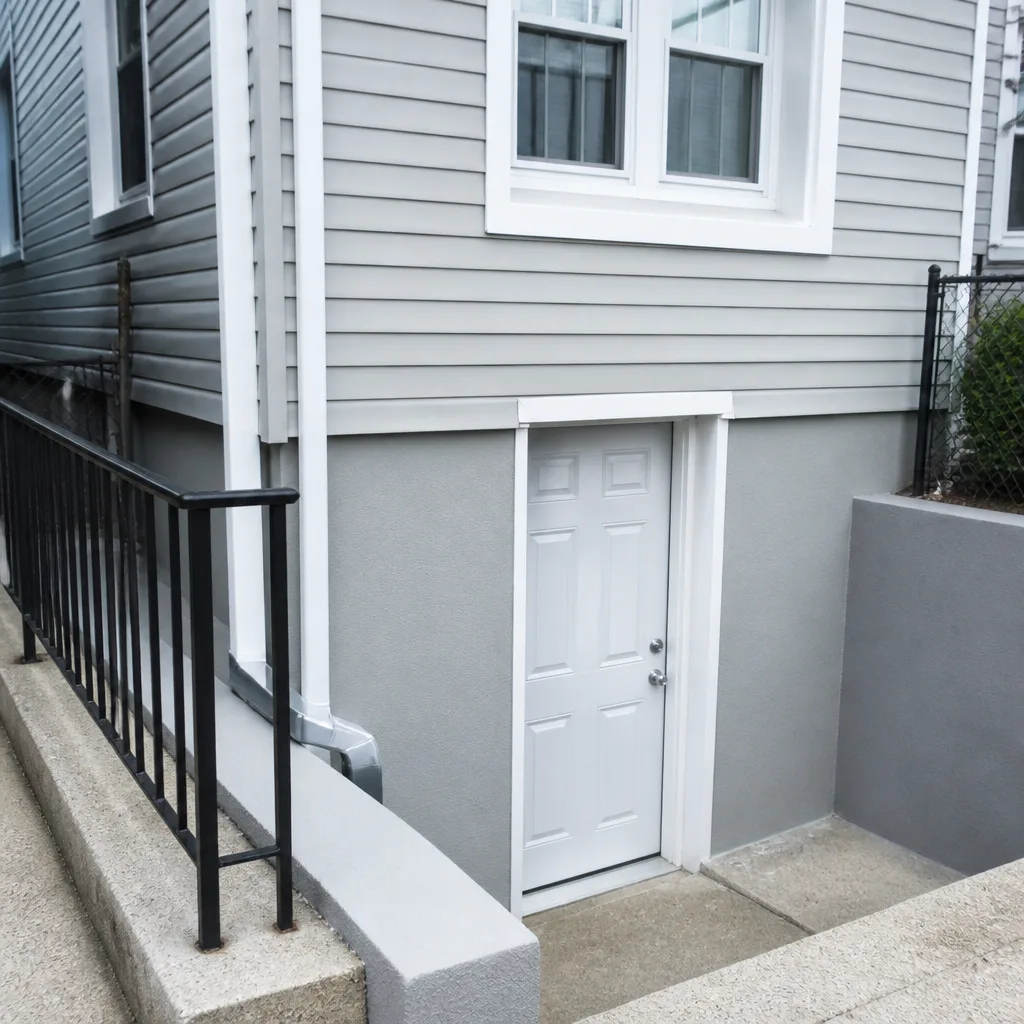 After
After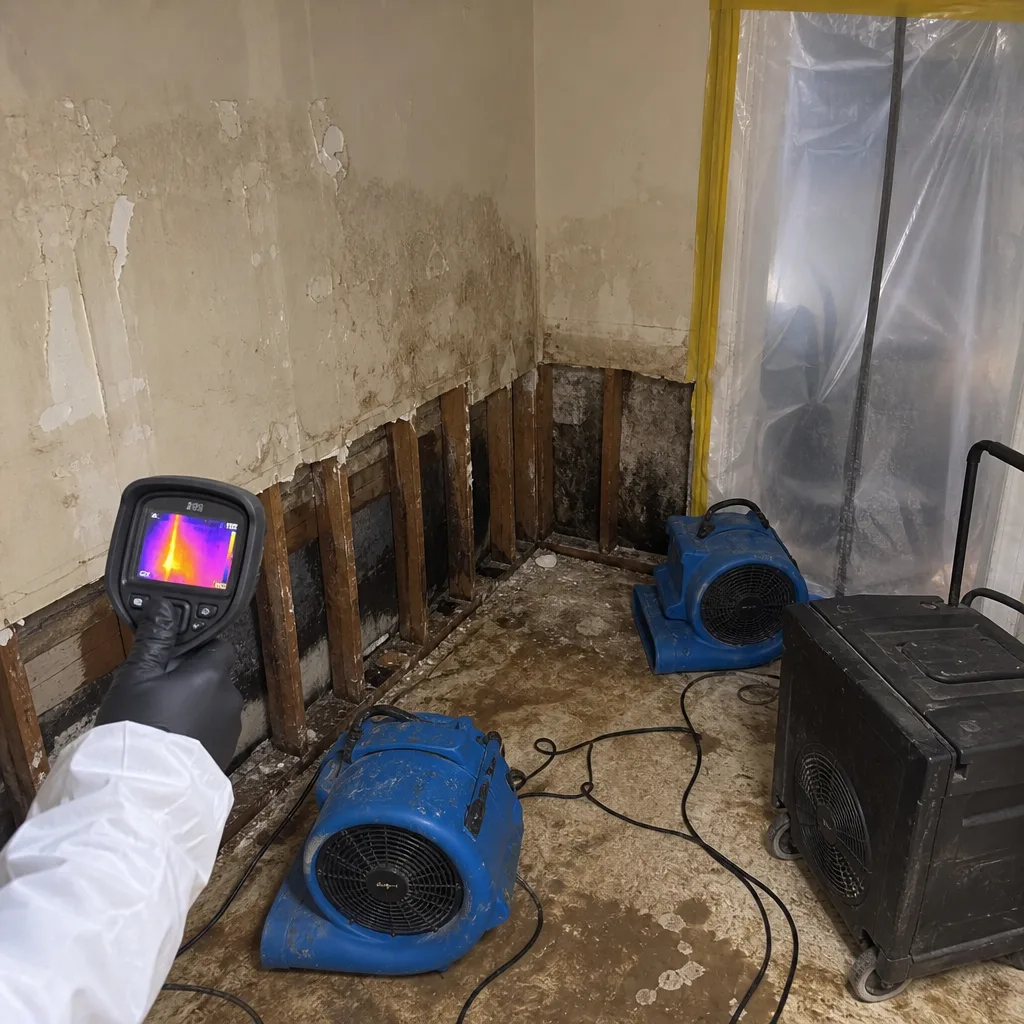 Before
 After
After24/7 Emergency Fire & Smoke Damage Restoration in Lower Manhattan
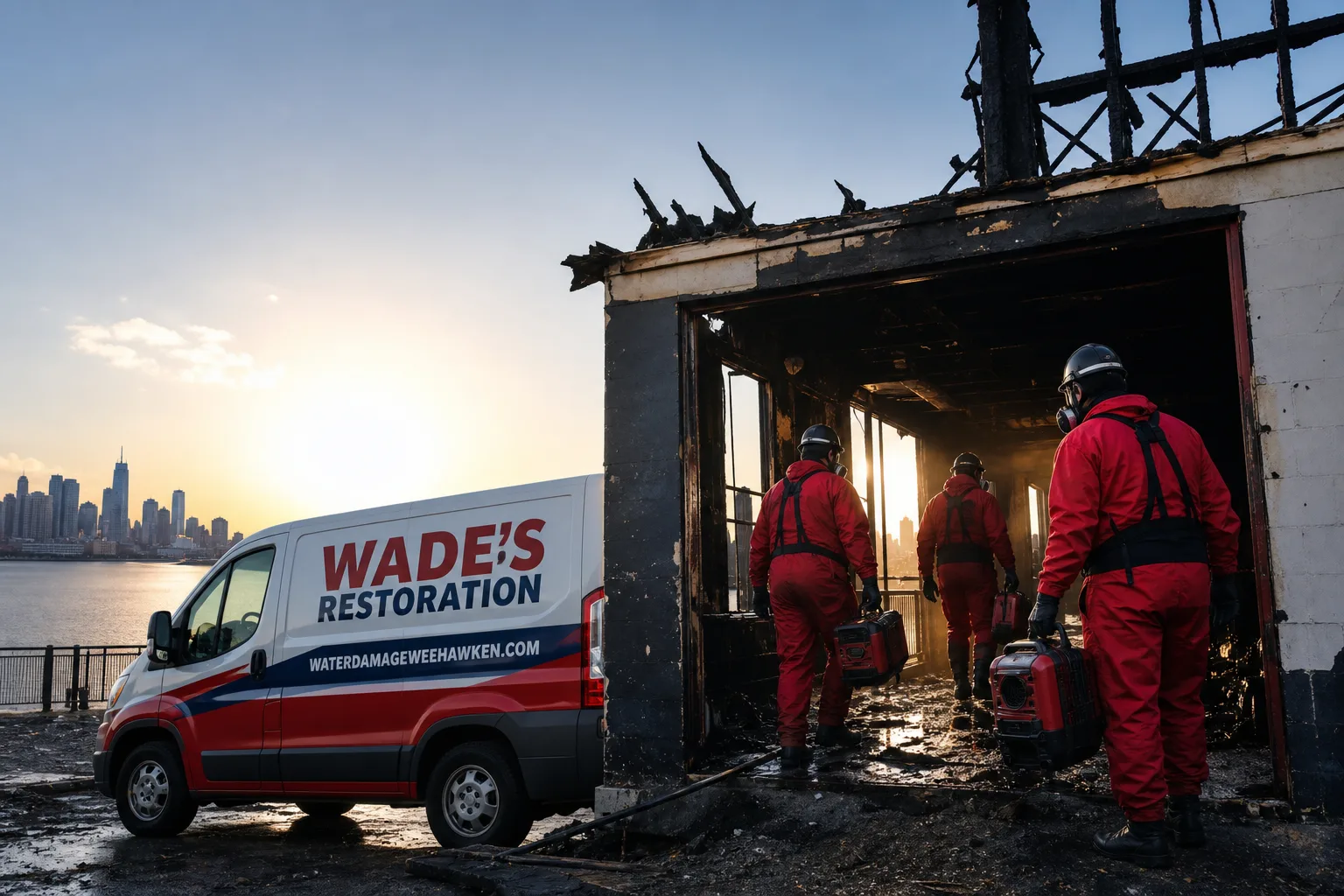
Fire and smoke damage in Lower Manhattan doesn’t wait for business hours, and neither do we. If you’ve had a fire in a FiDi high-rise, a Tribeca loft, or a Battery Park City apartment, call (201) 740-2235 right now and you’ll get a live person on the line, not an answering service. Wade’s Restoration has crews stationed near Lower Manhattan around the clock, and we can have extraction running inside the hour on most calls. The first 60 minutes after a fire matter enormously because smoke residue starts etching into glass, metal, and stone surfaces within hours, and the acidic soot from burned plastics and synthetics accelerates corrosion on everything it touches. A free visual inspection tells you exactly what you’re dealing with before anyone touches a wall. The faster we get containment up and air scrubbers running, the less damage spreads through elevator shafts, stairwells, and shared ductwork, which is how smoke travels through Lower Manhattan’s older buildings.
Understanding Fire & Smoke Damage Restoration Severity in Lower Manhattan Properties
Not all fire damage is the same, and in Lower Manhattan the building stock creates complications you won’t find in newer construction elsewhere. Light smoke damage from a stovetop fire leaves a thin film of dry soot that responds well to HEPA vacuuming and dry-chem sponging. Moderate damage, common in the pre-war towers along Water Street and Broad Street, means wet smoke residue from slow-burning or smoldering fires, and that residue is sticky, acidic, and has likely migrated through original vent shafts and around fire-rated doors that date back decades. Severe damage involves protein smoke from grease or electrical fires, which is nearly invisible but bonds to painted surfaces and requires aggressive chemical cleaning plus ozone or hydroxyl treatment. Lower Manhattan’s cast-iron and masonry loft conversions in Tribeca hold smoke differently than drywall construction: the soot embeds in brick pores, settles on exposed timber beams, and finds its way into the gaps around original window frames. In Battery Park City’s 1980s and 2000s towers, smoke migration through shared mechanical systems means a fire in one unit can leave odor throughout an entire floor. Pre-1980 buildings also carry the real possibility of asbestos in pipe insulation, floor tiles, or fireproofing, and any restoration work there triggers mandatory abatement protocols before drying can even begin.
Why Lower Manhattan Property Owners Choose Wade’s Restoration
- A real person answers at 2 a.m. Wade Ferris answers his own phone, and he heads out himself on emergencies in Lower Manhattan. No call center, no voicemail, no “someone will get back to you.”
- IICRC-certified crews with the right codes. Fire and smoke restoration technicians hold FSRT (Fire & Smoke Restoration Technician) and OCT (Odor Control Technician) certifications, plus WRT for the water damage that always accompanies firefighting.
- Free visual inspection, no trip charge in the county. Wade shows up, looks at the actual damage, and gives you a straight answer. No charge for that.
- Direct insurance billing and adjuster communication. Wade deals with your carrier directly, room by room, photo by photo. You’re never the one stuck relaying information between two sides.
- One team from first response to final coat of paint. Extraction, drying, cleaning, reconstruction, all handled by the same crew that showed up first. No handoffs, no subcontractors you’ve never met.
- 90-Day Done Right Promise, in writing. If it’s not done right, Wade makes it right. That promise is stamped on every fire, water, and mold restoration contract. Ask anyone on your street.
Our Fire & Smoke Damage Restoration Process
Inspection & Assessment
We walk the full property with you and document every surface, including the ones that look fine. Smoke migrates, and in Lower Manhattan’s connected buildings that means we check elevator shafts, stairwells, pipe chases, and neighboring units. Thermal imaging and hygrometers tell us what’s wet and what’s just warm.
Extraction & Stabilization
Fire suppression water doesn’t wait. We extract standing water from floors and sub-basements immediately, because Lower Manhattan’s landfill geology means groundwater intrusion compounds the problem fast. Emergency board-up and tarping happens in this same pass when the building envelope is compromised.
Drying & Dehumidification
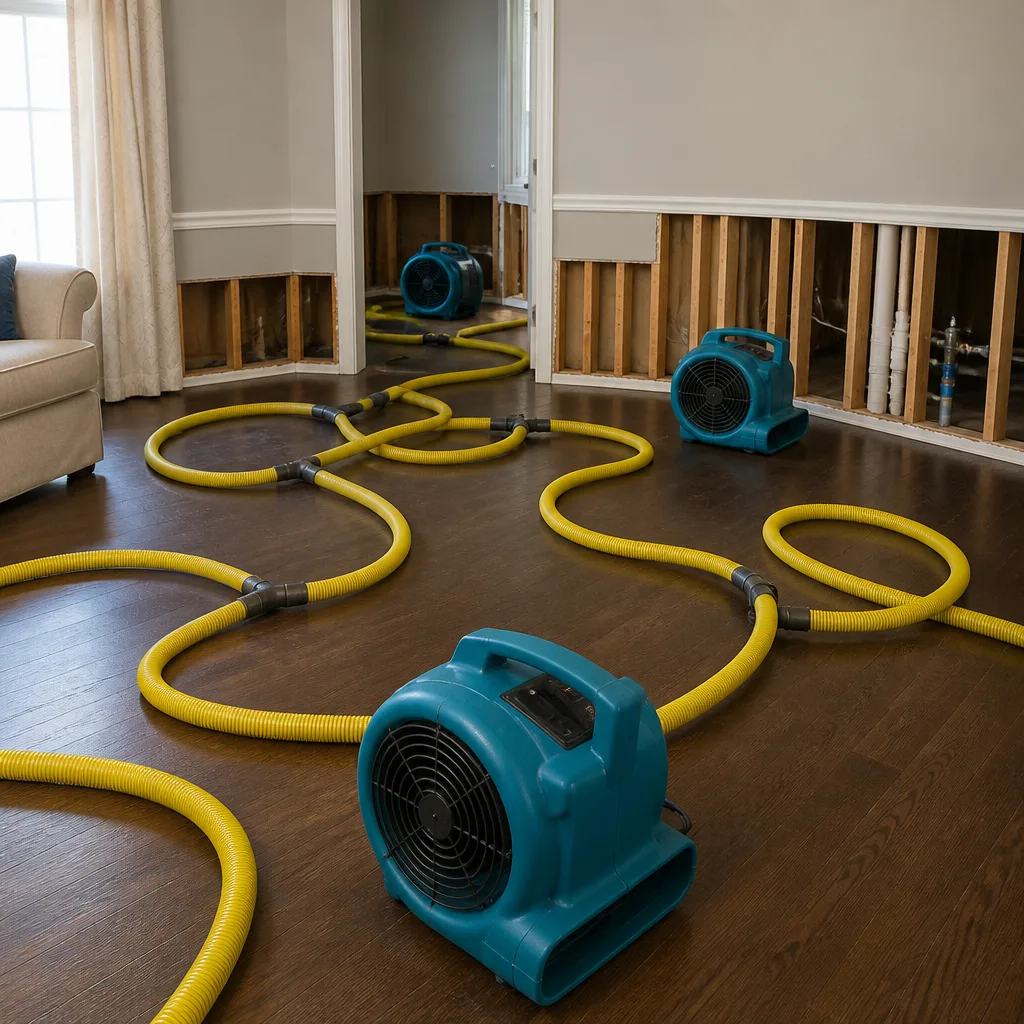
Air movers and LGR dehumidifiers from Phoenix and Dri-Eaz run until moisture readings hit dry standard. In pre-war buildings with terracotta block walls, we take moisture readings daily and log everything. You get the full log at the end. That’s almost unheard of in this trade.
Cleaning & Sanitization
Soot removal is surface-specific: dry-chem sponges on painted walls, HEPA vacuuming on porous surfaces, chemical agitation on stubborn residues. We use XPOWER HEPA scrubbers and B-Air air movers throughout, and antimicrobial treatments go on any surface that got wet before drying finished.
Smoke & Odor Removal
This is where generic cleanup fails. Smoke odor in a Lower Manhattan loft or high-rise lives in brick, in timber, in the space behind original crown molding. We use hydroxyl generators and thermal fogging to neutralize odors at the source, not just mask them. Contents get cleaned, packed out, and stored off-site when needed.
Repairs & Restoration
Once everything is dry, clean, and tested, we rebuild. Structural fire repair, drywall replacement, flooring, paint, and trim, all done by the same Wade’s Restoration crew that’s been on the job since hour one. We hand you a written scope of work before any reconstruction starts, so you know exactly what it costs.
Need Emergency Fire & Smoke Damage Restoration in Lower Manhattan Now?
Crews minutes away, answering live 24 hours a day. The sooner we start, the less it costs.
Working With Your Insurance Company
Insurance claims for fire damage in Lower Manhattan move faster when documentation starts in the first hour. Wade’s Restoration photographs every room, every surface, every damaged item before cleanup begins. We generate line-item scopes of work using the same software carriers use, so estimates match the format adjusters expect. Wade speaks directly with your adjuster, sends them moisture readings and drying logs as they’re collected, and handles the back-and-forth so you don’t have to. If your building’s Flood Emergency Operations Plan or post-Sandy compliance requirements affect the claim, we document that too, because getting reimbursed for the right materials matters. Here’s what your insurer receives from us:
What We Provide Your Insurer
- Thorough documentation of the loss
- Photos of all damage, room by room
- Moisture readings and drying logs
- A detailed, line-item scope of work
- Direct coordination with your carrier
Built for Lower Manhattan’s Loss Calendar
Lower Manhattan’s damage calendar doesn’t look like the rest of the city’s. Nor’easters and late-season Atlantic storms are the primary drivers here, not summer heat. The narrow peninsula is flanked by the Hudson River, East River, and New York Harbor on three sides, giving it the highest storm-surge exposure of any Manhattan neighborhood. When storm surge pushes water into sub-basement mechanical rooms and elevator pits, the result is water damage that triggers fire suppression system failures, electrical shorts, and the kind of secondary damage we’re called to restore at 3 a.m. Winter brings deep-freeze pipe bursts in older Financial District towers where original plumbing has been patched and repaired for a century. Spring thaw sends groundwater up through Battery Park City’s landfill geology, seeping into below-grade spaces that were dry all winter. Summer brings the occasional thunderstorm flash flood that overwhelms basement sumps in Tribeca’s converted cast-iron buildings. Through all of it, building managers across Lower Manhattan have learned to treat Fire & Smoke Damage Restoration as infrastructure, not an emergency-only call.
Fire & Smoke Damage Restoration Across Lower Manhattan’s Neighborhoods
The Financial District’s pre-war skyscrapers present a specific set of challenges. We’ve worked in towers on Water Street, Broad Street, and Wall Street where fire in a sub-basement electrical room smokes out twenty floors through original elevator shafts before anyone even smells it. Response routes depend on time of day: during trading hours we’re navigating narrow streets with lane closures; at night we’re moving fast through empty canyons. Tribeca’s cast-iron loft buildings along Greenwich Street and Hudson Street hold smoke in exposed brick and original timber, and the buildings themselves often sit over sub-basements that date to the 19th century. Battery Park City’s residential towers along South End Avenue and the Esplanade are newer construction, but their underground parking and mechanical spaces sit on Hudson River landfill, and when groundwater rises after a storm, it rises fast. Our crew was called to a 1920s Financial District tower on Water Street after a fire in a sub-basement electrical room spread smoke through the building’s original elevator shafts. We set up containment and ran HEPA air scrubbers in the lobby while our techs used moisture mapping to track water from the sprinkler system into adjacent mechanical spaces. Because the building’s Flood Emergency Operations Plan required flood-rated materials below base flood elevation, we worked with the building manager on a scope of work that replaced fire-damaged drywall with moisture-resistant board and treated all framing with antimicrobial before structural drying was complete.
Specialized Fire & Smoke Damage Restoration Services We Offer in Lower Manhattan
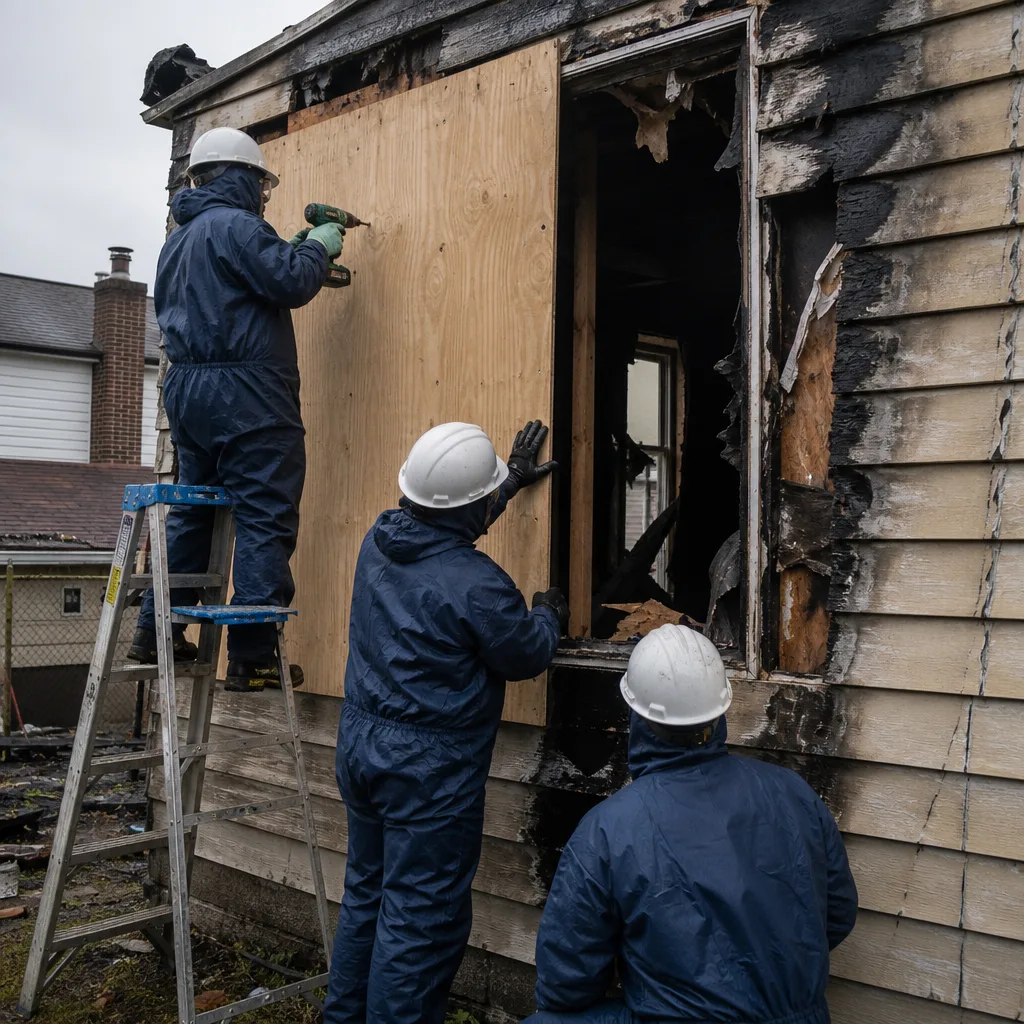
Emergency Board-Up & Tarping
After a fire, a broken window or compromised roof becomes an open invitation for weather, water, and intrusion. In Lower Manhattan’s dense high-rises, a blown-out window on the 30th floor of a Water Street tower needs immediate tarping, and we can mobilize crews and rigging faster than most. Board-up also secures ground-floor retail spaces in Tribeca where a fire has left glass shattered and doors unsecurable.
Smoke & Soot Removal
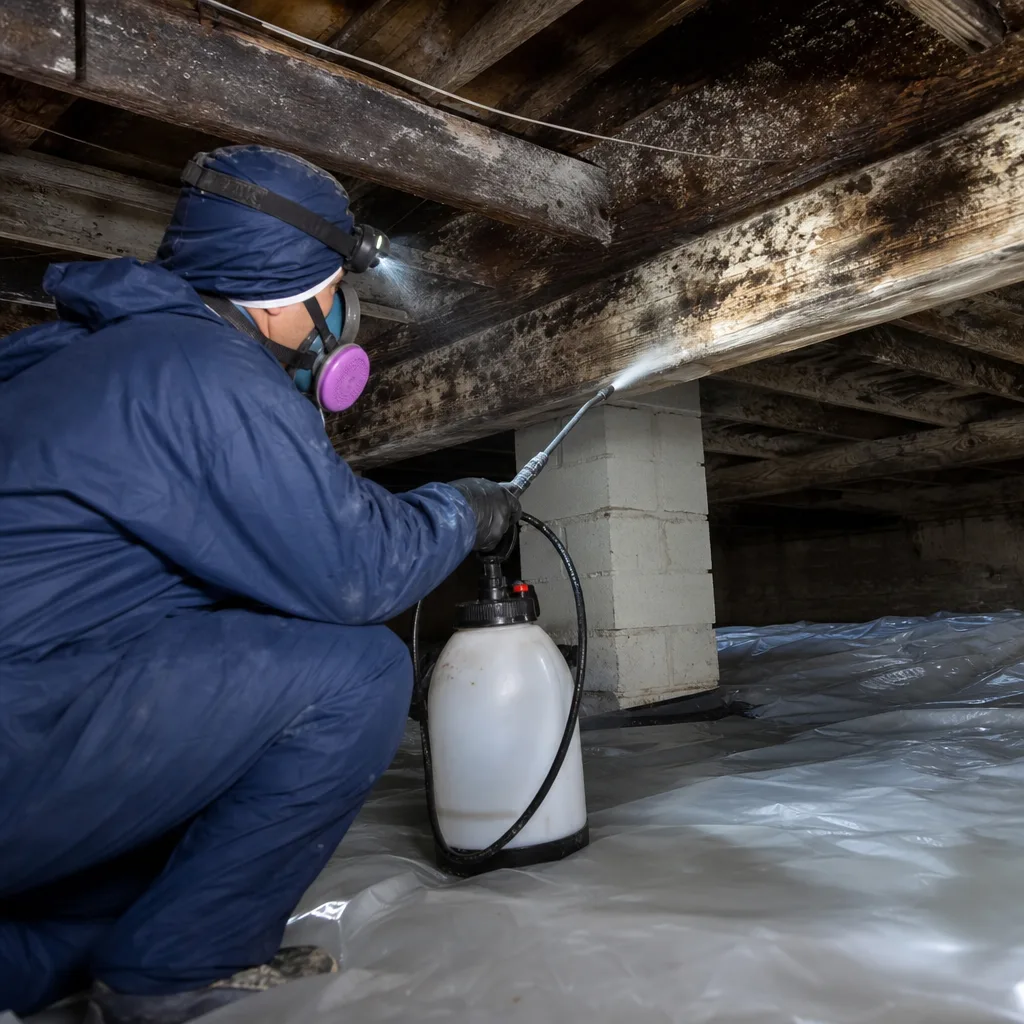
Soot in a Lower Manhattan building is a moving target. It travels through elevator shafts, stairwells, and shared ductwork, settling on surfaces three floors away from the fire source. Our FSRT-certified techs use surface-specific methods: dry-chem sponges on painted walls, HEPA vacuuming on textiles and porous materials, and chemical agitation on the oily wet soot residue common in kitchen and electrical fires.
Odor Removal & Deodorization
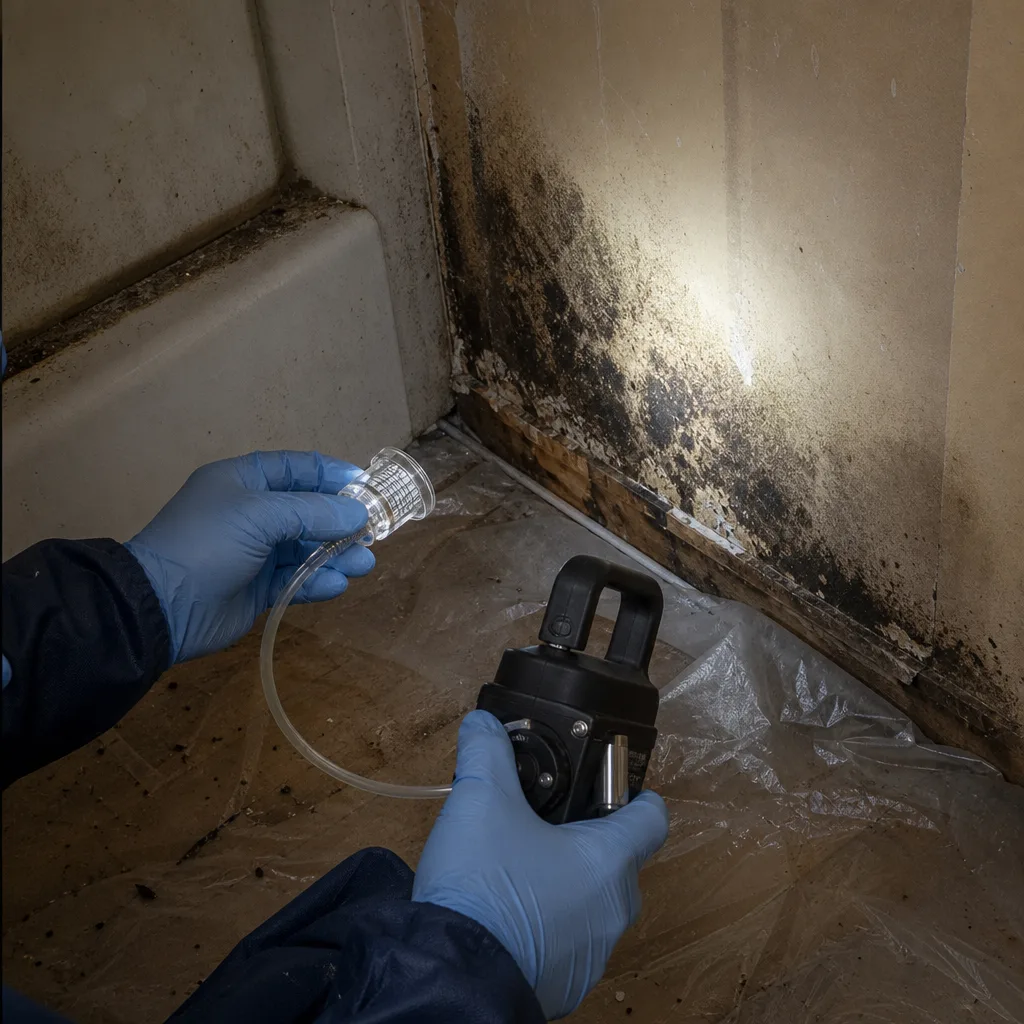
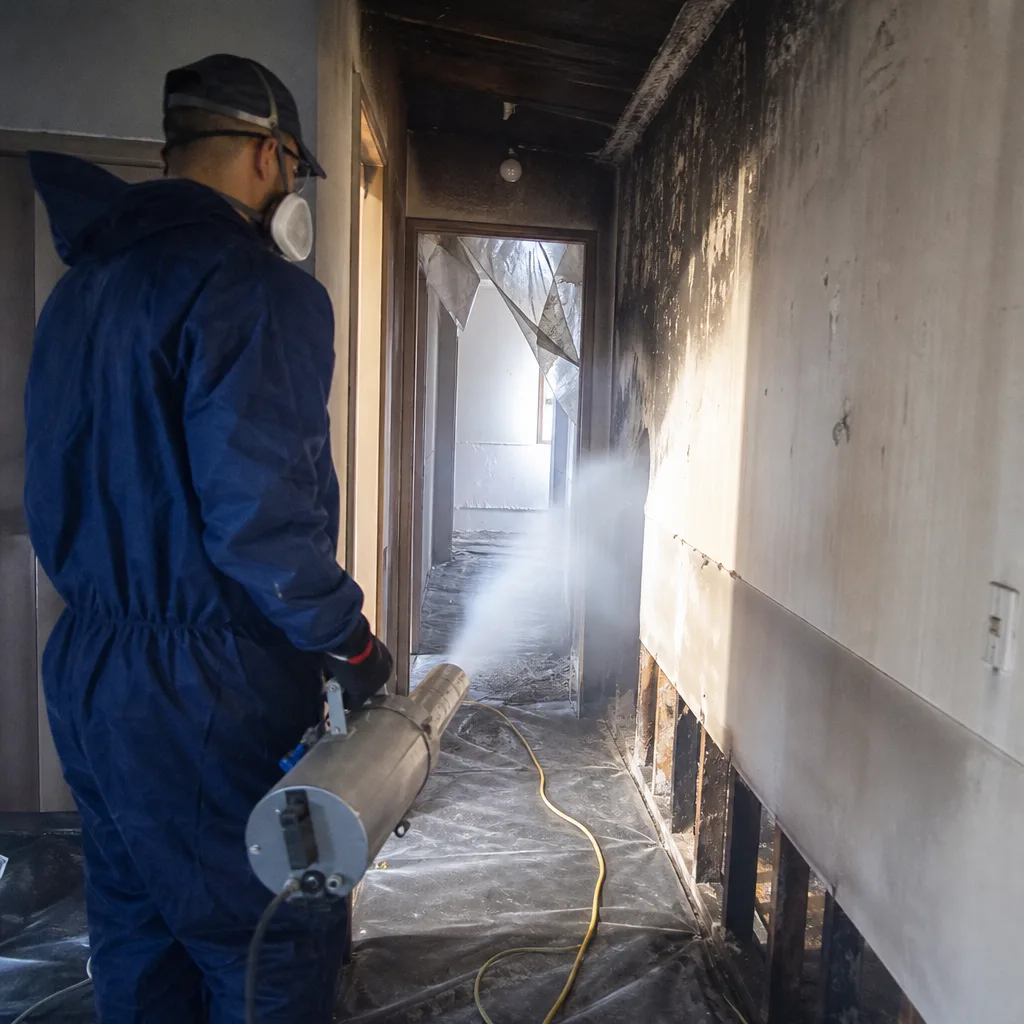
Smoke odor in a pre-war building lives in places you can’t see: behind crown molding, inside wall cavities built before drywall existed, in the pores of century-old brick. We run hydroxyl generators and thermal fogging systems to neutralize odor molecules at the source, then verify with thermal imaging that no smoke reservoirs remain in hidden cavities. If we don’t treat the cavity, the odor comes back.
Contents Cleaning & Pack-Out
Your belongings need different treatment depending on what they are. Soft goods go to an off-site facility for ultrasonic cleaning and ozone treatment. Hard contents get cleaned on-site when possible. Everything gets inventoried, photographed, and tracked so your insurance claim has complete documentation. When contents can’t stay during reconstruction, we pack them out and store them until your space is ready.
What happens when you call
- 1
A real person answersNo phone trees - you reach a local pro.
- 2
You get an upfront price rangeHonest numbers before anyone is dispatched.
- 3
A background-checked tech heads outLicensed & insured, dispatched right away.
- 4
You approve before work beginsNothing starts until you say go.
Fire & Smoke Damage Restoration Costs in Lower Manhattan, NY
Fire and smoke restoration pricing in Lower Manhattan runs higher than most of the city because of building access logistics, unionized freight elevator requirements in many Financial District towers, and the cost of specialized containment in connected buildings. A basic smoke cleanup in a small Tribeca apartment might run $2,000 to $5,000. Full contents cleaning and pack-out for a two-bedroom Battery Park City unit runs $8,000 to $20,000. Structural fire repair on a moderate fire in a pre-war FiDi co-op can reach $30,000 to $80,000 depending on the extent of framing damage and whether asbestos abatement triggers. The free visual inspection is the only honest way to scope the work, and it costs you nothing. Wade hands you a written scope before any work starts, so you know the number before you sign. Insurance covers most fire damage claims, and we bill your carrier directly. For out-of-pocket work, ask about the Senior & Veteran 10% discount, which is permanent, not a promotion.
We Also Serve Cities Near Lower Manhattan
Wade’s Restoration also responds to fire and smoke emergencies in the Financial District, Astoria, Midtown Manhattan, and Long Island City. If you’re in Lower Manhattan proper, crews are minutes away, not an hour. Call (201) 740-2235 from anywhere in the area and you’ll get a live answer.
Serving Lower Manhattan, NY - Our Local Coverage Area
We’re based in the Lower Manhattan area and know this community well. Use the map below to see our service coverage - if you’re nearby, we can almost certainly help.
Lower Manhattan Fire & Smoke Damage Restoration Questions, Answered
How does Lower Manhattan’s landfill geology change fire and smoke restoration?
Battery Park City and the western Financial District waterfront sit on Hudson River landfill, which means groundwater rises from below during storm surges, not just from surface flooding. After a fire, that groundwater can infiltrate sub-basements and mechanical spaces already compromised by suppression water, extending drying time and increasing mold risk. Our moisture mapping accounts for this, and we take daily readings in any below-grade space until the substrate hits dry standard. Call (201) 740-2235 if you’re dealing with a fire and water intrusion in a landfill-geology building.
Do I need to worry about asbestos during fire restoration in a pre-1980 Lower Manhattan building?
Yes. Most pre-1980 commercial and residential stock in the Financial District and Tribeca contains asbestos in pipe insulation, floor tiles, or fireproofing. Fire damage disturbs those materials, and New York City regulations trigger mandatory abatement protocols before drying and restoration can begin. Wade’s Restoration coordinates with licensed asbestos abatement contractors and documents everything for your insurance claim. Ignoring it isn’t an option; it’s a certificate-of-occupancy violation.
Why does the building’s Flood Emergency Operations Plan matter for a fire damage job?
Many Lower Manhattan co-ops and condos rewrote their house rules after Sandy to require flood-rated finishes below base flood elevation. If we specify materials that don’t meet those requirements, the work fails inspection and gets redone on your dime. Wade’s team checks the building’s Flood Emergency Operations Plan before finalizing any scope of work in below-grade or ground-floor spaces. It’s a step a generic restoration company skips, and it’s a costly one to miss.
How fast can smoke and soot damage spread through an old Lower Manhattan high-rise?
Fast. In pre-war towers, original elevator shafts, dumbwaiter chases, and pipe runs act as smoke flues, carrying soot and odor from a basement fire to upper floors in minutes. The acidic residue etches glass and stone within hours. Our team deploys containment and HEPA air scrubbers immediately to stop cross-contamination, then neutralizes odor at the source so it doesn’t return through building cavities.
What’s the difference between structural drying and dehumidification in a Lower Manhattan basement after a fire?
Dehumidification lowers the air’s moisture content, but structural drying targets the materials themselves: terracotta block, concrete, timbers, and subflooring. In Lower Manhattan’s below-grade spaces, where groundwater and landfill geology compound moisture problems, daily moisture readings are the only way to confirm structural drying is actually working. Wade logs those readings every single day and hands you the full log at job’s end.
How fast can someone actually get to my Lower Manhattan building?
We target 45 minutes to arrive at most Lower Manhattan addresses. Wade answers his own phone, and on fire emergencies he heads out himself. Call (201) 740-2235 day or night and you’ll get a straight answer about ETA, not a scripted hold message.
Will insurance cover fire and smoke restoration in my Lower Manhattan apartment or co-op?
Most homeowner and co-op policies cover fire damage, smoke damage, and the water damage from fire suppression. The complication in Lower Manhattan is building-level requirements like flood-zone compliance and asbestos abatement, which can become coverage disputes if not documented properly. We document everything from the first hour and communicate directly with your adjuster, so those items get included in the claim rather than denied later.
What should I do in the first 30 minutes after a fire in my Lower Manhattan building?
Call (201) 740-2235 first. Then open windows if it’s safe, turn off HVAC systems to stop smoke circulation, and avoid touching or wiping any surfaces. Wiping soot pushes it deeper into porous materials. Don’t use electrical appliances in affected areas. We’ll inspect for free and tell you exactly what needs to happen, with no pressure and no obligation.
Written by Wade Ferris, Owner at Wade’s Restoration, serving Lower Manhattan and surrounding communities. To wade is what you do through a flooded basement at two in the morning, and it happens to be his name.