
Quick Summary
Basement flooding in Lower Manhattan threatens property integrity due to dense subgrade infrastructure, historic masonry foundations, and high contamination risks from urban stormwater. Wade's Restoration provides 24/7 professional basement flood cleanup in Financial District properties, deploying industrial extraction units, precision moisture mapping, and EPA-registered antimicrobial treatments to halt structural rot and mold. Property managers and homeowners will learn how rapid mitigation stops secondary building damage and can call Wade's Restoration 24/7 for immediate emergency water extraction and a free on-site visual inspection.
Basement Flood Cleanup in Financial District – Emergency Response
When water pours into a Lower Manhattan basement, every minute counts. Whether dealing with a sudden sewer surge, a burst water line, or stormwater seepage through aging foundation walls, property managers and homeowners in the Financial District face immediate structural risks. Wade’s Restoration provides 24/7 emergency response across Lower Manhattan to extract standing water, dry out building foundations, and stabilize your property before secondary damage takes hold.[4]
Lower Manhattan presents distinct restoration challenges. Dense commercial corridors, deep multi-level sub-basements, and historic fieldstone foundations mean water travels quickly along concealed conduit paths and utility chases. The FiDi and Seaport Climate Resilience Plan projects that rising sea levels and intense rain events will increase tidal flood frequency across the district over coming decades. Getting ahead of moisture intrusion right away protects building structural integrity and keeps your indoor air safe.[2] See also Water Damage Restoration in Weehawken – Call Now-10% Off – Same-Day Service – Free Estimate.
Rapid Water Extraction and Structural Drying
Basement flooding in dense urban environments requires far more than surface pumping. When water sits against below-grade foundation slabs, hydrostatic pressure forces moisture through hairline masonry cracks, under sill plates, and deep into electrical conduit channels. Technicians must arrive with high-capacity extraction units, industrial desiccant dehumidifiers, and thermal imaging meters to map where moisture has traveled.[3]
Once standing water is removed, the priority shifts to deep structural drying and microbial control. Floodwaters entering through city storm drains or coastal surge fall under Category 2 or Category 3 contamination. That requires EPA-registered antimicrobial washes, full containment to prevent cross-contamination to upper floors, and continuous air scrubbing. Wade’s Restoration manages the entire mitigation lifecycle, from initial pumping to final framing and drywall repairs.
How Fast Can Emergency Restoration Crews Arrive in the Financial District?
In an active basement flood, rapid response prevents tens of thousands of dollars in avoidable building damage. Restoration teams operating in downtown Manhattan must navigate tight one-way streets, parking limitations, and complex freight elevator access to get commercial extraction equipment on site fast.
Accessing Below-Grade Vaults and Tight Basements
Getting commercial drying gear into dense FiDi basements demands clear local logistics. Below-grade mechanical rooms, elevator pits, and sub-level storage units often lack direct street access. Restoration teams deploy specialized submersible pumps and high-lift vacuum lines that can pull water up multiple stories without blocking building egress or pedestrian corridors.
The First 24 Hours: Halting Secondary Structural Damage
Water damage escalates on a strict biological and structural timeline. Within hours of flooding, unmitigated water wicks up drywall, soaks baseplates, and creates high relative humidity. As a specific example rather than a standard expectation, in a documented emergency response for a Lower Manhattan financial facility experiencing multi-level water intrusion across 13 floors, technicians started moisture mapping within 2 hours and extraction within 3 hours, achieving complete structural drying in 8 days without loss of core structural framing.[5]
Basement Flood Cleanup Costs in the Financial District
Need basement flood cleanup in Financial District?
We’re available now - call for a fast, free estimate.
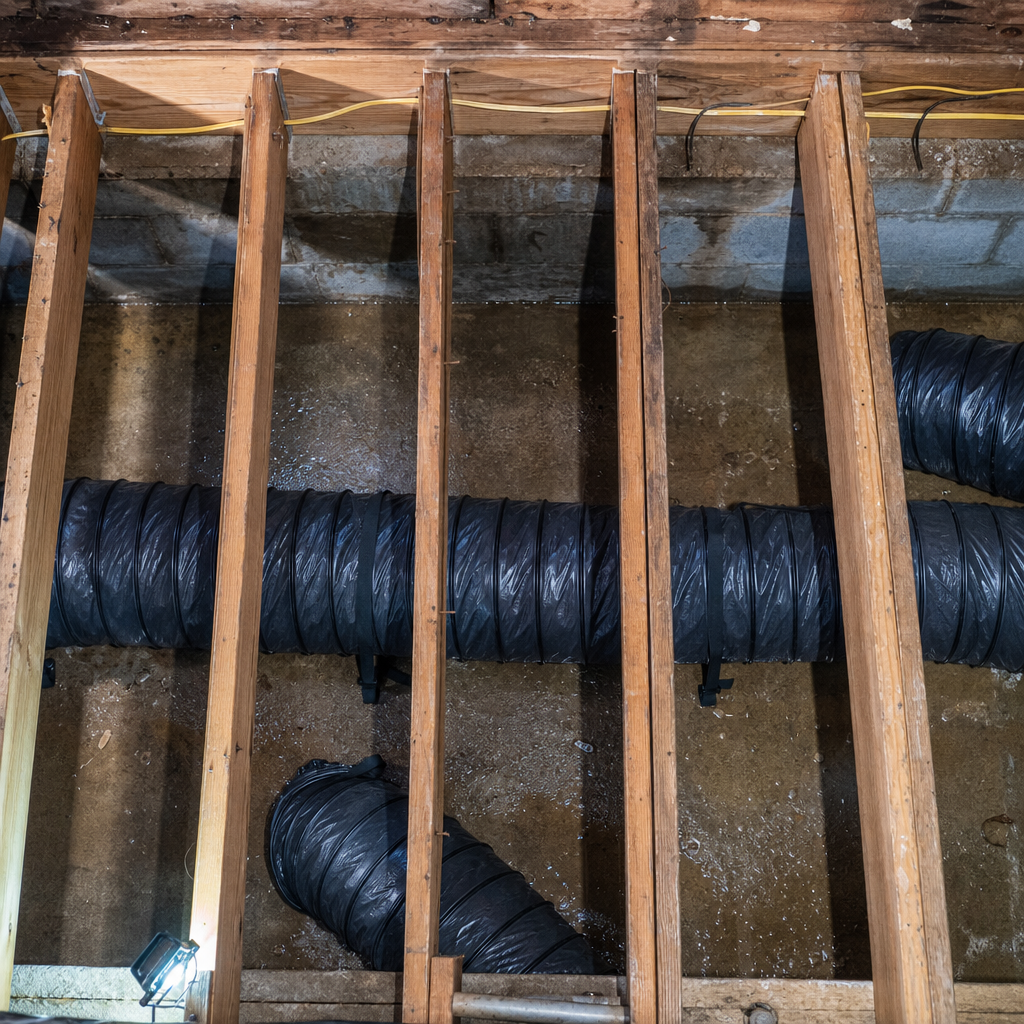
Every flooded basement presents a unique set of variables. Final pricing depends primarily on water volume, the category of contamination, the depth of moisture migration, and whether structural materials like drywall, flooring, or framing need demolition.
Cost Factors by Water Contamination Category
According to the New York City Comptroller’s Office, roughly 10% of basements and cellars in one-, two-, and three-family buildings across the city face persistent flooding risks. In historic or commercial downtown structures, costs correlate directly with contamination level and structural complexity.[1]
Navigating Insurance Claims and Documentation
Floodwater entering from outside often requires separate flood insurance. Coverage depends on the policy and cause of loss.
Targeting Subfloor Joists, Conduits, and Hidden Moisture
Pumping out visible surface water is only the first step. True water mitigation focuses on the hidden moisture trapped inside porous masonry, beneath concrete slabs, and around utility chases.
Checking Structural Timbers and Concrete Slabs
Flooding strains structural assemblies from the ground up. In dense residential pockets and mixed-use properties, water sitting against subflooring can cause permanent warping and dry rot. Technicians at Wade’s Restoration use precision diagnostic tools to determine what can be saved:
- Moisture Content Mapping: Pin-type meters test wood joists and sill plates. Readings below 16% are considered safe, readings between 16% and 19% require active desiccant drying, and readings above 28% indicate fiber saturation.
- Subfloor Deflection Checks: Plywood or OSB panels showing swelling, soft spots, or delamination are cut out and replaced to maintain floor load safety.
- Directed Air Movement: Heavy-duty air movers focus dry, heated air directly across exposed joists to draw out deep-seated moisture without damaging surrounding framing.
Drying Utility Chases and Masonry Walls
Older Financial District foundations often feature thick stone, brick, or unsealed concrete that holds moisture long after standing water is gone. If left untreated, damp utility conduits act as chimneys, carrying moist air and odors into upper-level spaces. High-capacity desiccant dehumidifiers lower ambient vapor pressure, pulling moisture out of deep foundation pockets and electrical conduits before wiring or pipes corrode.
Preventing Mold Growth After a Basement Flood
Drying within 24 to 48 hours helps reduce mold risk. Proper containment and sanitation are mandatory when handling urban floodwaters.
Containment Barriers and HEPA Air Filtration
To keep mold spores and biological dust from migrating into upper living areas or retail spaces, technicians seal the work zone:
- Sealing Shafts and Chases: Plastic isolation barriers close off stairwells, elevator openings, and utility passages to stop the natural building stack effect.
- Industrial HEPA Filtration: Air scrubbers cycle the basement atmosphere continuously, capturing 99.97% of airborne spores and micro-particulates.
- Negative Air Pressure: Exhausting filtered air out of the building keeps clean upper floors protected throughout the drying process.
Antimicrobial Treatments and Reconstruction
Porous items exposed to contaminated floodwaters are removed and bagged under containment. Non-porous framing and masonry surfaces receive thorough washdowns with EPA-registered botanical or hospital-grade antimicrobials. After moisture levels return to standard dry standards, Wade’s Restoration handles the rebuild process, installing fresh insulation, drywall, and flooring so the space is completely returned to pre-loss condition.
Frequently Asked Questions About Basement Flood Cleanup
How fast can emergency flood restoration teams arrive in the Financial District?
Emergency dispatch runs 24 hours a day, 7 days a week. Response times vary and depend on traffic, provider availability, and event severity, with crews ready to deploy heavy-duty pumps and extraction gear immediately.
What immediate steps should I take if my basement floods?
If you can do so safely, switch off electrical power and gas lines to the basement from an upstairs breaker panel. Avoid walking through standing floodwater due to hidden electrical hazards and bio-contaminants. Take clear photos and videos of water levels for your insurance records, then call a certified restoration team right away.
Does property insurance cover basement flood cleanup?
Floodwater entering from outside often requires separate flood insurance. Coverage depends on the policy and cause of loss.
How long does complete basement drying and dehumidification take?
Most basement drying projects take between 3 and 5 days. Porous stone foundations, heavy concrete slabs, or multi-room conduit runs may require extra time to ensure deep moisture is completely drawn out before rebuilding begins.
If your Financial District property is taking on water, Wade’s Restoration provides 24/7 emergency water extraction, moisture mapping, and full structural repairs. Call right away to schedule an immediate on-site inspection.
Need basement flood cleanup in Financial District?
We’re available now - call for a fast, free estimate.
Sources
- P-2333 New York City: Effects of Hurricane Ida – fema.gov (2022)
- Memo – nyc.gov
- Report Finds Ten Percent of Low-Income and Immigrant … – newyorkfed.org (2024)
- Introduction – edc.nyc – edc.nyc
- Stormwater Management Studies – edc.nyc
Related reading: Drywall Water Damage Repair in Astoria – 10% Off & Free Estimate – On-Site in 60 Minutes
Related reading: Water Damage Restoration in Hoboken – Call Now-10% Off – Same-Day Service – Free Estimate
Related reading: Water Damage Restoration in Astoria – Call Now-10% Off – Same-Day Service – Free Estimate
Frequently Asked Questions
How is contaminated Category 3 floodwater safely removed from deep sub-basements in the Financial District?
Wade's Restoration deploys high-lift vacuum lines and commercial submersible pumps to extract contaminated urban water through tight multi-level layouts without blocking building egress. Technicians establish negative air containment zones, run HEPA filtration, and apply EPA-registered antimicrobials to neutralize pathogens before structural drying begins.
Why do historic stone and masonry foundations in Lower Manhattan require specialized desiccant drying?
Porous historic masonry and thick concrete slabs absorb floodwater under hydrostatic pressure, which can seep into utility chases and corrode wiring or framing. Wade's Restoration uses industrial desiccant dehumidifiers to lower vapor pressure, drawing deeply trapped moisture out of dense foundation pockets to halt structural decay.
Does Wade's Restoration handle full reconstruction after the basement water extraction and drying are finished?
Yes, Wade's Restoration manages the complete recovery lifecycle, guiding property owners from initial emergency extraction through complete structural rebuilding. Once precision diagnostic tools verify that moisture levels have returned to safe dry standards, technicians install new framing, subflooring, insulation, and drywall.
About the author
 |
Sarah Miller Sarah Miller is an IICRC certified Water Damage Restoration Technician with over 6 years of experience specializing in mold remediation and indoor air quality assessments for residential and commercial properties. She holds a Bachelor of Science in Environmental Science from Rutgers University and focuses on providing practical, localized advice for property owners navigating unexpected damage. |
Water damage, flood, or mold emergency?
We’re available now - call for a fast, free estimate.
Call Now - Free Estimate