
Quick Summary
Water emergencies in Long Island City high-rises and converted lofts cause rapid lateral moisture migration beneath dense concrete slabs and acoustic subfloors, making immediate professional water damage restoration in Long Island City essential to prevent severe structural decay. Wade's Restoration delivers complete lifecycle water damage restoration in Long Island City with 24/7 rapid response, deploying certified specialists who manage everything from thermal moisture mapping and extraction to sanitization, structural rebuilds, and seamless insurance claim coordination. Readers will learn how prompt containment safeguards multi-layer building assemblies and can immediately call Wade's Restoration for 24/7 emergency dispatch and a free on-site visual inspection.
Water Damage Restoration in Long Island City: Fast Emergency Response
When a plumbing riser fails on an upper floor or heavy rain pushes runoff into a ground-floor unit, standing water creates an immediate crisis. Professional water damage restoration services in Long Island City, such as Wade’s Restoration, provide 24/7 fast emergency dispatch. Restoration teams handle the recovery process, from emergency extraction and moisture mapping to cleanup and structural rebuilds, coordinating mitigation and reconstruction to protect the property.[3]
Urban flooding moves fast in western Queens. During severe weather, municipal drainage networks quickly become overwhelmed. Whether managing a commercial property near Queens Plaza or a residential condo along the waterfront, prompt response is essential to contain the damage and protect the property.[1] See also Water Damage Restoration in Weehawken – Call Now-10% Off – Same-Day Service – Free Estimate.
How Fast Can a Restoration Crew Arrive in Long Island City?
Emergency crews dispatch rapidly across Long Island City upon receiving a call. In water emergencies, minutes matter. Standing water begins soaking into baseboards, wicking up drywall, and degrading flooring adhesives within the first hour.
Reaching the site quickly allows technicians to isolate the source, shut off localized supply lines, set up containment barriers, and extract bulk water before clean water degrades into gray or black water. Swift containment prevents localized plumbing leaks from turning into complete structural teardowns.
Why Immediate Action Saves Building Materials
Long Island City properties present specific structural challenges. Modern high-rises and converted industrial lofts feature layered assemblies that trap moisture out of plain sight. When water sits, it travels horizontally across poured concrete subfloors, soaking underneath floating floors and entering shared party walls. Immediate deployment of commercial extraction units, targeted air movers, and dehumidifiers halts this spread before mold spores activate, which can happen within 24 to 48 hours in humid conditions.
What Factors Impact Water Damage Restoration in Queens?
According to specialists at Wade’s Restoration, every restoration project requires a tailored drying plan based on the source of the water, the construction materials involved, and the extent of hidden moisture migration. The main variables include:
- Water Contamination Level: Clean supply line breaks require different containment and disposal measures than drain backups or street-level storm runoff, which require sanitization and porous material removal.
- Structural Assemblies: Solid concrete decks, sound-dampening floor underlayments, and double-layer fire-rated drywall demand specialized drying setups compared to standard wood-frame construction.
- Scope of Damage: Surface extraction differs significantly from multi-unit water migration where moisture travels into electrical chases, elevator shafts, and adjacent apartments.
Insurance Claims and City Damage Reporting
Navigating property insurance after a flood or major leak depends on the cause of the damage. Standard property insurance coverage depends on the source, typically covering sudden and accidental water discharges such as a pipe burst or appliance leak, while flood damage usually requires separate flood insurance.[5]
NYC Emergency Management advises residents to document flood damage using the city’s damage information form so officials can track neighborhood impacts and allocate recovery resources. For private insurance claims, proper documentation including photographic evidence, moisture mapping logs, and line-item estimates ensures adjusters receive the exact records needed for claims processing.[2]
Flood vulnerability is a major regional concern. Research identifies southern and eastern Queens among New York City’s highest flood-risk areas, highlighting the ongoing vulnerability of below-grade spaces and basement apartments across the borough. Thorough documentation protects your financial interests when disaster hits.[4]
Moisture Migration in LIC High-Rises and Converted Industrial Lofts
Need water damage restoration in Long Island City?
We’re available now - call for a fast, free estimate.
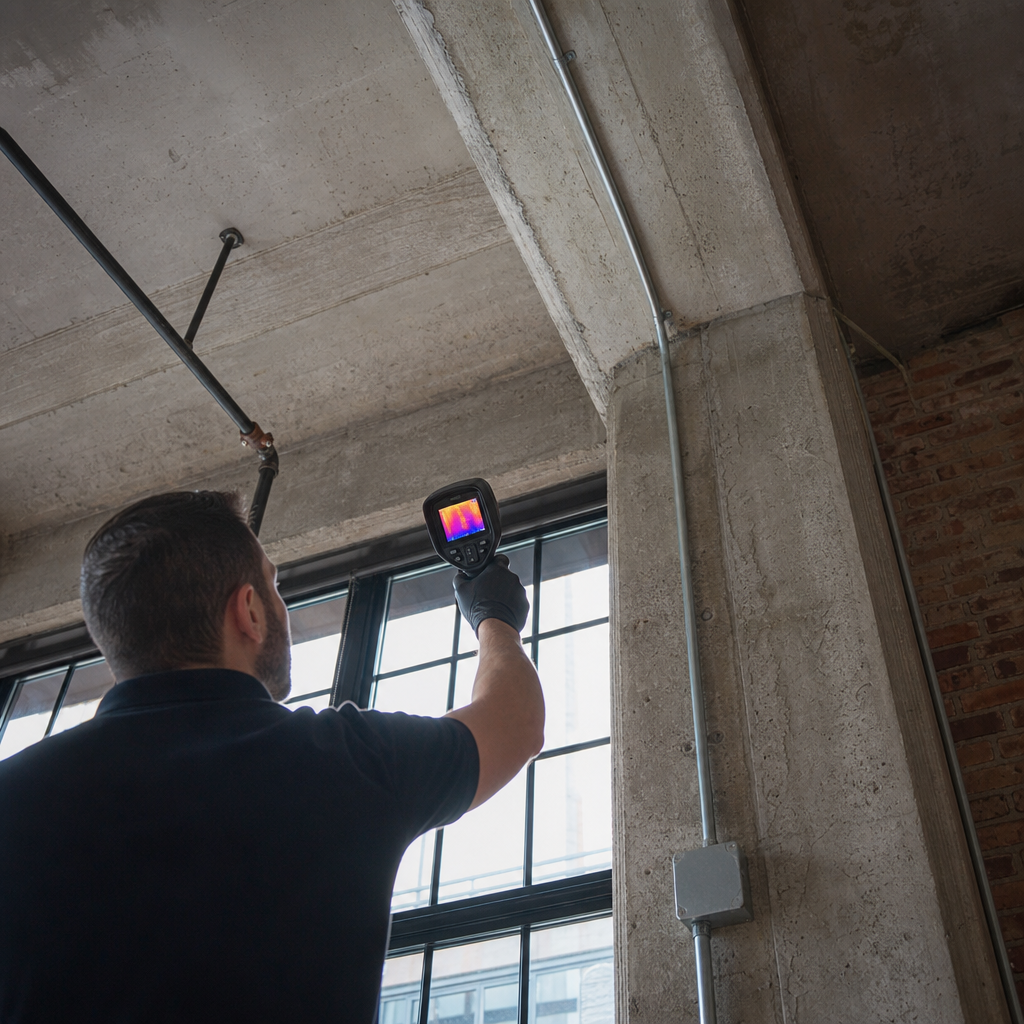
Water behaves differently in Long Island City high-rises and converted warehouse lofts than it does in traditional wood-framed single-family homes. In standard wood-frame structures, water naturally follows gravity, dripping straight down through subfloors and ceilings. In concrete high-rises, dense poured slabs stop water from immediately draining down. Instead, water travels laterally across the slab surface.
Lateral Slab Travel vs. Vertical Drainage
Because concrete slabs are dense and relatively non-porous, gallons of water will spread out horizontally across an entire floor plate. Water creeps beneath baseboards, enters common hallways, and slips through expansion joints and electrical conduits into neighboring units. A tenant three doors down might experience wet drywall long before the unit directly underneath notices a single drop coming through their ceiling.
Restoration technicians at Wade’s Restoration use thermal imaging cameras and moisture meters to trace these hidden lateral paths, finding moisture pockets behind drywall and under cabinetry without unnecessary demolition.
Acoustic Sound-Dampening Subfloors and Multi-Layer Assemblies
To meet residential acoustic codes, modern LIC buildings and loft conversions incorporate sound-dampening underlayments under engineered hardwood or luxury vinyl tile. These rubber, cork, or dense foam membranes create a water barrier. When water gets under the finished floor, it becomes trapped beneath the acoustic membrane against the concrete slab.
| Structural Component | Moisture Behavior | Restoration Strategy |
|---|---|---|
| Acoustic Subfloor Mats | Traps water against concrete slabs, preventing natural upward evaporation | Lift targeted floor sections; inject directed dry air under the membrane using specialty drying equipment. |
| Shared Demising Walls | Wicks moisture upward through double-layer drywall and interior insulation | Perform precision flood cuts above the moisture line to open wall cavities for ventilation while maintaining fire ratings. |
| Ceiling Plenums & Chases | Channels water horizontally along pipe runs and electrical conduit | Create inspection ports, inspect structural channels, and direct positive airflow across the upper slab. |
Steps in Emergency Water and Flood Cleanup
Following verified FEMA emergency cleanup steps, restoring a water-damaged property involves a strict, methodical process:
- Air out: Circulate fresh air and use ventilation to reduce moisture levels and control indoor humidity.
- Move out: Remove and protect salvageable personal belongings, contents, and furniture from affected areas to prevent secondary damage.
- Tear out: Remove saturated, non-salvageable materials such as waterlogged drywall, insulation, and damaged flooring.
- Clean out: Clean, decontaminate, and sanitize exposed structural elements and framing.
- Dry out: Dry all structural components and surfaces thoroughly using dehumidifiers and air-moving equipment.
Antimicrobial Treatment and Structural Rebuild
When contaminated water enters a building, thorough sanitization is essential. As recommended by Wade’s Restoration, treating affected structural framing helps prevent mold growth. Once the structure is completely dry with documented moisture logs, reconstruction begins to replace drywall, trim, and flooring to restore the space.
Frequently Asked Questions
Does property insurance cover water damage restoration in Long Island City?
Coverage depends on the cause of the damage. Standard property and homeowner policies typically cover sudden and accidental internal water damage, such as a broken pipe or appliance failure. Flood damage from rising storm waters or surface runoff usually requires separate flood insurance. Restoration professionals such as Wade’s Restoration provide detailed line-item scopes and drying documentation to support claims.
Can water damage cause mold growth in NYC apartments?
Yes. Mold spores exist naturally in indoor air and can germinate on damp drywall, carpet backing, or acoustic underlayments within 24 to 48 hours if high moisture levels persist. Fast extraction and controlled drying are necessary to stop microbial growth before it starts.
How much does emergency water damage restoration cost?
Costs vary depending on the category of water contamination, the square footage affected, the drying equipment required, and whether structural teardown and rebuilding are needed. Restoration contractors provide on-site assessments and written scopes before beginning work.
Are emergency water extraction crews available 24/7?
Yes. Emergency water damage restoration services are available 24 hours a day, 7 days a week, including weekends and holidays, to provide rapid water extraction and structural drying in Long Island City.
Need water damage restoration in Long Island City?
We’re available now - call for a fast, free estimate.
Sources
- DiNapoli: Extreme Weather and Disaster Response Costs … – osc.ny.gov (2025)
- REPORT FLOOD DAMAGE AND SUBMIT 311 SERVICE … – nyc.gov (2025)
- NYCEM Copy to Edit_Ida Damage Analysis Report [SHAREDwithJP] – nyc.gov
- A GUIDE TO HAZARD MITIGATION – nyc.gov
- FLOOD RISK AND BASEMENT HOUSING IN NEW YORK … – newyorkfed.org (2024)
Related reading: Water Damage Restoration in Jersey City – Call Now-10% Off – Same-Day Service – Free Estimate
Related reading: Water Damage Restoration in Hoboken – Call Now-10% Off – Same-Day Service – Free Estimate
Related reading: Water Damage Restoration in Astoria – Call Now-10% Off – Same-Day Service – Free Estimate
Frequently Asked Questions
How do specialists remove water trapped beneath concrete slabs and acoustic underlayments without full demolition?
Wade's Restoration uses non-invasive thermal imaging to track horizontal moisture paths and deploys targeted positive-pressure drying systems beneath acoustic membranes. This precision drying technique extracts moisture from dense subfloor assemblies without requiring complete floor tear-outs whenever materials remain salvageable.
Do I need to hire a separate contractor for structural repairs after emergency water extraction?
No, Wade's Restoration delivers complete lifecycle restoration with in-house IICRC-certified technicians handling everything from emergency extraction to final drywall, trim, and flooring reconstruction. This seamless single-source approach prevents third-party delays and ensures your Long Island City property is fully restored from start to finish.
How does Wade's Restoration help property owners navigate insurance claims for multi-unit leaks?
Wade's Restoration assists throughout the entire claims process by providing adjusters with comprehensive thermal moisture maps, detailed line-item estimates, and verified drying logs. This precise documentation helps satisfy carrier requirements quickly, ensuring seamless approval for both mitigation and structural rebuild services.
About the author
 |
Christopher Vance Christopher Vance is a property restoration specialist with over 10 years of experience in the disaster recovery industry. He holds a degree in Construction Management from Rutgers University and maintains certifications in structural drying and water damage restoration. Christopher focuses on creating practical guides that help Weehawken property owners navigate emergency mitigation and the complexities of insurance claims. |
Water damage, flood, or mold emergency?
We’re available now - call for a fast, free estimate.
Call Now - Free Estimate