
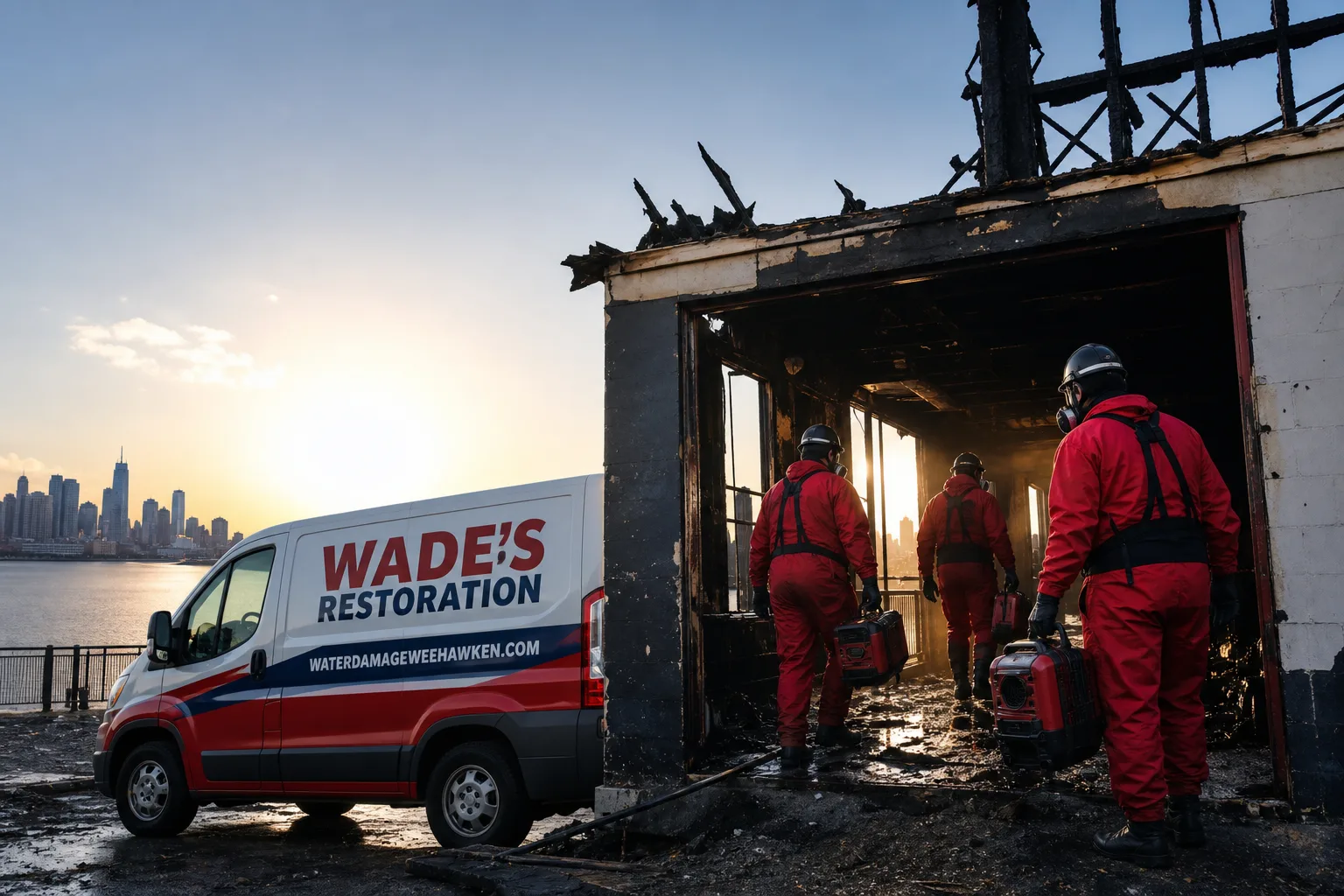
Free visual inspection and a written scope of work before any mitigation begins - photos, moisture readings, and drying logs go in your claim file
The scope we write is the scope we bill. Anything new gets shown to you, in writing, before we touch it.
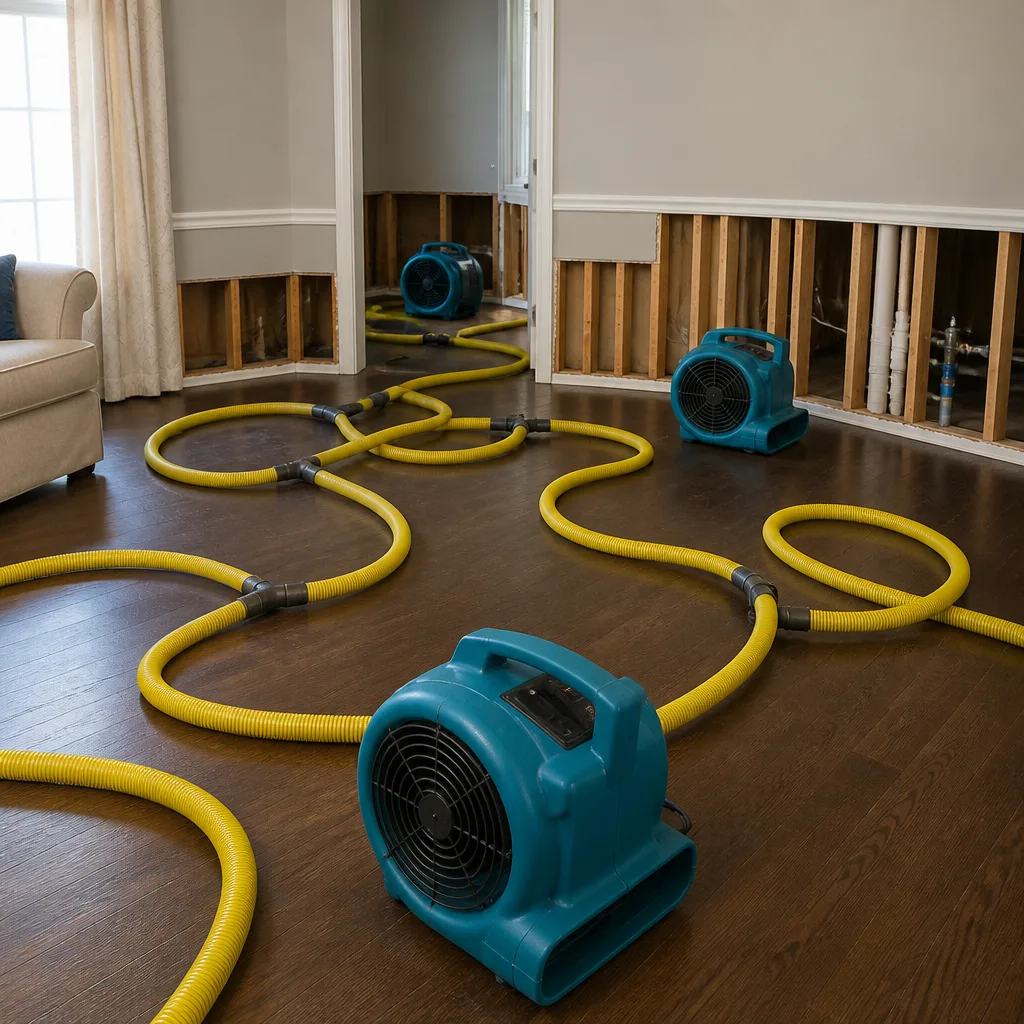



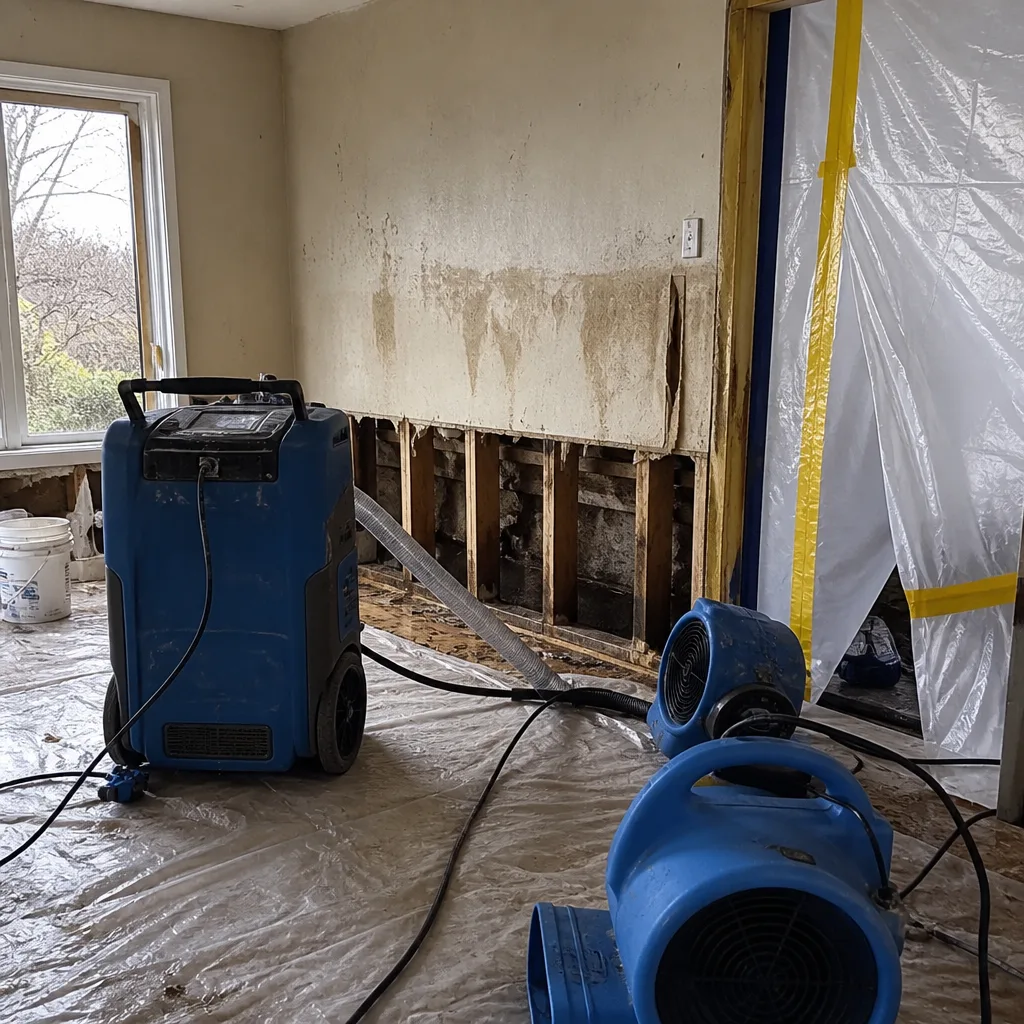 Before
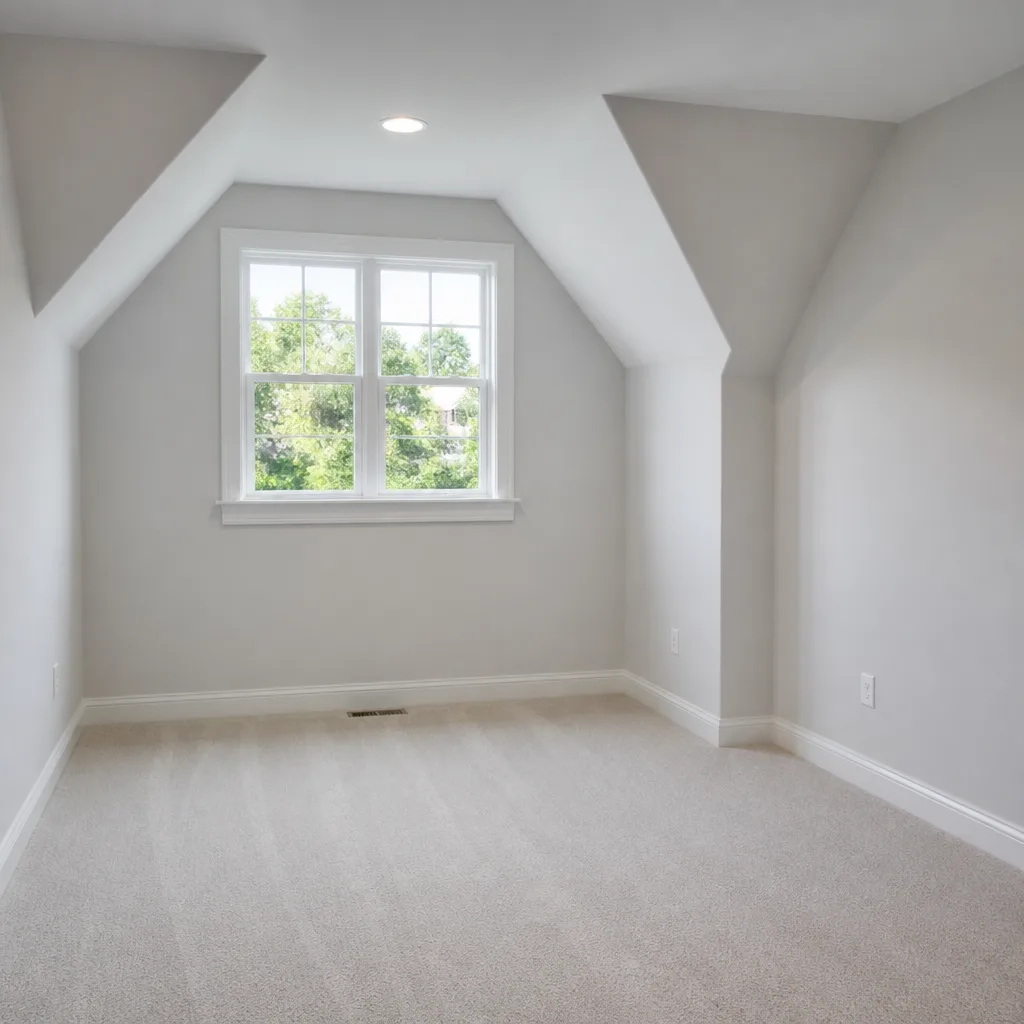
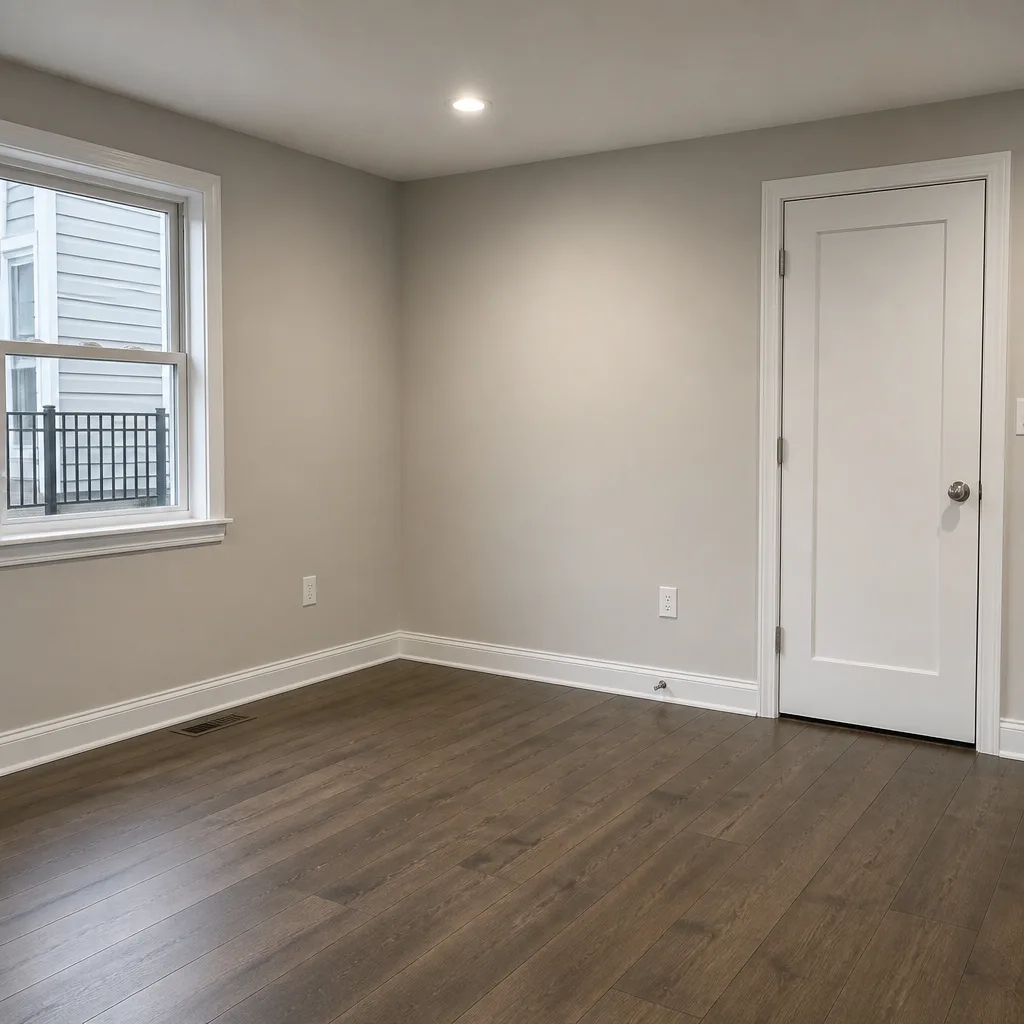 After
After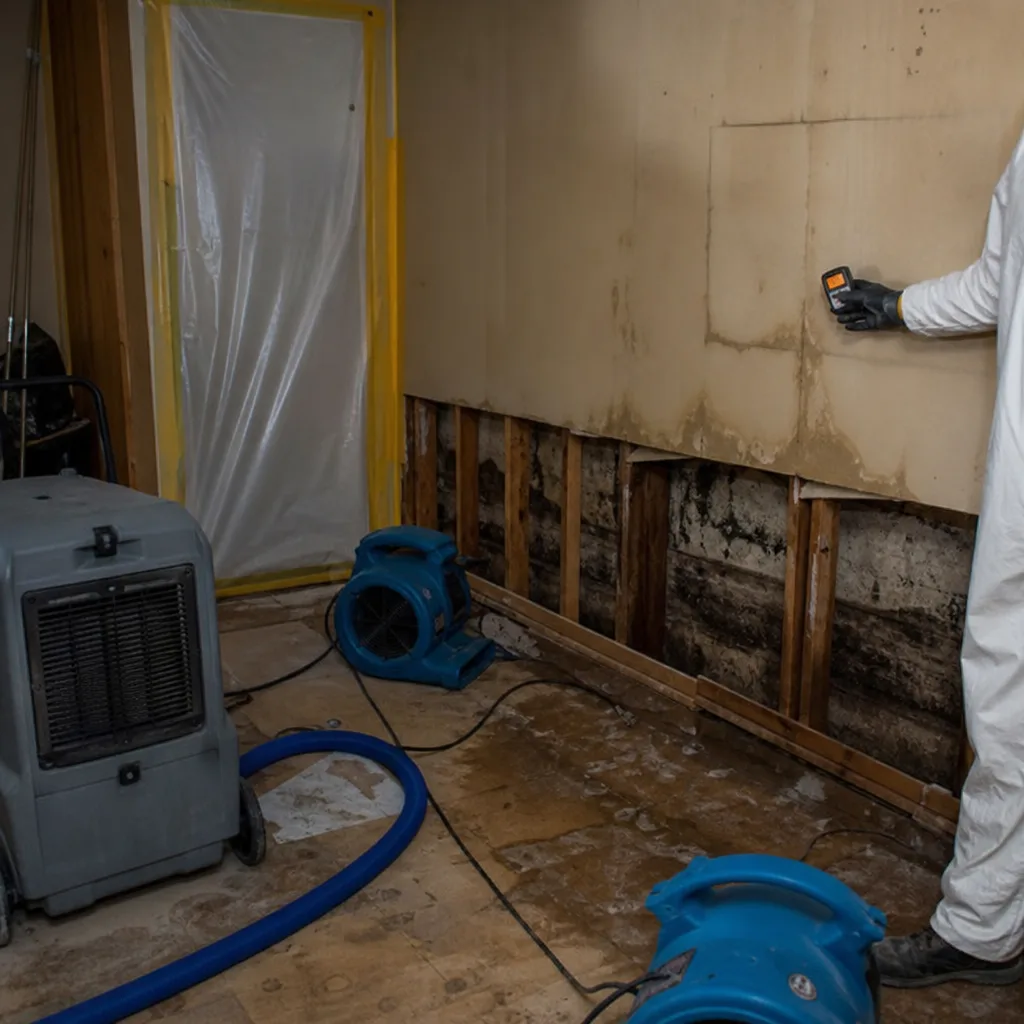 Before
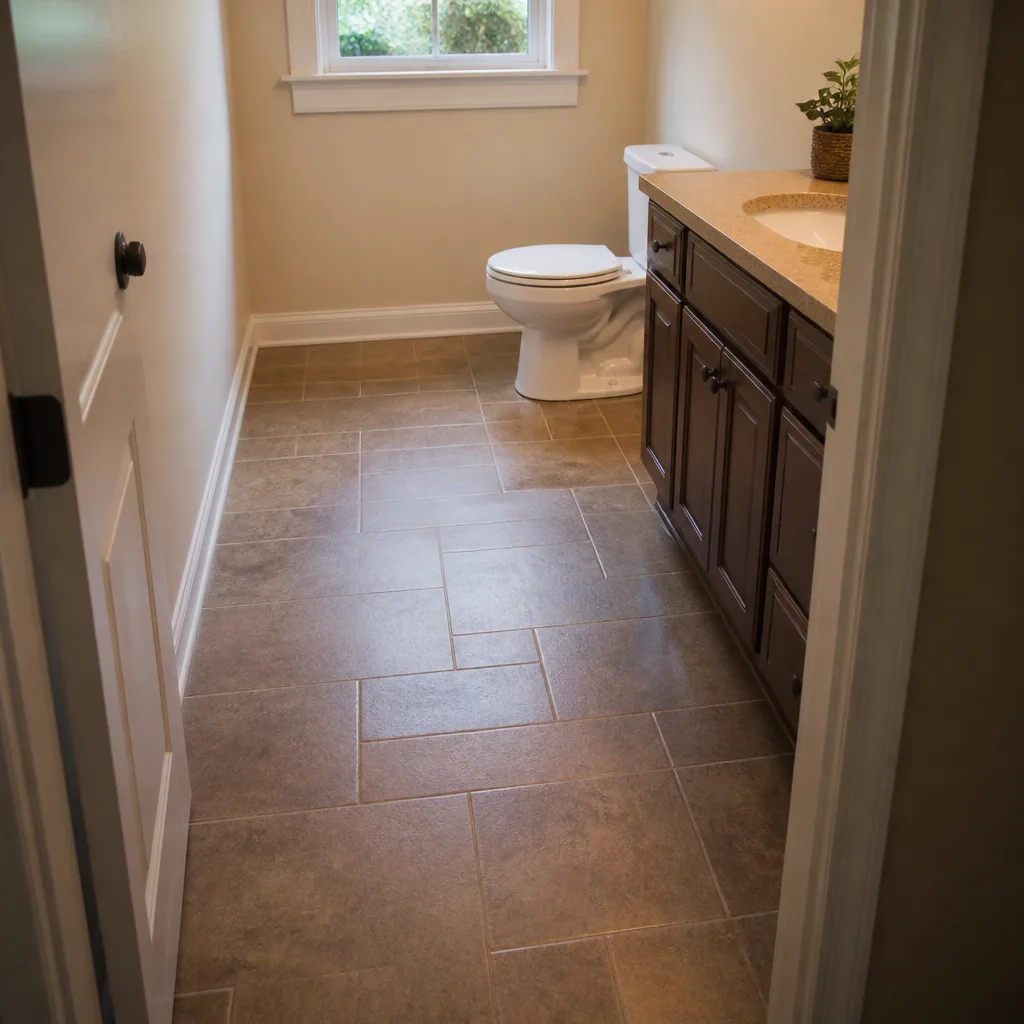
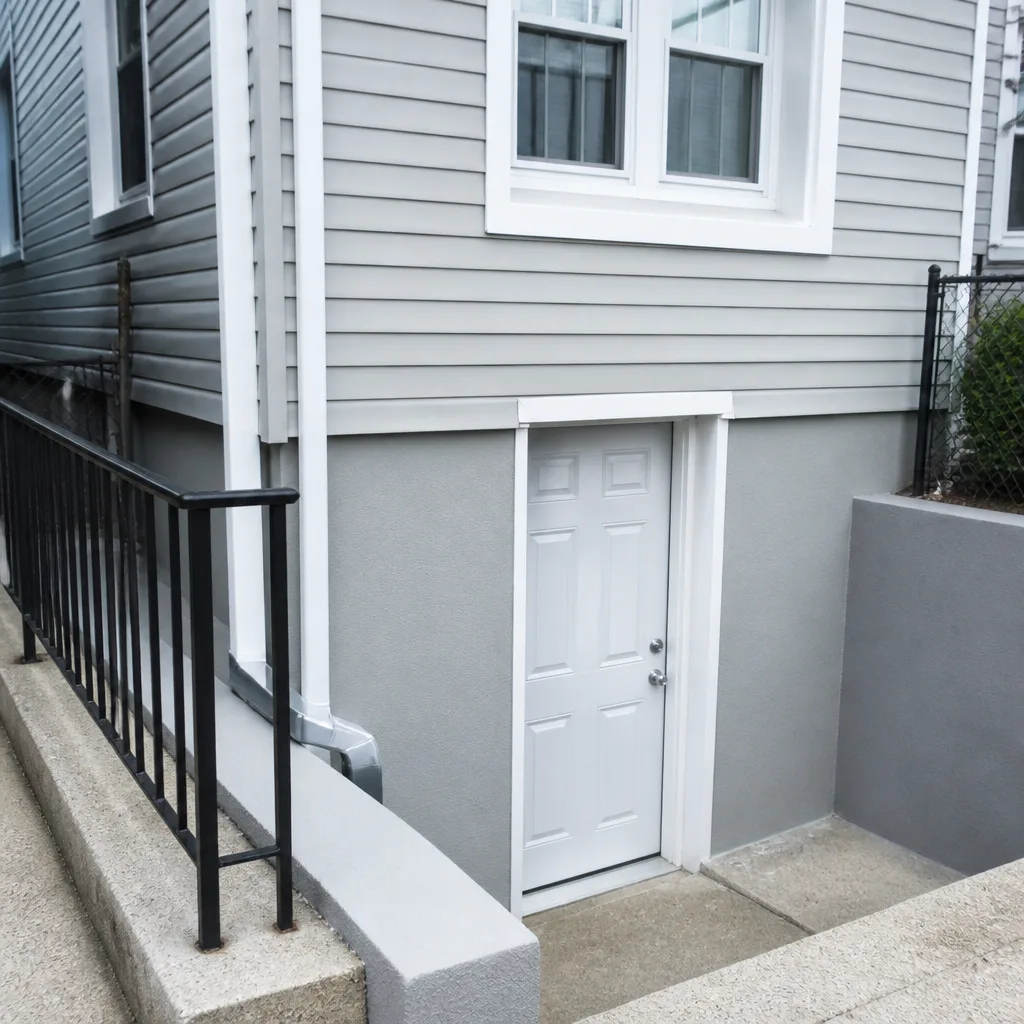 After
After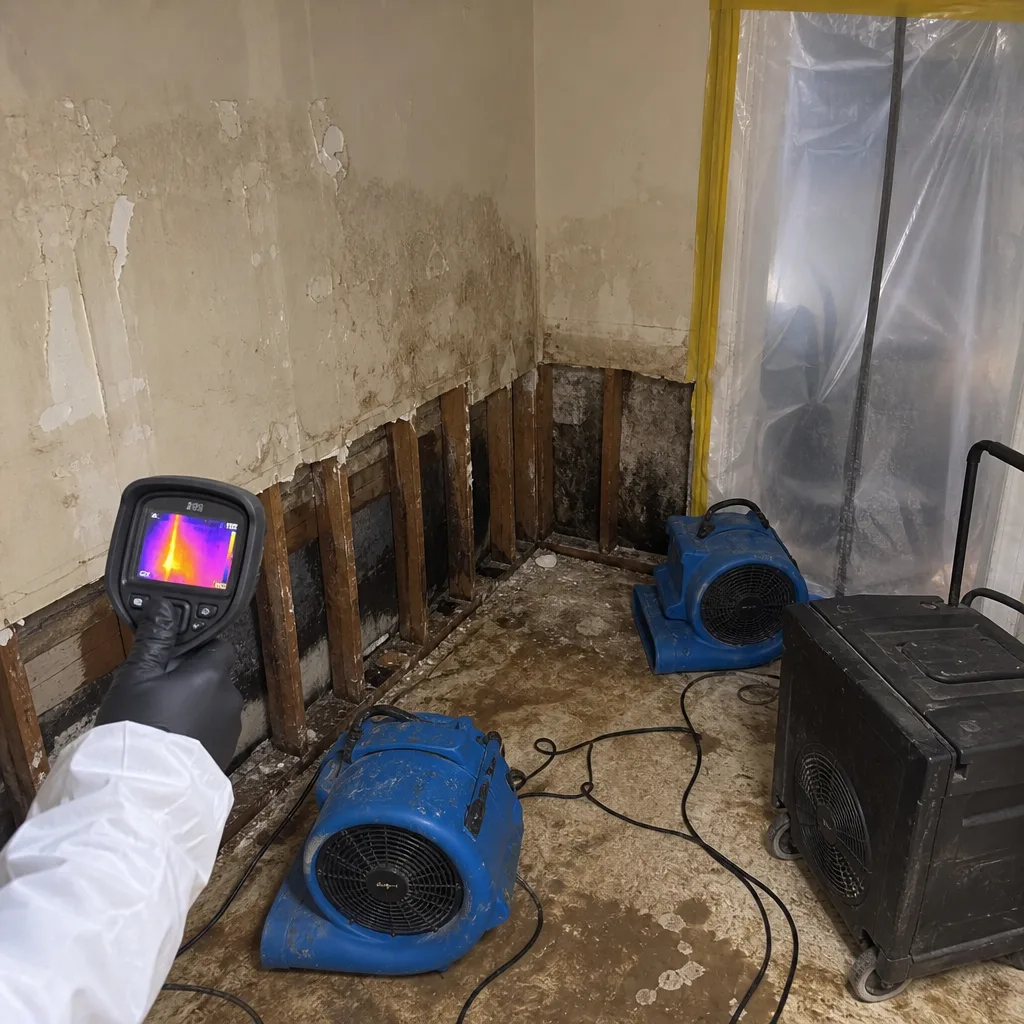 Before
 After
After24/7 Emergency Storm & Disaster Restoration in Long Island City
When a nor’easter pushes East River water into your ground-floor unit, or a summer storm sends tree limbs through a Hunters Point window, you need someone who answers the phone at 2 a.m. and gets a crew moving. That’s us. Wade’s Restoration handles storm and disaster restoration in Long Island City around the clock, with live answer every single time, never a voicemail tree. Call (201) 740-2235 right now and Wade or one of his crew leads will walk you through the first 30 minutes, then head your way. The first hour after a storm event shapes how much can be saved versus torn out. Water moves fast through converted factory lofts and pre-war walk-ups, and in LIC specifically, there’s a contamination issue most restorers never flag. We’ll get into that below.
Understanding Storm & Disaster Restoration Severity in Long Island City Properties
Water damage gets classified into three categories. Category 1 is clean water from a broken supply line. Category 2 carries contaminants, what you’d get from a washing machine overflow. Category 3 is black water, loaded with bacteria, pathogens, and chemical waste. Here’s the thing about our Long Island City service area: a lot of “routine” basement flooding here gets treated as Category 1 or 2 by national franchises that don’t know the neighborhood. That is a mistake, and a dangerous one. The Newtown Creek sewer influence zone changes the baseline. We classify any water intrusion tied to sewer backup or street-level surge in LIC as presumptively Category 3 until testing says otherwise. The converted brick factories along Court Square and the waterfront towers south of the Queensboro Bridge have different failure modes, but the water chemistry is what drives the protocol. You need containment, HEPA air scrubbing, and licensed waste hauling on jobs where a comparable loss in Astoria would need none of that.
Why Long Island City Property Owners Choose Wade’s Restoration
- 45-minute response commitment. We’re staged to reach any LIC address, from the waterfront high-rises to the Court Square loft blocks, within 45 minutes of your call. Wade’s truck is already on the road when you hang up.
- 24/7 live answer, always a real person. Wade Ferris answers his own phone. No call center, no script, no hold music. The guy who prices your job is the guy you talk to at midnight.
- IICRC-certified crews. Our techs carry WRT and ASD certifications, and we apply AMRT protocols for Category 3 water. Means we’re trained to the industry standard for structural drying, applied microbial remediation, and flood work specifically.
- Free visual inspection. Before any work starts, someone walks the damage with you and explains exactly what we’re seeing. No charge for that, ever.
- Direct insurance billing. We document from the first hour and bill your carrier directly. You’re not floating a five-figure remediation cost while you wait on a check.
- One team from extraction to reconstruction. The same Wade’s crew that pumps the water is the one that hangs new drywall. Nobody gets handed off to a subcontractor you’ve never met.
Our Storm & Disaster Restoration Process
Inspection & Assessment
We walk the property with thermal imaging and moisture meters, mapping every affected area. In Long Island City, that includes checking for asbestos fireproofing and lead paint on structural steel before we even think about cutting into a converted factory loft’s walls.
Extraction & Stabilization
Standing water comes out with truck-mounted extractors and submersible pumps. If a window blew out or a roof section gave way, we board up and tarp immediately to stop further intrusion.
Drying & Dehumidification
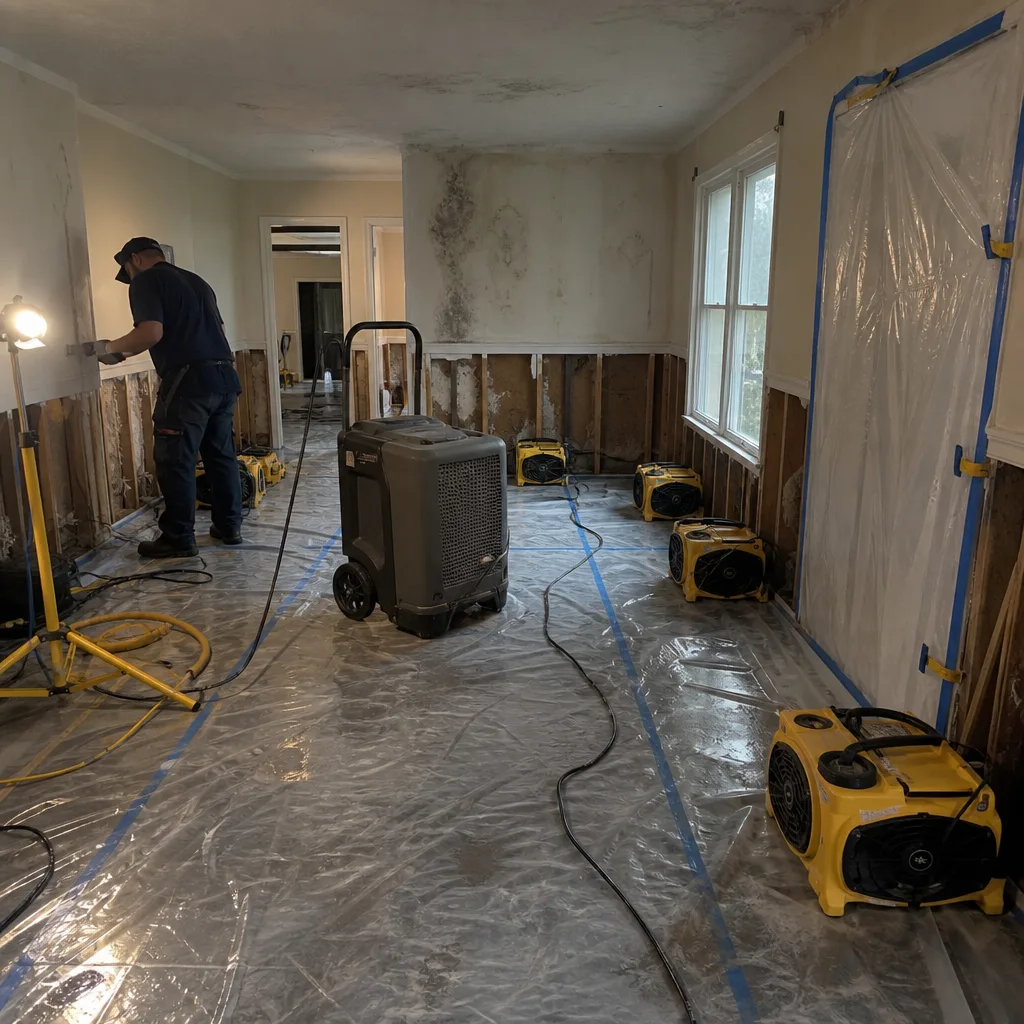
We set Phoenix and B-Air air movers with Injectidry systems for wall cavities and under-slab drying. In LIC’s older concrete slab buildings, drying takes longer than in wood-framed structures, and we plan for that from day one.
Cleaning & Sanitization
Our Sanitization Services in Long Island City include HEPA scrubbing and antimicrobial treatments on all affected surfaces. For Category 3 water, this includes full containment zones and negative air pressure, not just spraying bleach on the floor.
Environmental Containment & Contaminated Debris
Biohazard & Crime Scene Cleanup - Long Island City and storm disaster work often requires abatement coordination. We handle contaminated debris disposal with licensed hazardous-waste haulers when the Newtown Creek influence zone is in play. This is the step most restorers skip because it’s expensive and complicated. Skipping it fails clearance testing and can expose you to fines.
Repairs & Restoration
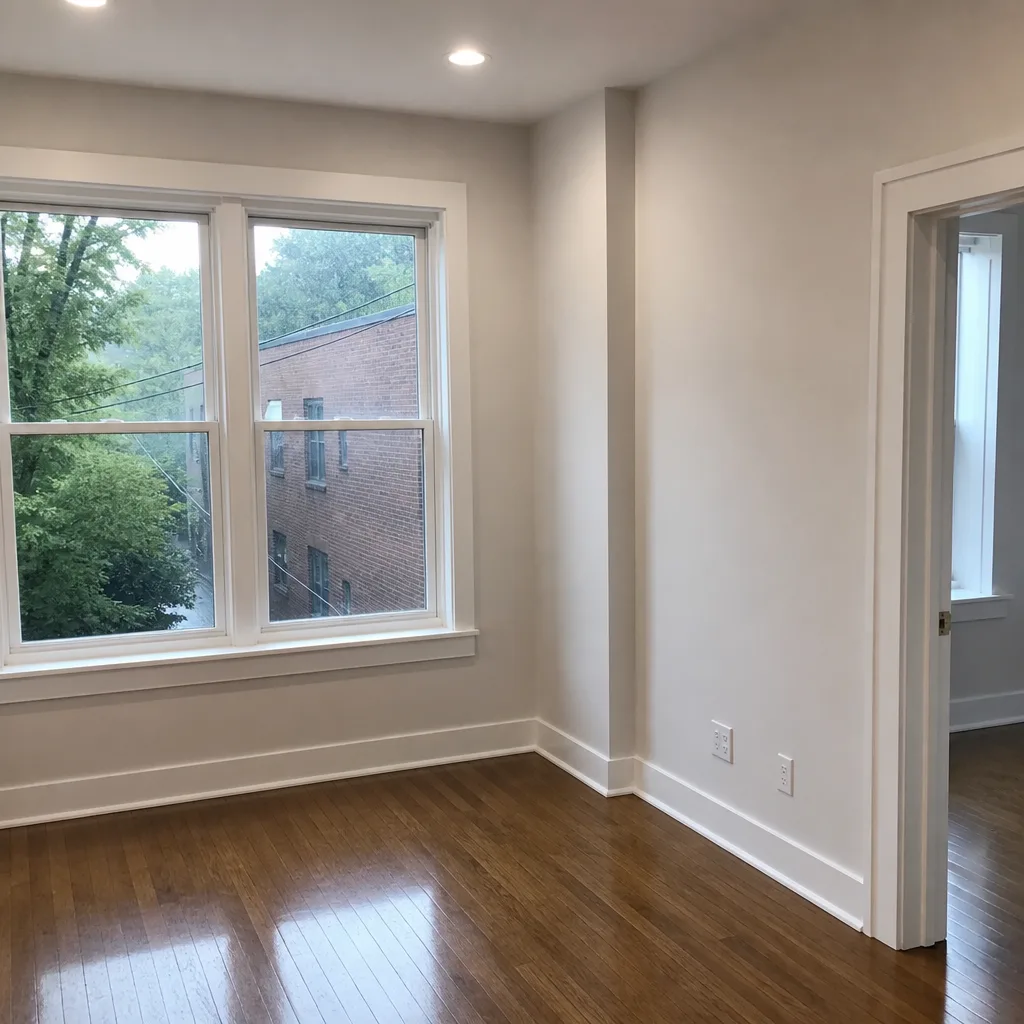
Reconstruction & Cleanup - Long Island City covers new drywall, flooring, paint, trim, and any structural wood replacement. We rebuild to pre-loss condition and stand behind it with the 90-Day Done Right Promise in writing.
Need Emergency Storm & Disaster Restoration in Long Island City Now?
Crews minutes away, answering live 24 hours a day. The sooner we start, the less it costs.
Working With Your Insurance Company
Insurance adjusters see a lot of claims, but they don’t see many LIC-specific claims documented the way we document them. That matters when a Newtown Creek-adjacent sewer backup gets classified as Category 3 and your carrier balks at the hazmat line items. We handle that conversation for you. From the first hour, we photograph every square foot of damage, log moisture readings daily, and build a line-item scope that matches the adjuster’s format. Wade talks to the adjuster directly, so you’re never the one stuck relaying information between two sides. On one Court Square loft restoration, the adjuster had never dealt with a Superfund sewer-influence classification before, and Wade walked him through the EPA designation and the testing protocol. The claim paid.
What We Provide Your Insurer
- Thorough documentation of the loss
- Photos of all damage, room by room
- Moisture readings and drying logs
- A detailed, line-item scope of work
- Direct coordination with your carrier
Built for Long Island City’s Loss Calendar
Long Island City doesn’t get a quiet season. January deep freezes split supply lines in pre-war walk-ups along Vernon Boulevard, and those pipes run through converted factory floors with no insulation to speak of. March and April thaw brings groundwater seepage into basements and cellars across Hunters Point, particularly in the older brick stock where foundations were never waterproofed. Summer thunderstorms hit fast and hard, overwhelming the combined sewer system and sending street-level water into ground-floor retail and residential spaces near Jackson Avenue. Then nor’easter season runs September through April, with surge events that ride up the East River and into low-lying blocks west of 21st Street. Flood Damage Restoration and Emergency Board-Up are our most-requested services after a big wind event. And Debris Removal from roof and facade damage is a constant on the high-rise corridor near Queens Plaza.
Storm & Disaster Restoration Across Long Island City’s Neighborhoods
Hunters Point, the southern and western tip, has the highest concentration of FEMA Flood Zone AE properties. We run more flood extraction calls there than anywhere else in LIC, and the water usually comes with a contamination profile that demands Category 3 handling because of the East River surge and the Newtown Creek sewer influence. Court Square mixes converted industrial buildings with newer towers; the old factory lofts are where we most often find asbestos fireproofing and lead paint on structural steel that forces abatement coordination before drying can even start. Up toward Queens Plaza and Dutch Kills, the pre-war walk-ups and small commercial buildings deal with wind-driven rain, roof penetration, and the occasional flying debris from construction scaffolding. The glass-and-steel waterfront towers along Center Boulevard look modern, but ground-floor and below-grade spaces there sit right in the flood zone surge path, and their building envelope failures are different, window seals, curtain wall leaks, underground parking that becomes a holding tank.
A substantial share of Long Island City’s restoration work carries regulatory and materials complexity that a comparable loss in nearby Astoria or Flushing simply would not. The reason is the water chemistry, and here is what that means on a jobsite: On a converted loft block near Court Square, our crew was called after a nor’easter surge pushed East River water into a ground-floor unit. The moisture readings on the 1930s concrete slab came back off the charts, and because the building sits in a documented Newtown Creek sewer-influence zone, we classified the water as Category 3 before extraction. Our technicians ran containment, pulled the saturated drywall, and had to coordinate with a licensed hazardous-waste hauler for the contaminated debris, a step most city restorers would never trigger. That’s the difference between getting clearance testing passed and getting a stop-work order.
Specialized Storm & Disaster Restoration Services We Offer in Long Island City
Flood Damage Restoration
We pull standing water, dry the structure, and rebuild. In LIC, that almost always includes baseline contamination testing because of the Newtown Creek sewer lateral infiltration during high-water events. What looks like a routine pump-out in a Hunters Point brownstone basement is actually a documentation and disposal job that requires licensed hazardous-waste hauling. We handle all of it.
Emergency Board-Up
Broken windows, blown-out doors, a tree through a facade. We board up and secure the property so it isn’t open to weather, animals, or people who shouldn’t be in there. On LIC’s older brick and steel buildings, proper board-up also means protecting the interior from further water intrusion while you wait on full repair. We get there fast, often within the hour.
Debris Removal
After a storm, you’re dealing with roof material, broken glass, maybe a neighbor’s construction scaffold that came loose. We remove it, document it for your insurer, and haul it off. For properties near Newtown Creek, debris that has been in contact with street-level water gets handled as potentially contaminated, not just tossed in a dumpster.
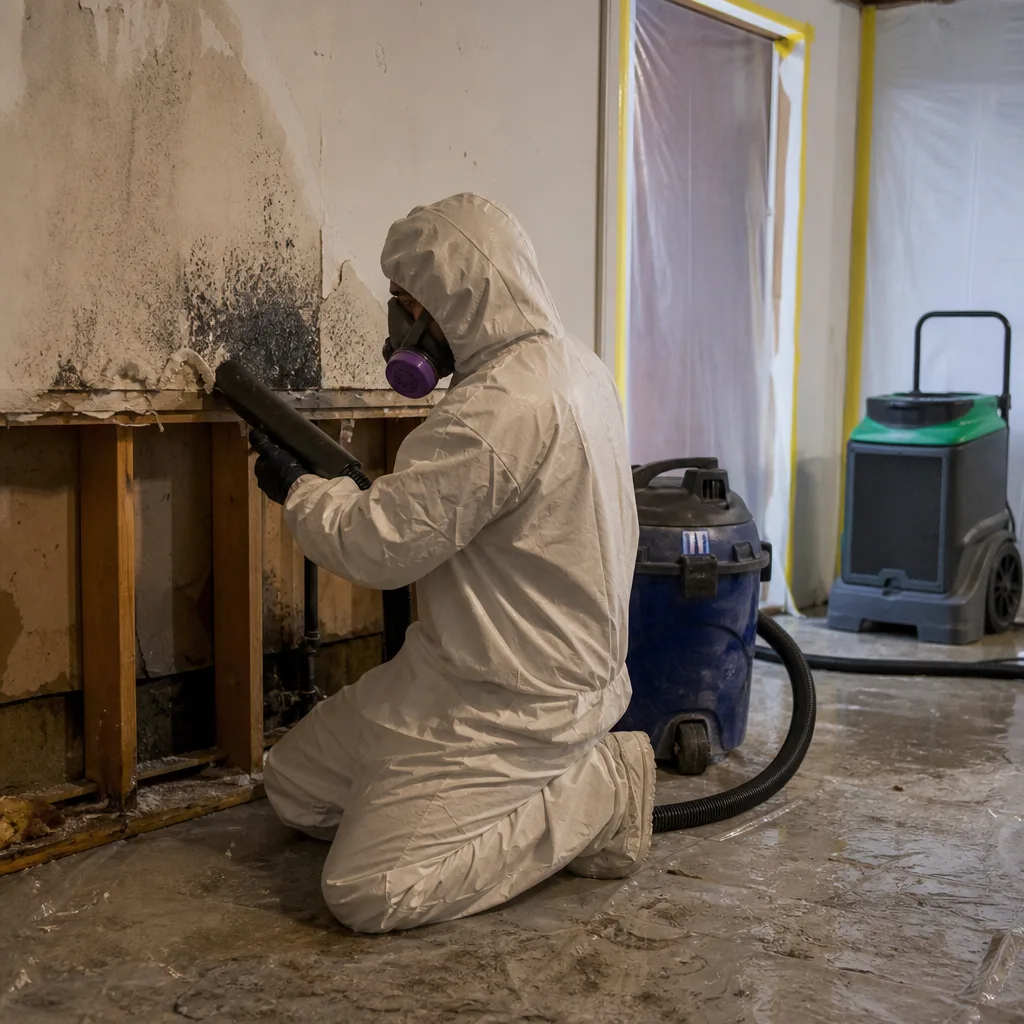
Storm Damage Cleanup
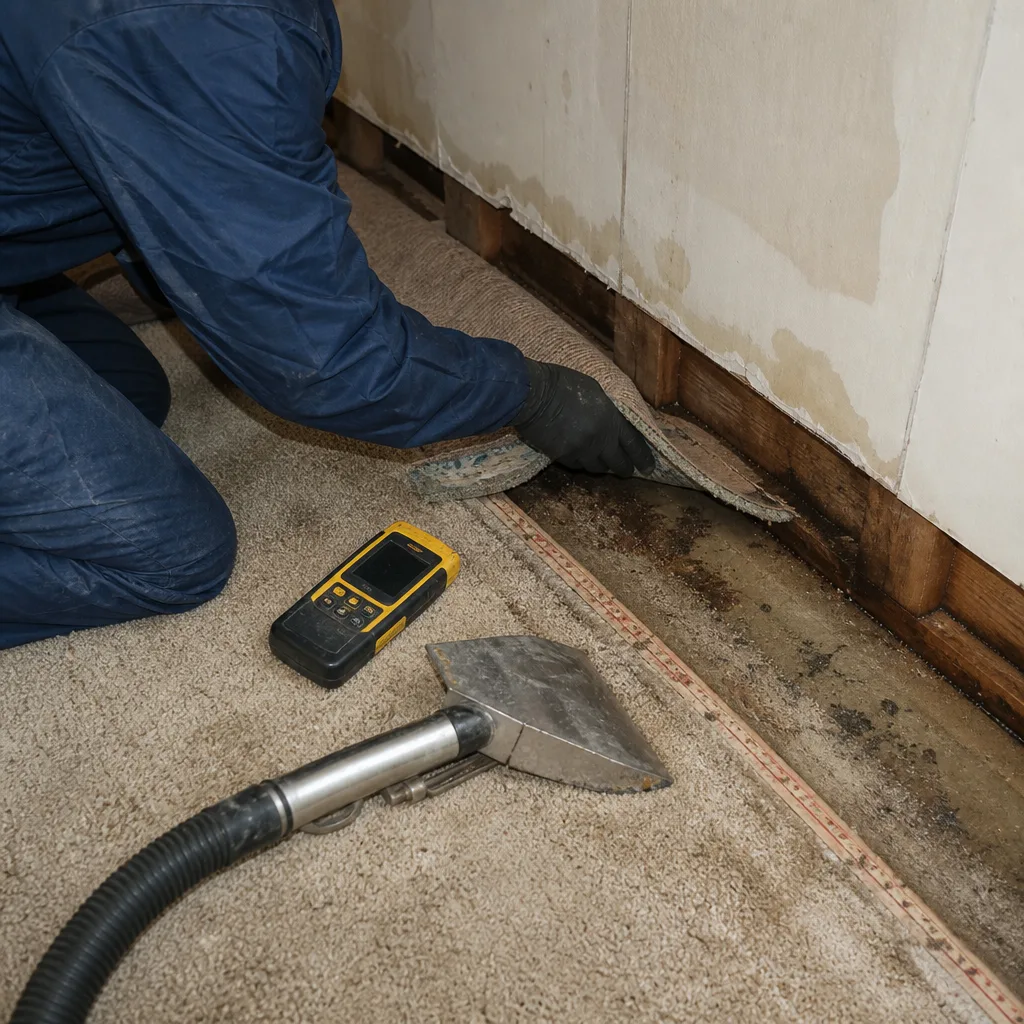
Wind-driven water, broken glass, wet insulation, saturated carpet. We clean it out, dry it, and treat it. In Long Island City’s converted industrial lofts, this often means pulling down wet ceiling tiles and checking the concrete above for water retention that most restorers never look for.
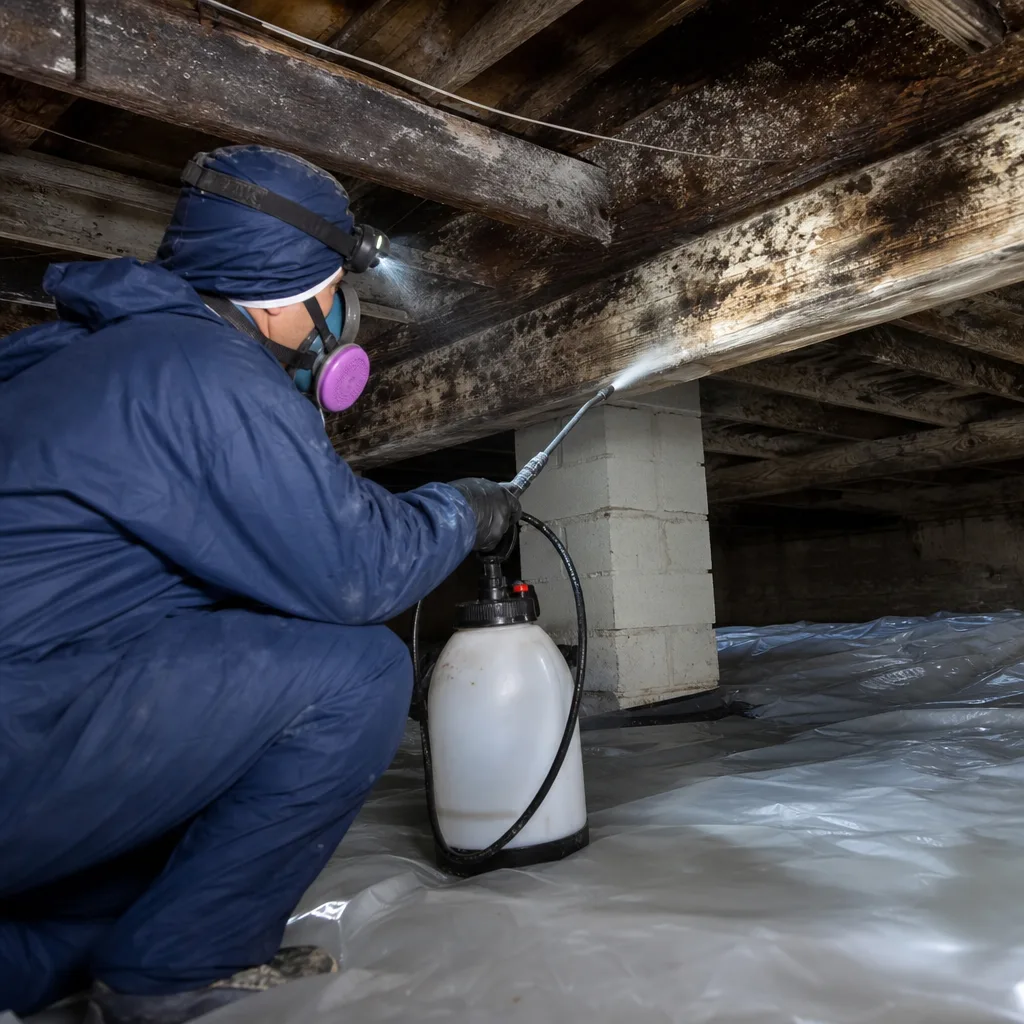
Roof Tarping
If a nor’easter takes a section of roof off, we tarp it. Not just a blue tarp thrown over the hole; we actually tie it down and seal the edges so the next rain doesn’t undo everything. On the pre-war buildings along Vernon Boulevard, proper tarping is what keeps a roof loss from becoming a full interior gut.
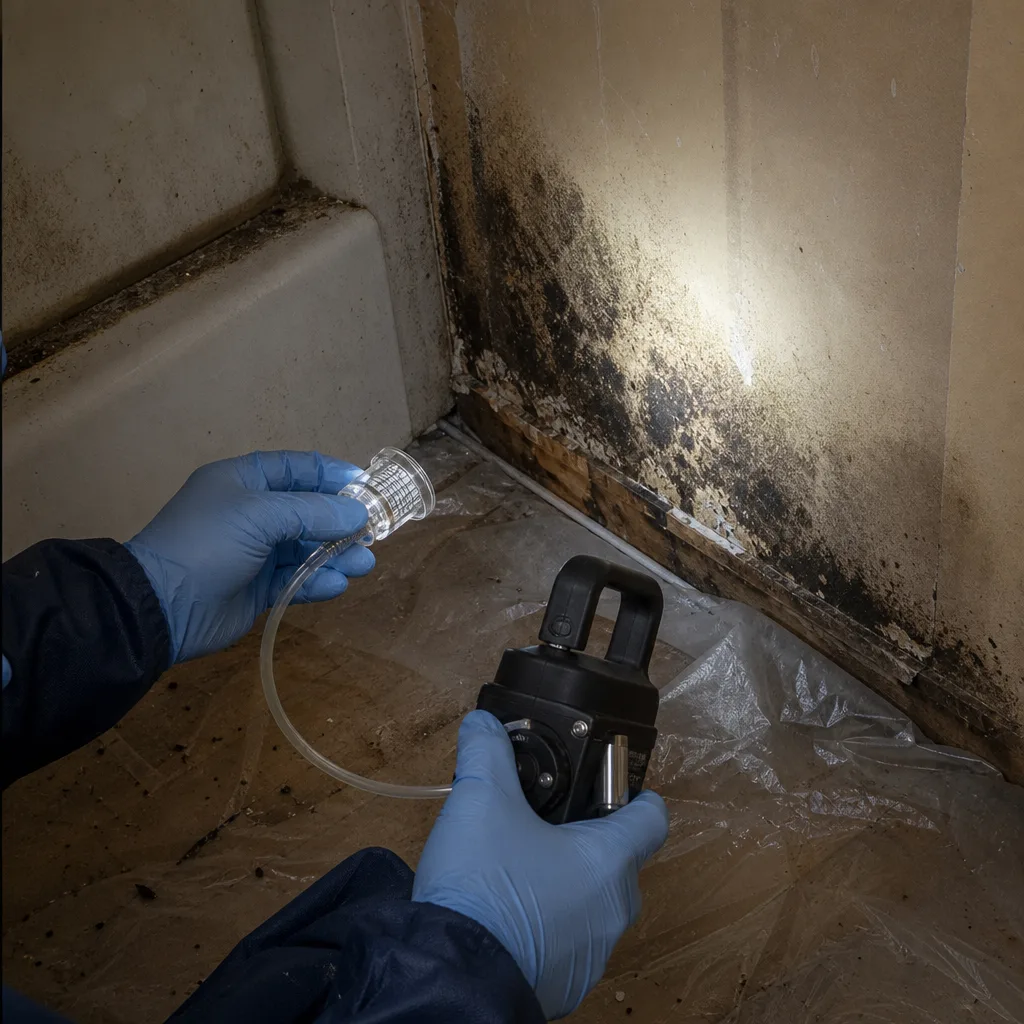
Wind Damage Repair
High wind tears off flashing, pushes water through brick pointing, and knocks down parapets on older buildings. We assess the structural damage, stabilize it, and rebuild. On the glass-and-steel towers near the waterfront, wind damage often shows up as curtain wall leaks and window seal failures that let water into interior wall cavities, a slow damage pattern that needs moisture mapping, not just patching.
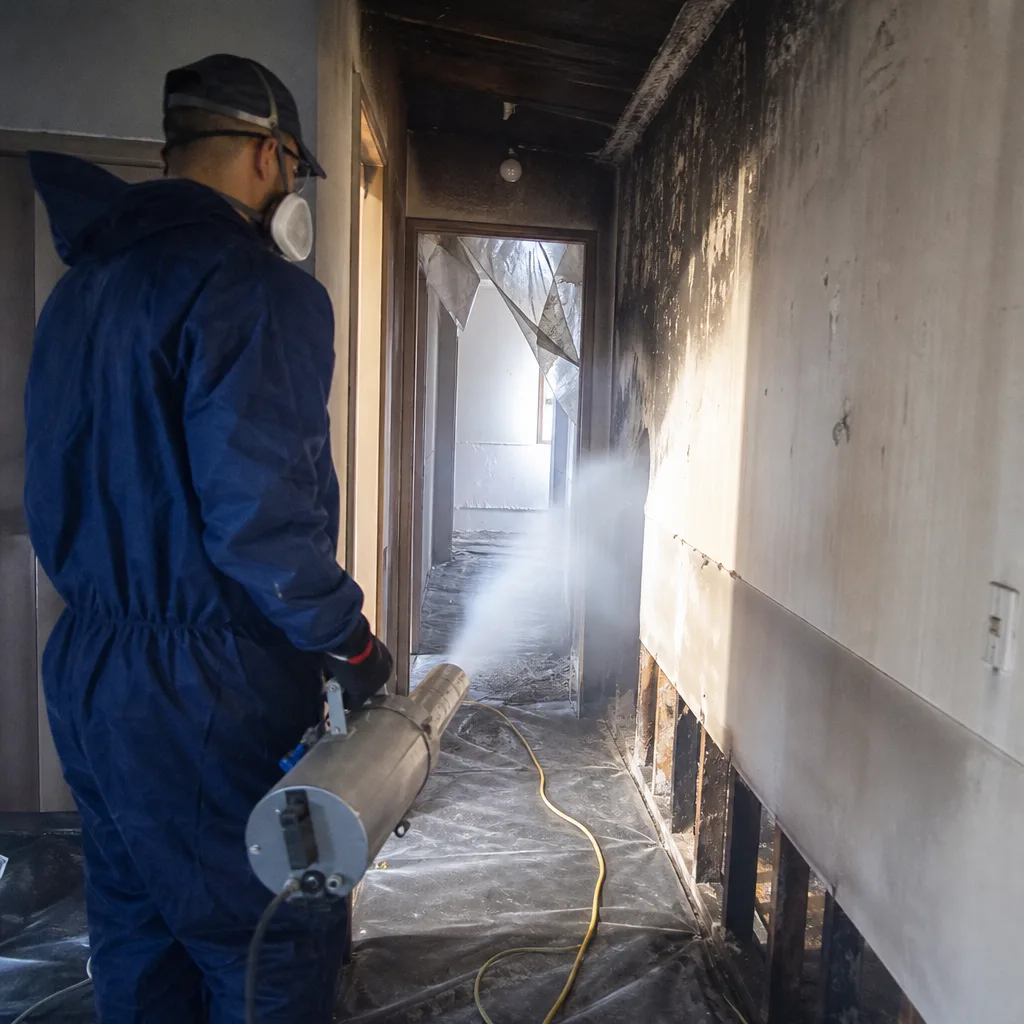
What happens when you call
- 1
A real person answersNo phone trees - you reach a local pro.
- 2
You get an upfront price rangeHonest numbers before anyone is dispatched.
- 3
A background-checked tech heads outLicensed & insured, dispatched right away.
- 4
You approve before work beginsNothing starts until you say go.
Storm & Disaster Restoration Costs in Long Island City, NY
Flood damage restoration in Long Island City typically runs $2,800 to $8,500 for a standard ground-floor or basement loss in a pre-war walk-up or converted loft, depending on square footage and water category. Category 3 jobs with full containment and hazmat debris hauling run higher, often $6,000 to $15,000 or more, because of the testing, the negative-air setup, and the licensed disposal. Emergency board-up around LIC runs $450 to $1,200. Roof tarping is $550 to $1,500 depending on roof size and access. Debris removal, $400 to $2,000, with a jump when the debris has been in contaminated water. Insurance covers most storm losses, minus your deductible. If the cause is sewer backup without a rider, your policy might not cover it unless you have that endorsement, which is a conversation worth having with your agent before the next storm. Call (201) 740-2235 and we’ll talk through your situation, or book our free visual inspection for a firm, written scope.
We Also Serve Cities Near Long Island City
We work throughout the immediate area, including Storm & Disaster Restoration in Astoria, where the sewer influence zone is different and the protocols shift accordingly. If you’re in Long Island City or any surrounding neighborhood, call us. Same crew, same standards, same live answer at 2 a.m.
Serving Long Island City, NY - Our Local Coverage Area
We’re based in the Long Island City area and know this community well. Use the map below to see our service coverage - if you’re nearby, we can almost certainly help.
Long Island City Storm & Disaster Restoration Questions, Answered
Does every basement flood in Long Island City trigger black water protocols?
No, but the ones tied to sewer backup or street-level surge do, and in LIC that is most of them. We test and document rather than assume. In the Newtown Creek influence zone, we treat water as presumptively Category 3 until the samples come back clean. That’s the safe protocol, and it is what gets insurance claims paid instead of denied.
What extra steps are required for storm damage in a converted LIC factory loft?
You’re usually looking at asbestos and lead paint abatement before any drying or rebuild can legally proceed. The spray-applied fireproofing on structural steel and lead-based paint on original millwork are common in these buildings. We check for both before cutting into walls or running air movers, which is the step that protects anyone living in the building from airborne contamination. Call (201) 740-2235 and ask for a free visual inspection.
Can you start drying a flooded Hunters Point luxury high-rise unit the same day?
Yes. We can have extractors running inside the hour. Drying a high-rise unit in Hunters Point has its own challenges, building access, freight elevator scheduling, and FEMA Flood Zone AE requirements for baseline contamination testing, but none of that slows down the initial extraction. We start immediately and coordinate the building logistics as we go.
How do you handle storm debris from a building near Newtown Creek?
We treat any debris that has been in contact with street-level water as potentially contaminated. That means documentation, proper containment during removal, and hauling by a licensed hazardous-waste hauler. You cannot legally put Category 3 contaminated debris in a standard dumpster, and we handle all of that so you’re never exposed to liability.
What does ‘pre-loss condition’ mean for a Long Island City loft restoration?
It means rebuilding to the condition the space was in before the storm, not better, not worse. In an LIC converted loft, that often means matching original brick, restoring steel window frames rather than replacing them with vinyl, and matching custom finishes. We document everything pre-demolition so the rebuild is defensible to your insurer and true to the building’s character. Call (201) 740-2235 for a walkthrough.
How fast can someone actually get to my Long Island City address?
Within 45 minutes, usually faster. We’re staged here, so calls from Hunters Point, Court Square, and Queens Plaza get a quick response, not a crew driving in from an hour away. Wade answers his own phone. That means you’re talking to the person who is coming, not a call-center rep.
Will insurance cover storm and flood damage in Long Island City?
Most storm damage from wind, rain, and falling debris is covered under standard homeowner’s or building policies, minus your deductible. Flood damage from East River surge is a separate issue; you need a flood policy for that. Sewer backup is also separate, and many LIC policies require a specific endorsement. We document to the adjuster’s format and deal with them directly, so you’re not stuck as the middleman.
What should I do in the first 30 minutes after storm damage?
Shut off power at the breaker if water is near outlets. Move valuables to dry ground. Take photos with your phone of everything, exteriors, interiors, the water line, any debris. Then call (201) 740-2235. Don’t try to pump Category 3 water yourself; the contamination risk is not worth it. We’ll be there within 45 minutes and take it from there.
If you’ve got storm damage in Long Island City right now, don’t wait. Every hour the water sits, the damage compounds and the repair bill climbs. Call (201) 740-2235 and talk to Wade directly. We’ll walk the property, give you an honest assessment, and start the work that stops the loss in its tracks. Free visual inspection, no charge for the first conversation, and a written scope before anything starts. That’s how we’ve done it since 2007, and it’s the only way we know to do it right.
Written by Wade Ferris, Owner at Wade’s Restoration, serving Long Island City and the surrounding area since 2007.