
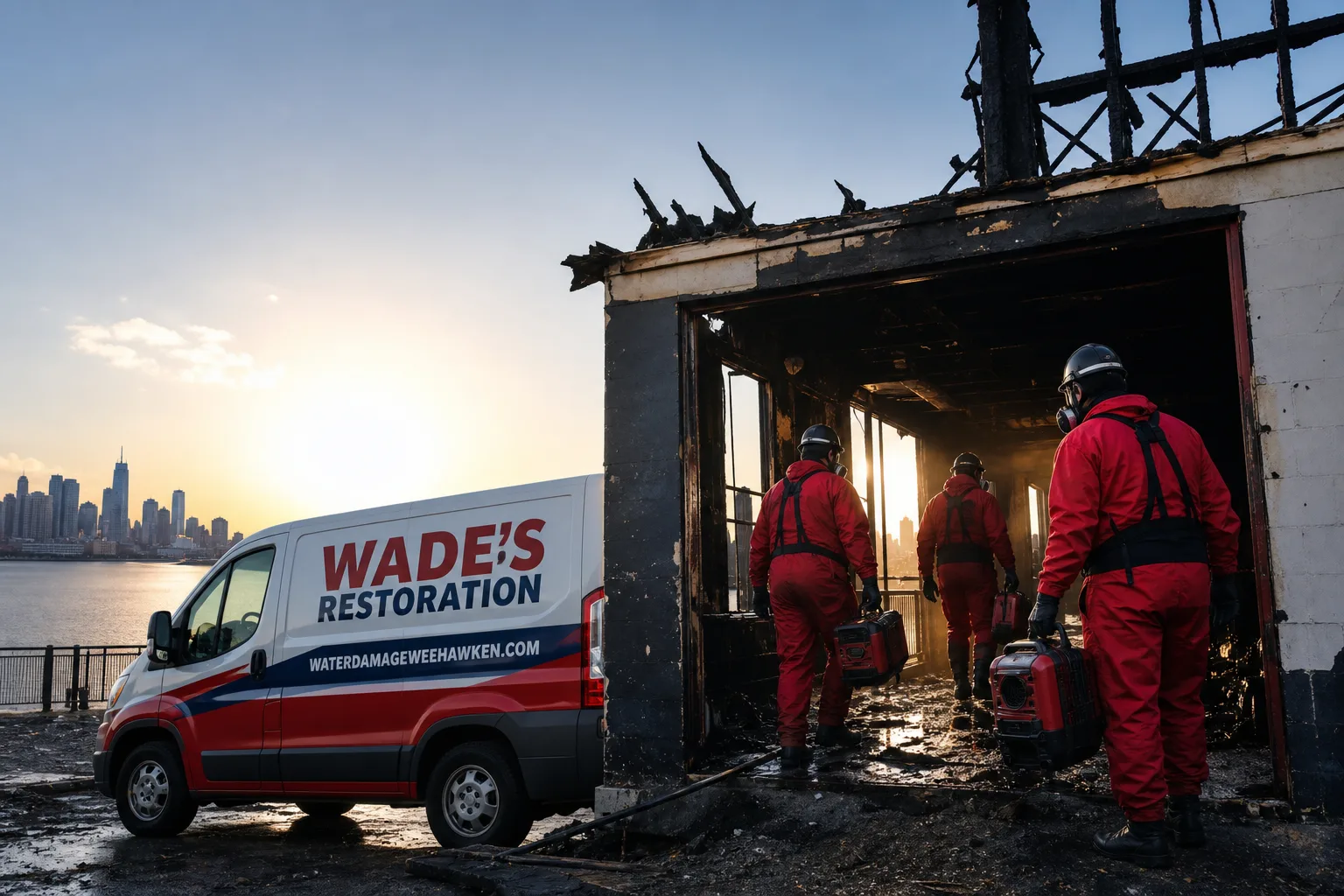
Free visual inspection and a written scope of work before any mitigation begins - photos, moisture readings, and drying logs go in your claim file
The scope we write is the scope we bill. Anything new gets shown to you, in writing, before we touch it.
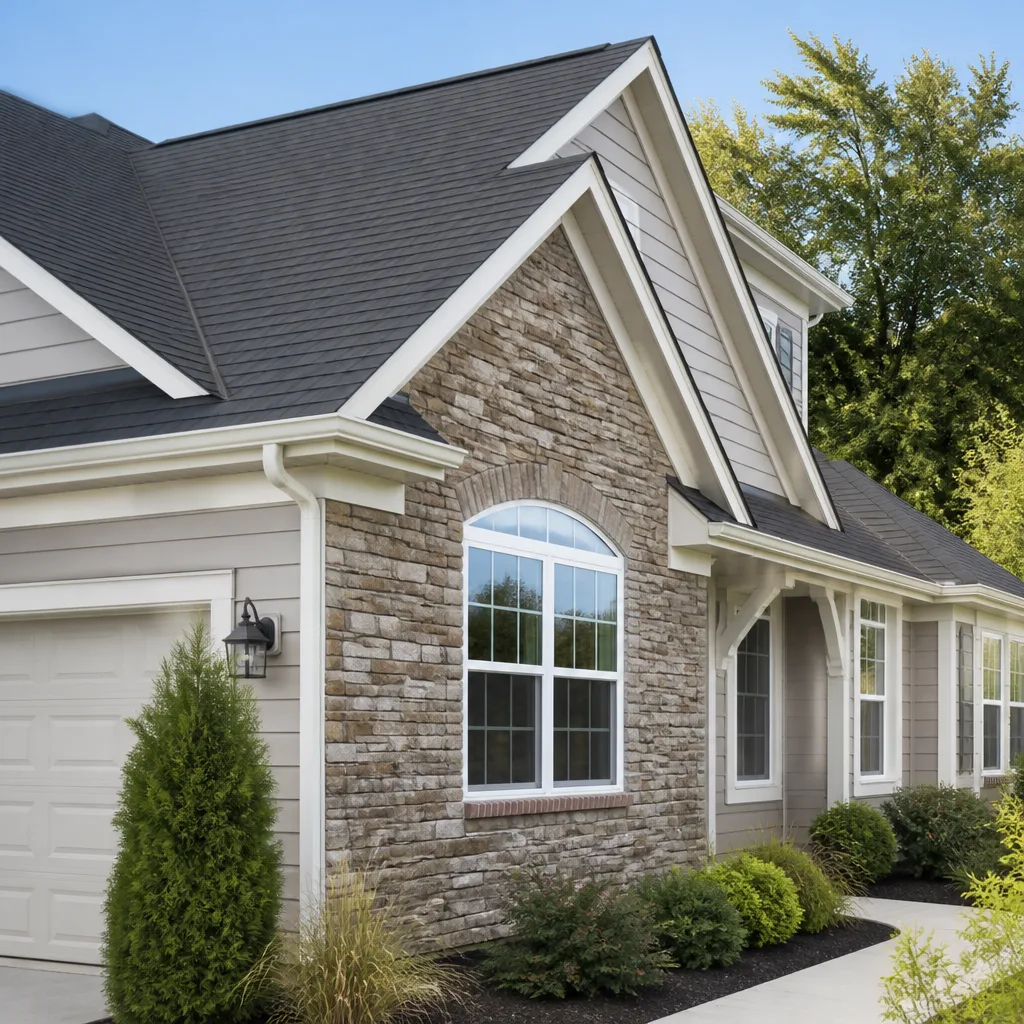
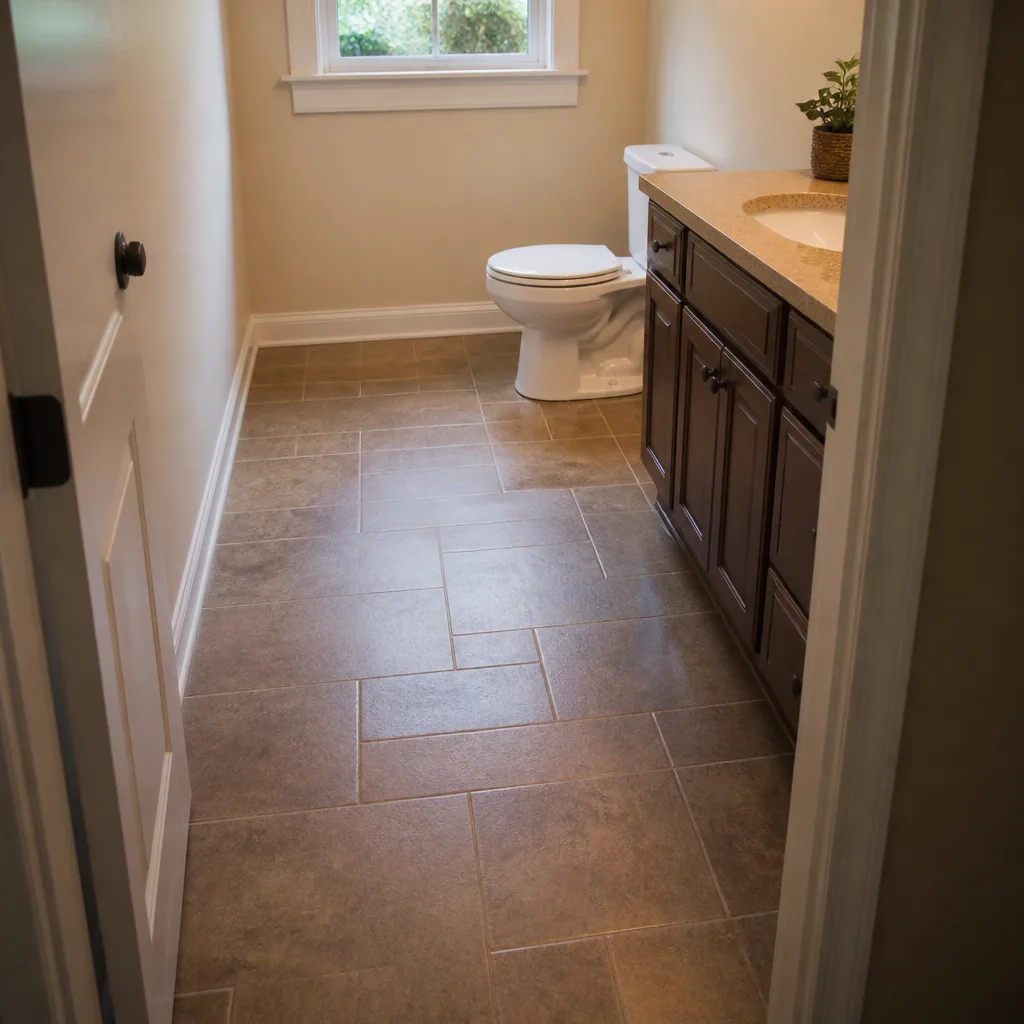
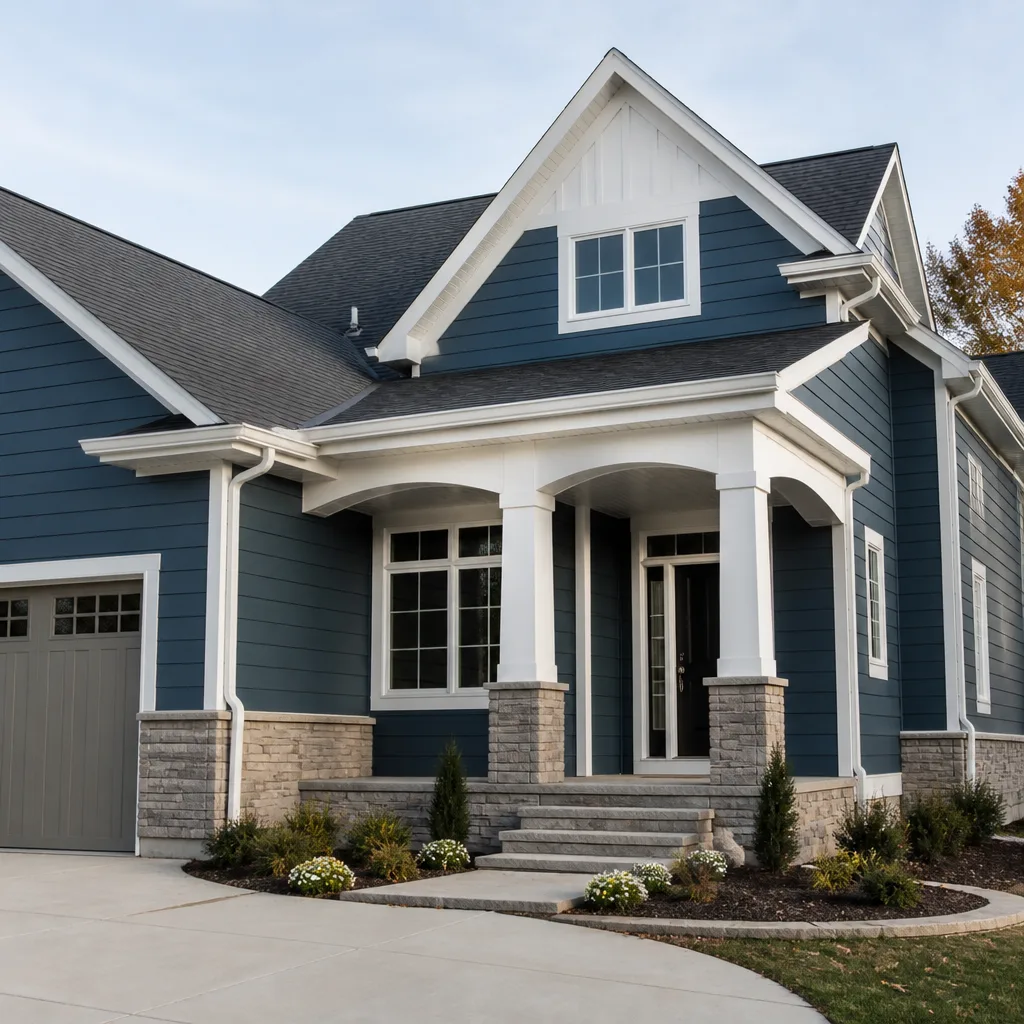
 Before
 After
After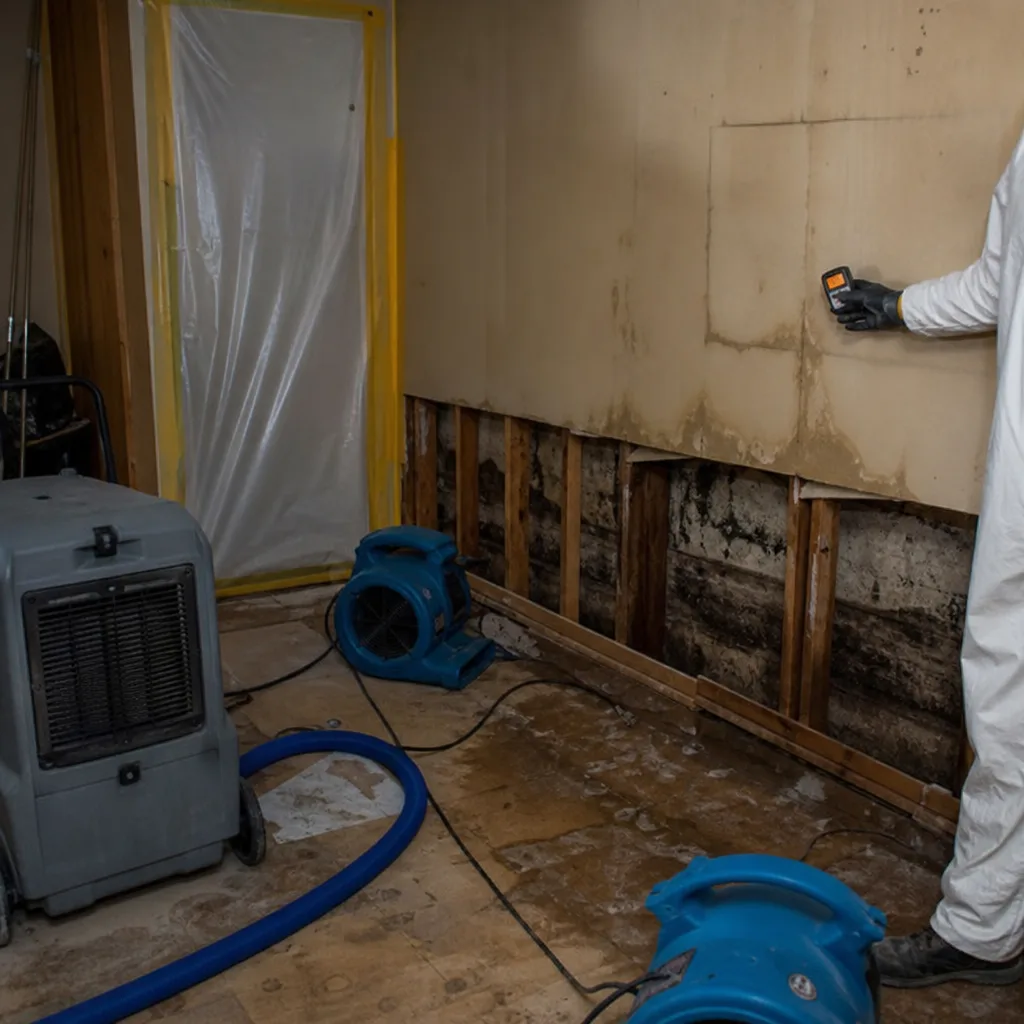 Before
 After
After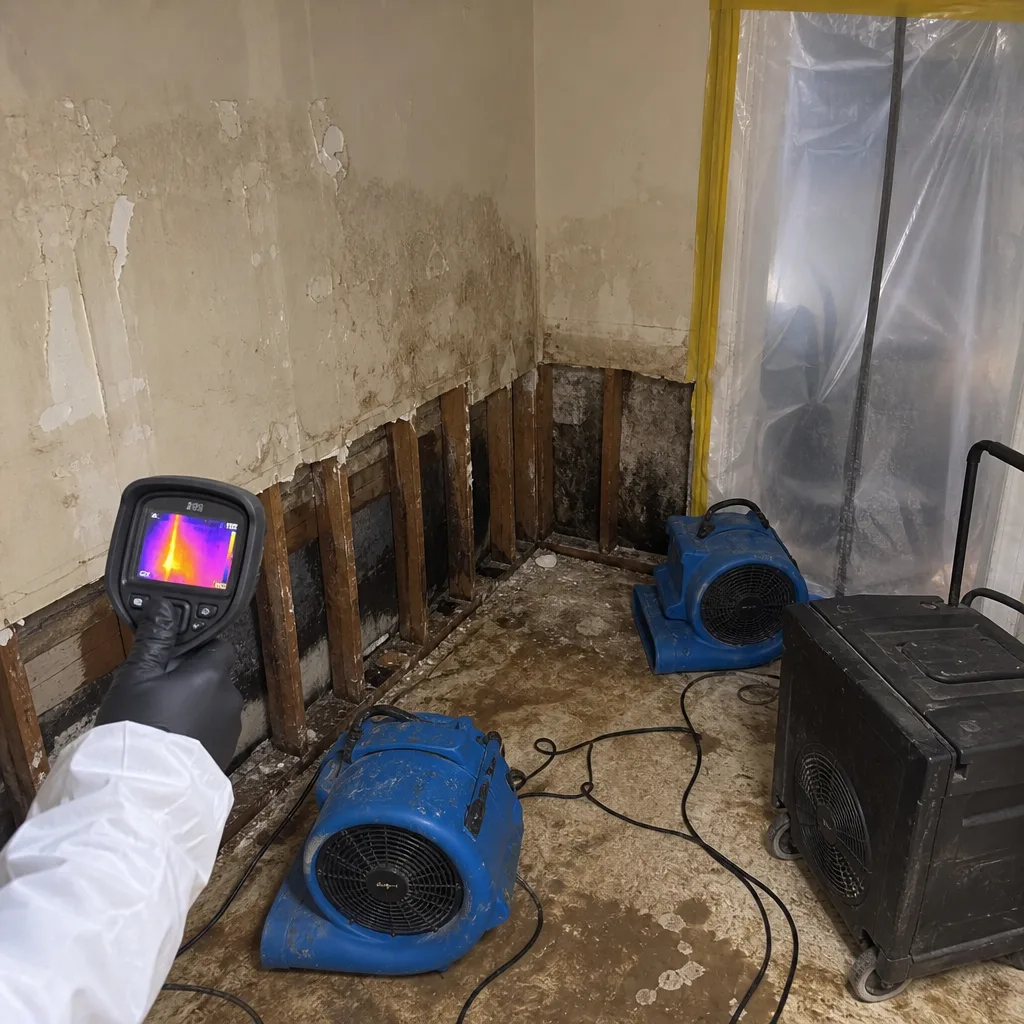 Before
 After
After24/7 Emergency Reconstruction & Cleanup in Union City
When a fourth-floor supply line lets go in a Union City tenement, you don’t have hours to wait for a callback. You need someone who knows these buildings, knows where the shutoffs live, and answers the phone at 2 a.m. That’s how Wade’s Restoration runs. Crews stationed to reach Union City fast, a live voice on the line around the clock, and a free visual inspection before anything gets torn apart. Call (201) 740-2235 the minute water starts moving through walls or smoke starts pushing into hallways. The first hour determines whether you’re drying plaster or ripping it to the studs, and whether that hardwood floor in the parlor survives.
In a city this dense, a fire or flood in one unit rarely stays in one unit. It migrates. Through party walls, down riser chases, across ceiling joists. Wade Ferris knows that about Union City, because he’s spent nearly two decades answering calls from landlords, tenants, and homeowners in these exact buildings. We don’t send a national franchise crew that’s never seen a pre-war brick walk-up. We send people who work here, with equipment sized for tight stairwells and basements full of old iron pipe.
Understanding Reconstruction & Cleanup Severity in Union City Properties
Severity in Union City isn’t just about how much water came out. It’s about how far it traveled before anyone noticed. Category 1 water from a burst supply line is clean at the source, but by the time it passes through a 1920s lath-and-plaster ceiling, picks up decades of dust and old paint, and pools on a kitchen floor, it degrades fast. Give it 48 hours and you’re dealing with Category 2 or 3 conditions: bacteria, mold spores, and building materials that can’t be saved. Moisture mapping with thermal imaging and hygrometers tells us where the water actually went, not just where it’s visible. In stacked units, that usually means treating spaces that look completely dry from the outside.
Pre-war construction changes the math. Plaster walls hide moisture longer than drywall does. Original hardwood over plank subfloor can be dried in place if we get there fast, but only with the right drying chamber and daily moisture readings. Cast-iron drain stacks rust from the inside and fail without warning. Old galvanized supply lines scale shut and then burst at the fittings. When a page or site tells you cleanup is “simple,” they haven’t seen the inside of these walls. We have. And we bring the moisture logs to prove what was wet, what got dry, and what had to come out.
Why Union City Property Owners Choose Wade’s Restoration
- 45-minute response commitment. When you call about water moving through a Union City building, we’re on the road immediately. Not “sometime today.” Within the hour.
- 24/7 live answer, every single time. No voicemail, no answering service, no call center in another state. You get a person, often Wade himself.
- IICRC-certified crews. Our techs carry WRT (Water Restoration Technician), FSRT (Fire & Smoke), and AMRT (Applied Microbial Remediation) certifications. Not a weekend handyman with a rented fan.
- Free visual inspection. Before we write a scope, we walk the building with you and show you exactly what we see. If there’s nothing to fix, we tell you that too. No charge for that.
- Direct insurance billing. We document from the first hour so your carrier gets what it needs the first time, not after three rounds of requests.
- One team, start to finish. The same crew that extracts the water is the crew that hangs the drywall. No handoff, no confusion, no finger-pointing.
Our Reconstruction & Cleanup Process
Inspection & Assessment
We walk the property top to bottom, thermal imaging in hand, and map the actual extent of the damage. In a Union City multi-family, that means checking every unit in the water’s path, not just the one where it started. You get a written scope before any demolition starts.
Extraction & Stabilization
Water comes out first. Truck-mounted and portable extraction units pull standing water from floors, carpet, and wall cavities. We stabilize ceilings and shore up anything that’s structurally compromised before we move to drying.
Drying & Dehumidification
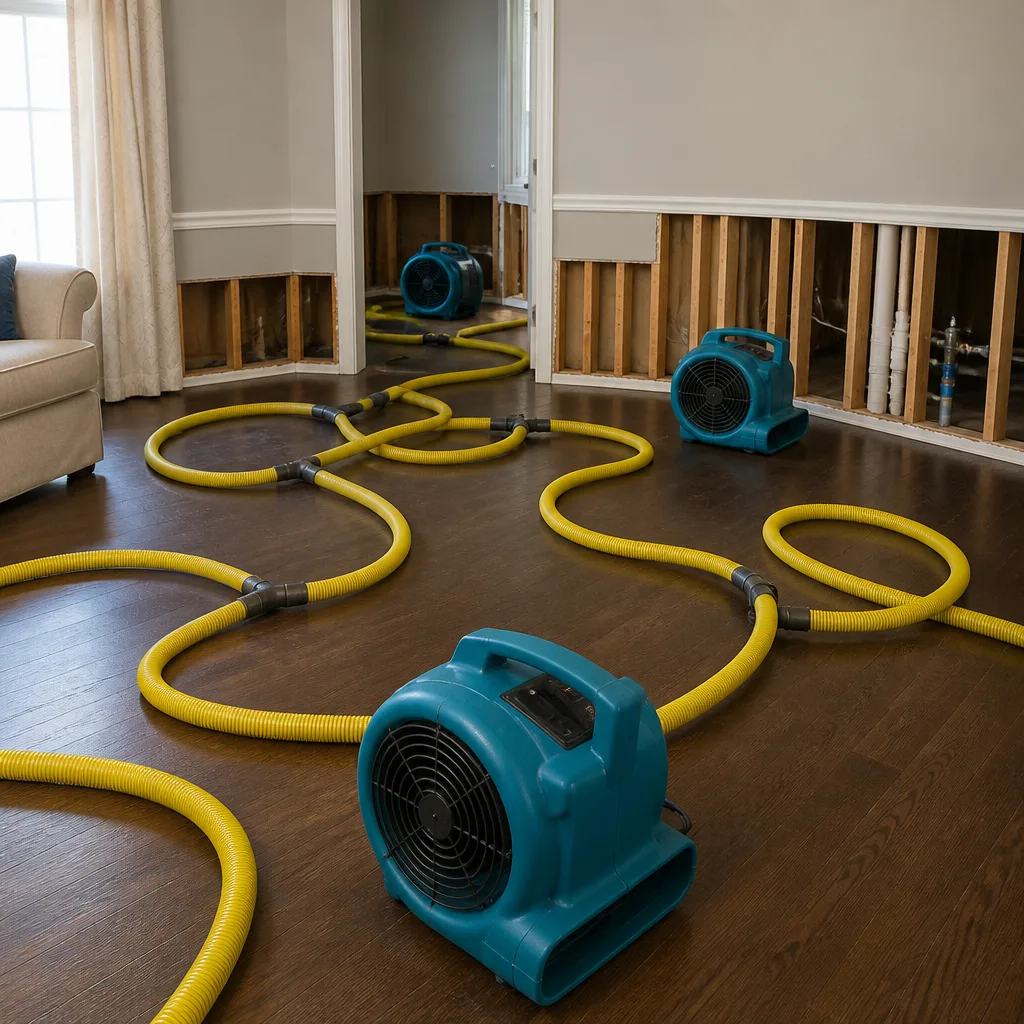
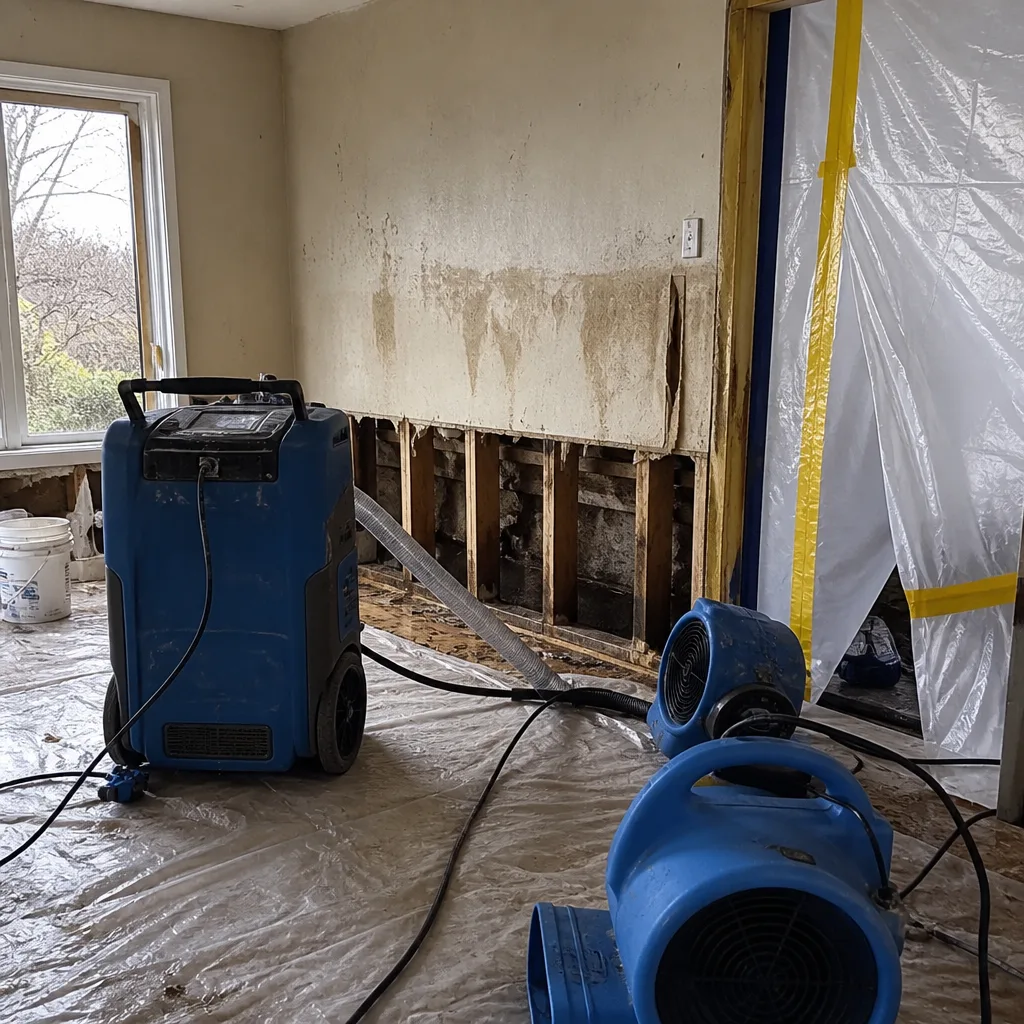
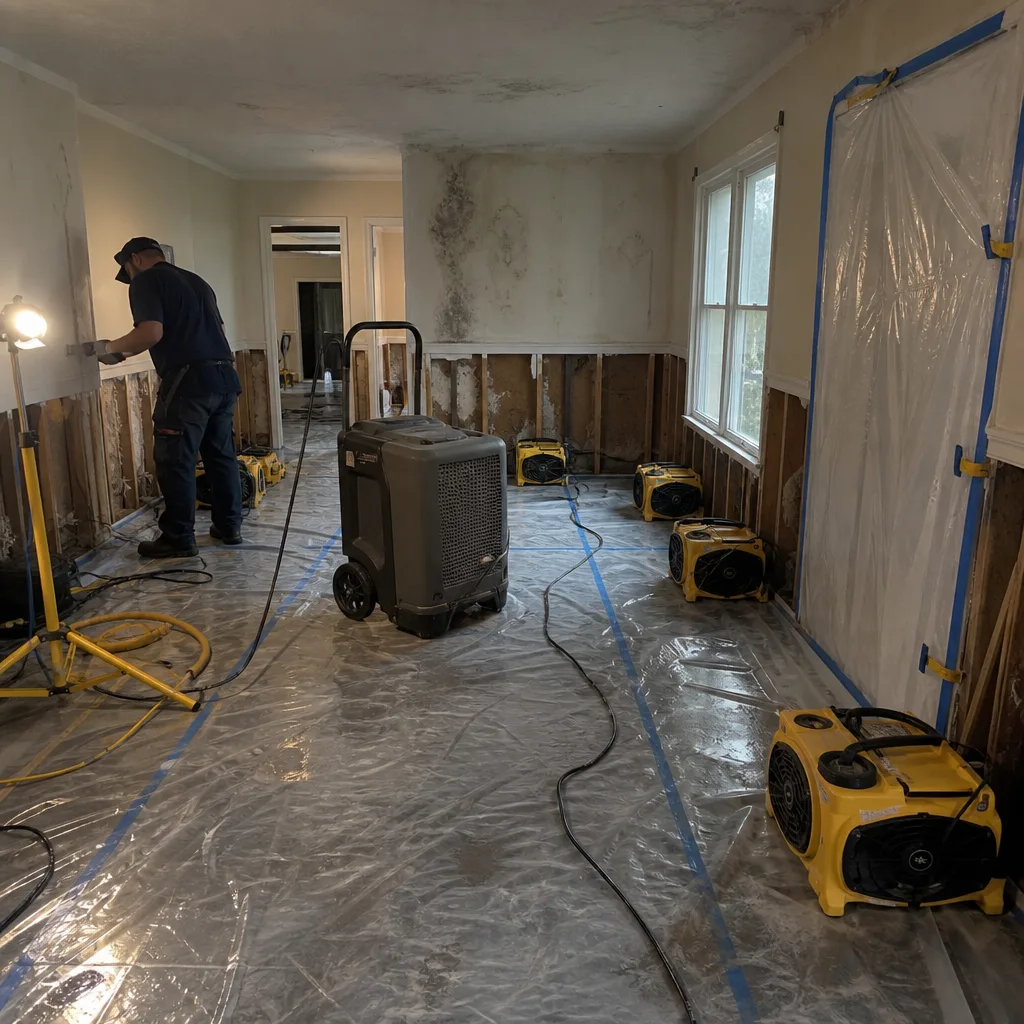
Dri-Eaz dehumidifiers and XPOWER air movers go in, arranged to create airflow through cavities, not just over surfaces. Daily moisture readings track progress. You get the full log at the end of the job. Almost nobody does that. We do.
Cleaning & Sanitization
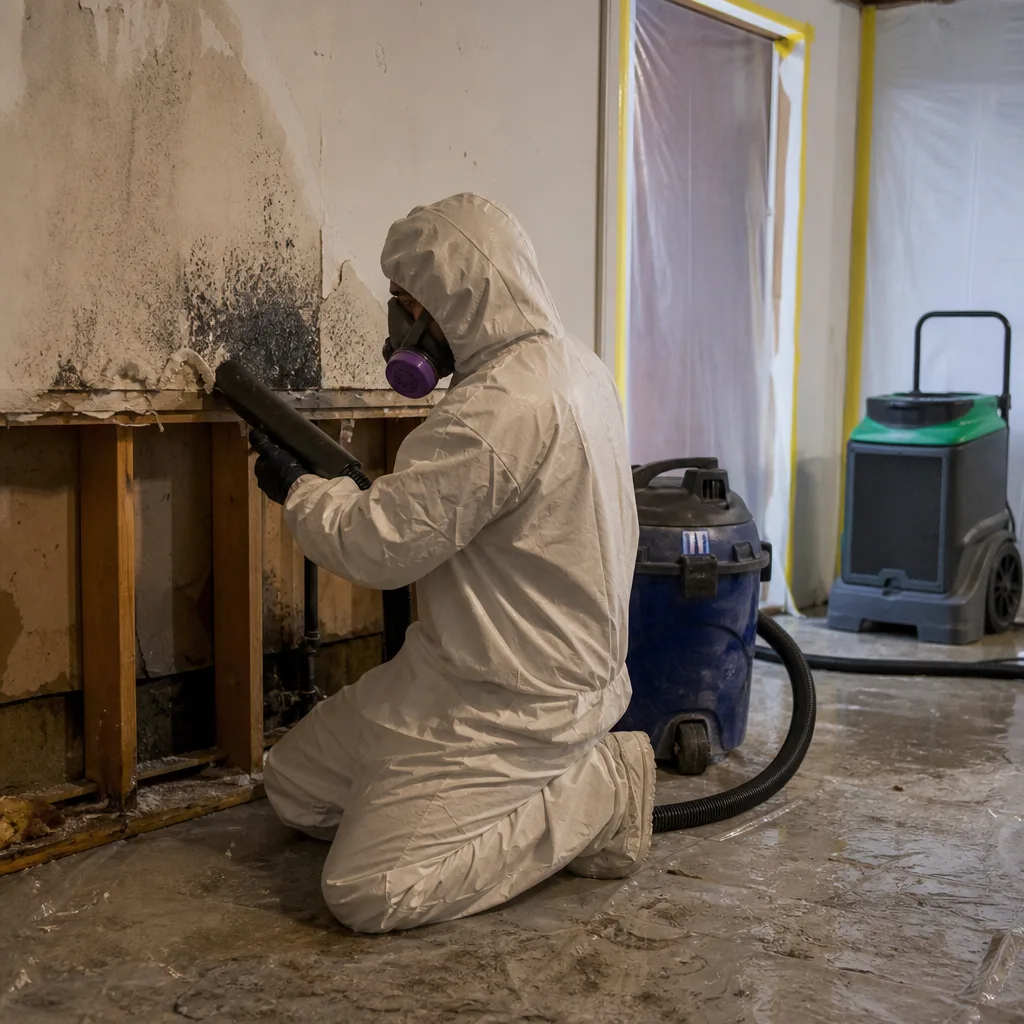
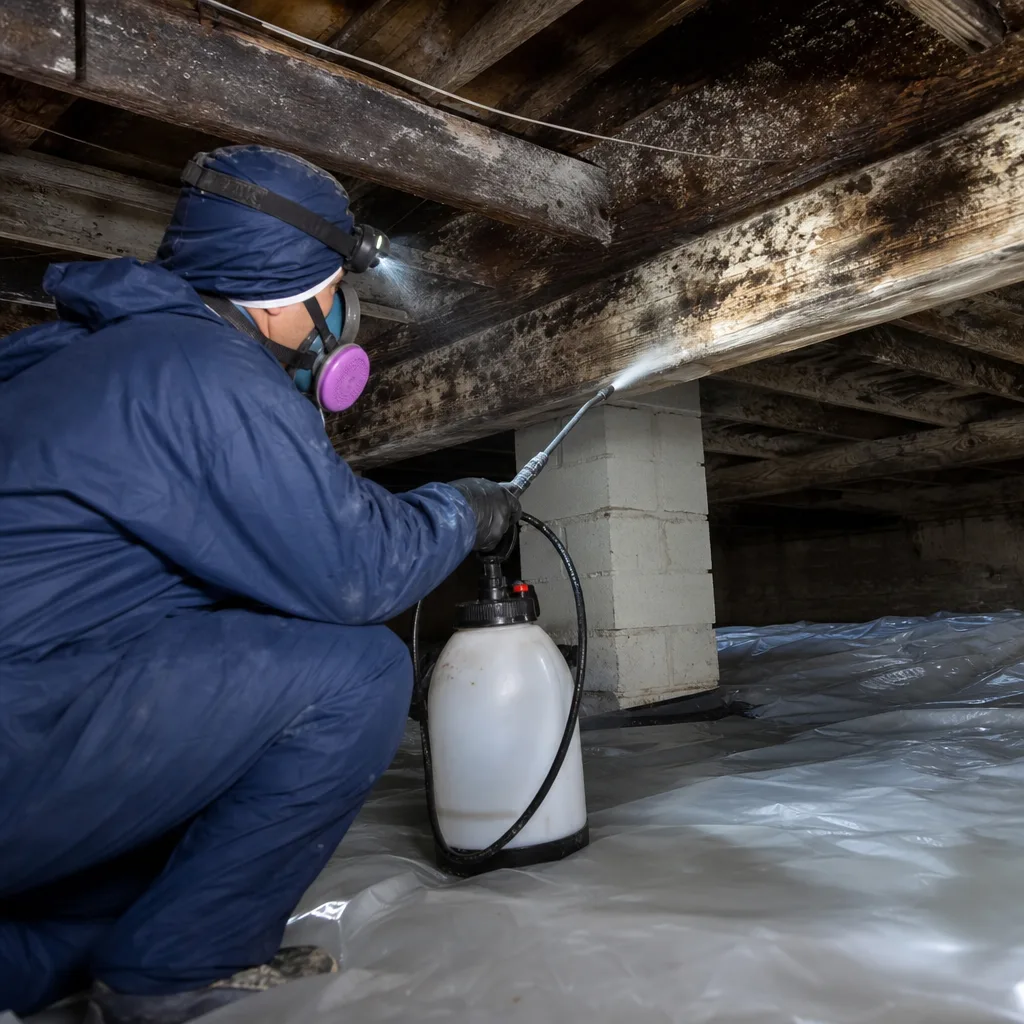
HEPA air scrubbers run to capture airborne particulates. All affected surfaces get antimicrobial treatment appropriate to the water category. Contents that can be cleaned are cleaned; contents that can’t are documented for your insurer.
Asbestos & Lead Testing
Union City’s pre-war buildings almost always trigger mandatory testing before demolition. We coordinate the sampling, get the results, and adjust the scope accordingly. Skipping this step is how contractors get stop-work orders and you get fined.
Repairs & Restoration
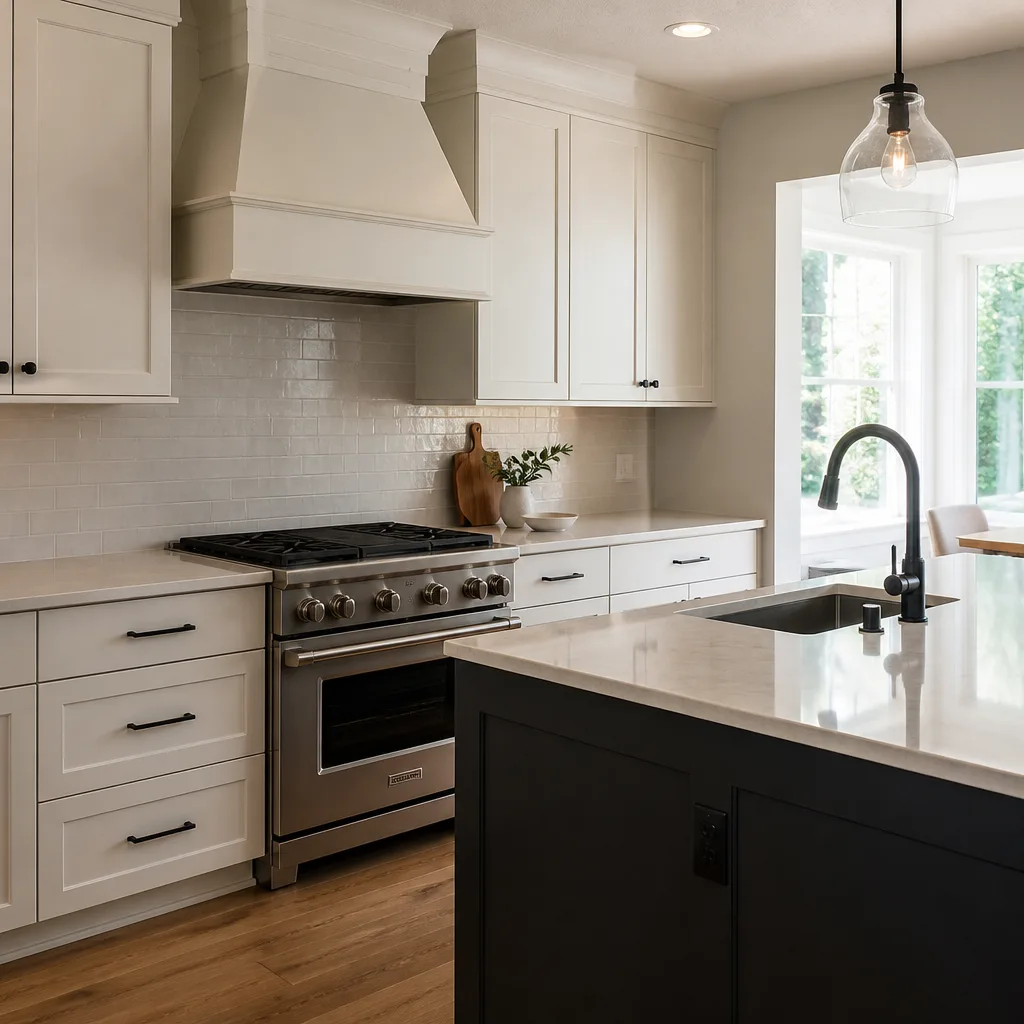
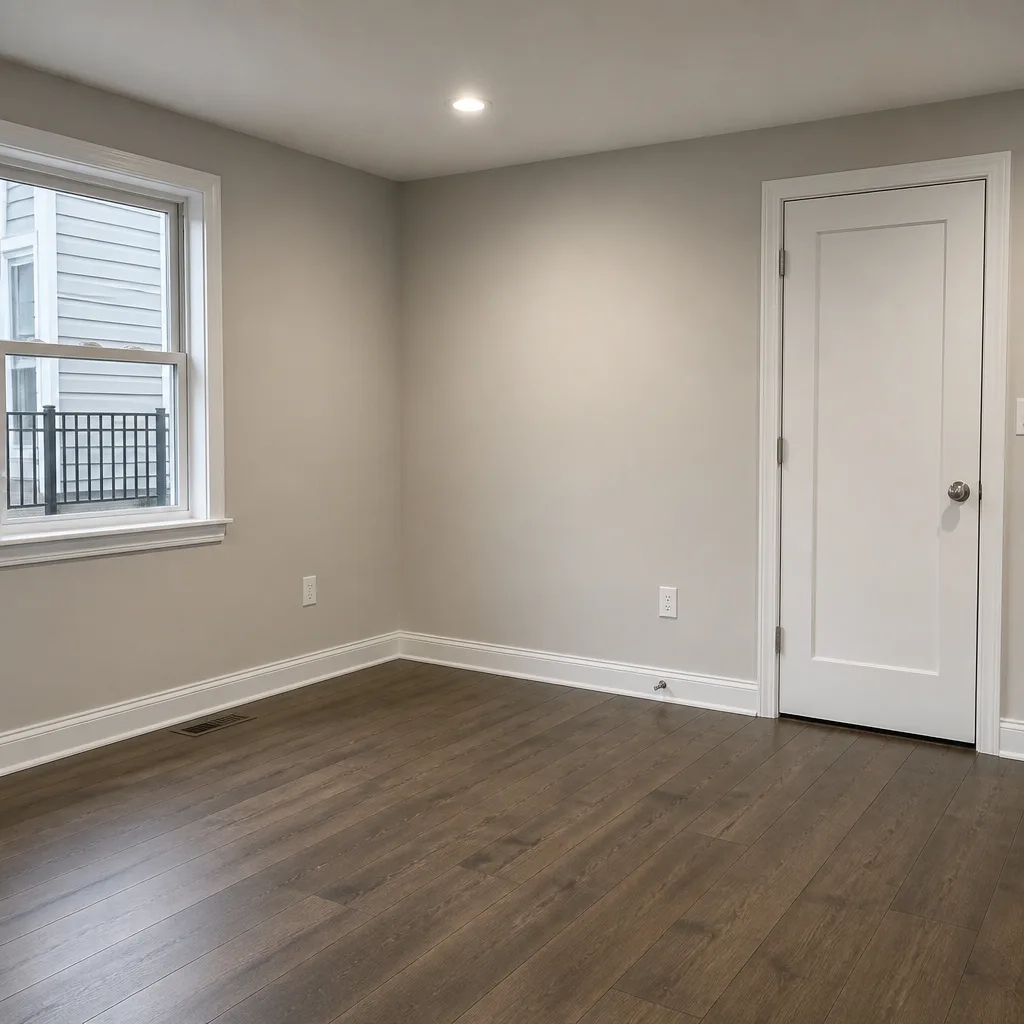
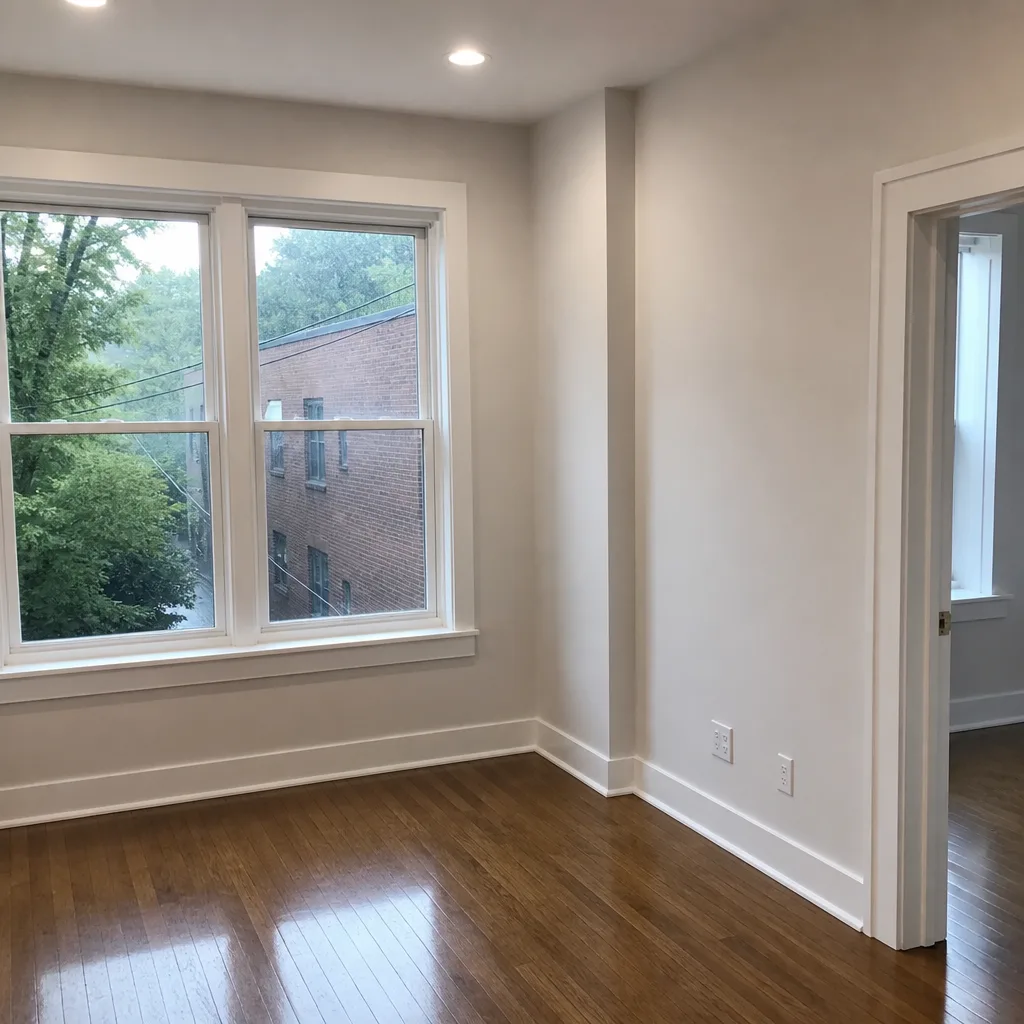
Drywall goes back up, floors get refinished or replaced, paint goes on, trim goes in. The finish line is a unit that looks like it did before the loss, not a patch job that screams “water damage” from the hallway.
Need Emergency Reconstruction & Cleanup in Union City Now?
Crews minutes away, answering live 24 hours a day. The sooner we start, the less it costs.
Working With Your Insurance Company
Insurance in these buildings is never simple. A single burst riser can trigger three separate policies, a landlord’s dwelling coverage, two tenants’ renters policies, and a building association master policy that nobody can find. We’ve untangled that knot hundreds of times in Union City. From the very first hour, we document. Photos, room by room. Moisture readings, day by day. A line-item scope of work that speaks the language adjusters expect. Wade deals with the adjuster directly, so you’re not stuck relaying questions between a carrier’s phone tree and a restoration crew. You hired us to fix the building. The paperwork is our problem.
What We Provide Your Insurer
- Thorough documentation of the loss
- Photos of all damage, room by room
- Moisture readings and drying logs
- A detailed, line-item scope of work
- Direct coordination with your carrier
Built for Union City’s Loss Calendar
Union City’s damage calendar runs on weather and age. January deep freezes hit the old galvanized supply lines hard. Water freezes in uninsulated riser chases, expands, and splits pipes that have been in those walls since the Coolidge administration. Spring thaw comes and suddenly a dozen tenants on Bergenline Avenue discover the same pinhole leak at the same fitting. Summer brings the thunderstorms that dump two inches of rain in an hour, and all that water running off the Palisades finds its way into basement units and below-grade garages. Fall and winter nor’easters drive wind-driven rain through brick parapets and old windows. And underneath all of it: cast-iron drain stacks that have been rusting from the inside for 80 years, waiting for the one flush that sends sewage backing into a first-floor retail space. We’ve seen every one of these. More than once.
Reconstruction & Cleanup Across Union City’s Neighborhoods
Union City compresses a lot of building stock into a very small footprint, but the loss patterns shift block by block. Up on Palisade Avenue, the pre-war brick co-ops and condos tend to fail at the risers. Water from a fourth-floor unit travels down through the plumbing chase and presents in the second-floor neighbor’s bathroom ceiling, which is how these jobs usually get called in: as a dispute between neighbors. Along Bergenline Avenue, the commercial ground floors under residential units see the sewage backups and supply-line bursts that take out retail inventory as fast as they soak apartments above. The residential blocks between Summit Avenue and Kennedy Boulevard are dense with 3- and 4-story walk-ups where a single failed washing-machine hose on the top floor produces a four-unit loss before the tenant gets home from work. And in the lower sections near the Weehawken border, where the buildings step down the Palisades slope, stormwater from the ridge collects in below-grade garages and basement apartments after every heavy convective storm.
Specialized Reconstruction & Cleanup Services We Offer in Union City
Full-Service Reconstruction
When the drying is done, the building still has to be put back together. We do that work with the same crew and the same standard of documentation. In Union City’s older buildings, that often means matching plaster with modern drywall in a way that doesn’t telegraph the repair from the hallway, lacing new framing into 100-year-old joists, and respecting the building’s quirks instead of fighting them. No handoff to a different company. One name, one standard, start to finish.
Insurance Claim Documentation
This is the service that saves Union City property owners thousands. We document from the first hour: photos, moisture maps, drying logs, and a scope of work built to insurance industry standards. Then we talk directly to your adjuster. You shouldn’t have to become a claims expert to get your building dried and rebuilt. Most people in these multi-family situations are dealing with their own policy, the neighbor’s policy, and the landlord’s policy all at once. We translate between all of them.
Contents Restoration & Pack-Out
Water or smoke doesn’t just damage the structure. It damages everything inside. We pack out affected contents, inventory every item, clean what can be cleaned, and store it until the unit is ready. In a Union City walk-up with no elevator, that means carrying furniture down four flights of stairs, not just backing a truck up to a garage. We’ve done it hundreds of times. The inventory goes to your insurer as part of the claim. Nothing goes missing, and you know exactly what left and exactly what came back.
What happens when you call
- 1
A real person answersNo phone trees - you reach a local pro.
- 2
You get an upfront price rangeHonest numbers before anyone is dispatched.
- 3
A background-checked tech heads outLicensed & insured, dispatched right away.
- 4
You approve before work beginsNothing starts until you say go.
Reconstruction & Cleanup Costs in Union City, NJ
Honest numbers for Union City. A typical water extraction and dry-out in a single unit runs $2,500-$6,000. Add reconstruction and you’re looking at $8,000-$20,000 for a bathroom and hallway. A full four-unit loss from a burst riser can run $40,000-$90,000, depending on how many floors of plaster have to come out and how much of the original flooring survives. Asbestos and lead testing adds $800-$2,500 upfront in these pre-war buildings. That’s not padding. That’s the law, and skipping it will cost you far more in fines and stop-work orders. The fastest way to a firm number is the free visual inspection. We walk it, we write it, and the scope is firm before a single wall is opened.
We Also Serve Cities Near Union City
We regularly run crews into Union City and the surrounding Hudson County communities: Weehawken, Hoboken, North Bergen, and Secaucus. Same response time, same equipment, same standard of documentation. If you’re in one of those towns and you’re watching water come through a ceiling, call (201) 740-2235.
Serving Union City, NJ - Our Local Coverage Area
We’re based in the Union City area and know this community well. Use the map below to see our service coverage - if you’re nearby, we can almost certainly help.
Union City Reconstruction & Cleanup Questions, Answered
How does Union City’s pre-war housing stock change the Reconstruction & Cleanup timeline?
It adds days, and here’s the honest reason: most of these buildings contain asbestos in plaster, pipe insulation, or flooring, and lead paint on walls and trim. Before demolition can legally proceed, those materials have to be sampled, tested, and cleared. That’s a 48-to-72-hour step that suburban contractors often skip because they never encounter it. We build it into the schedule from day one, and we coordinate the testing so it doesn’t stall the job. That’s the playbook for Reconstruction & Cleanup in buildings this old.
What happens when a burst pipe on the fourth floor soaks three units below?
You have four losses, not one, and at least two insurance policies in the mix. We set containment in every affected unit, run dehumidifiers and air movers in all of them, and pull daily moisture readings from the party walls and ceiling cavities. The water usually travels through the plumbing chase, so the visible damage in the second-floor bathroom might actually be from water that started on the fourth. We document the entire path of the water. That documentation is what keeps everyone’s insurer honest.
Do you handle pack-out and contents restoration in a walk-up with no elevator?
Every week. Union City’s walk-ups are part of the job. Our crews carry furniture down four or five flights when it has to be packed out, and they carry it back up when the unit is ready. The inventory is documented at every step, photographed, and provided to your insurer. Nothing gets left on the curb, and nothing goes into storage without a record.
Is water intrusion from heavy rain covered differently than a burst pipe in Union City?
Usually, yes. Burst pipes are typically covered under most dwelling and renters policies, because plumbing failures are a named peril. Stormwater intrusion, especially through foundations or basement walls, often falls under flood exclusions or requires a separate flood policy. The Palisades slope sends a lot of surface water into Union City basements, and many small landlords are surprised to learn that damage wasn’t covered. We document the source of the water carefully. It matters for your claim.
How fast can you start emergency water extraction in Union City?
We’re typically on site within 45 minutes of your call, day or night. Crews are staged to reach Union City fast. Extraction starts as soon as we arrive. The faster water comes out, the more of your original plaster, flooring, and trim survives. Call (201) 740-2235 the minute you see water.
How long does drying and remediation take in a pre-war building?
Three to five days for a typical single-unit loss after a supply-line break. Older buildings with plaster walls can run longer, because plaster releases moisture slowly and we pull readings until the numbers prove the cavities are dry. We don’t call it done until the moisture logs say it’s done. You see those logs. That’s the standard.
Can we stay in the home during reconstruction?
Depends on the scope. If it’s a contained bathroom or single room, often yes. If we’re tearing out plaster from a ceiling that’s shared with the bedroom, you may need to relocate for a few days. In multi-family buildings with common areas affected, the answer is more complicated and depends on what the association and insurers agree to. We’ll give you a straight answer after the inspection.
What should I do in the first 30 minutes after water damage in Union City?
Shut off the water at the source if you can find it. Kill power to affected areas if water is near outlets or the panel. Move what you can lift. Then call (201) 740-2235. Don’t wait for a callback from your landlord or your insurer. Water moves through these old buildings faster than you’d believe, and every hour you wait costs you building material that could have been saved.
Call Wade’s Restoration for Reconstruction & Cleanup in Union City
If you’re standing in a soaked hallway or staring at a water-stained ceiling somewhere in Union City, call (201) 740-2235 right now. You’ll get a live person, probably Wade himself. We’ll walk the building with you, show you what we see, and give you a written scope before anything gets ripped out. Free visual inspection, direct insurance coordination, and a 90-Day Done Right Promise in writing. Ask anyone on your street. We’ve probably already worked there.
Written by Wade Ferris, Owner at Wade’s Restoration, founded 2007. Locally owned, owner-operated, and serving Hudson County’s pre-war buildings with the respect they deserve.