
Quick Summary
Addressing ceiling water damage repair in Lower Manhattan requires immediate intervention to stop overhead leaks, prevent structural ceiling collapses, and eliminate moisture migrating across shared floor assemblies in multi-family buildings. Wade's Restoration provides the rapid-response expertise needed to diagnose hidden leaks, safely extract trapped water, execute controlled structural cavity drying, and perform complete plaster or drywall rebuilds. Readers will understand emergency safety measures and repair cost factors, and can call immediately for a 24/7 emergency ceiling water damage assessment and free on-site visual inspection.
How to Get Fast Ceiling Water Damage Repair in Lower Manhattan
A water-damaged ceiling in Lower Manhattan is rarely just a cosmetic issue. In multi-family buildings and apartment complexes across neighborhoods like TriBeCa, SoHo, and the Financial District, overhead leaks often involve water traveling through shared floor assemblies before pushing through your ceiling. According to specialists at Wade’s Restoration, addressing ceiling water damage generally involves stopping the overhead source, safely managing trapped water, drying affected cavities, and repairing the damaged surface.[2]
A reasonable NYC planning estimate is about $500-$1,700 for ceiling repair, but Lower Manhattan-specific pricing is not established by a neutral public source. Extensive damage, material replacement, mold, lead-paint concerns, or access requirements can raise the total. Authoritative public data does not isolate ceiling-water-damage repairs specifically for Lower Manhattan. Manhattan accounted for 52% of water-main leaks identified proactively citywide during Fiscal Years 2023 through 2025, though this metric reflects municipal water mains rather than private ceiling leaks or repair volume.[1]
Quick Answer: Immediate Steps for an Overhead Water Leak
Immediate Priority: A sagging or bulging ceiling may indicate weakened materials and a collapse hazard. Keep people away, avoid electrical fixtures near the leak, and contact building management or emergency services if collapse appears imminent.
General practical guidance for managing overhead water damage typically involves several steps:[5]
- Stabilization and Assessment: Avoid DIY puncturing of the ceiling, especially for plaster assemblies, and wait for a qualified professional assessment unless emergency responders direct otherwise.
- Cavity Drying: Moisture detection equipment, air movers, and dehumidifiers may be used to locate moisture pathways and dry wet framing or subfloors.
- Reconstruction: Once structural materials are dried, repairs may involve securing intact plaster or replacing damaged drywall sections, followed by taping and repainting.
What Does Ceiling Water Damage Repair Cost in Lower Manhattan?
A reasonable NYC planning estimate is about $500-$1,700 for ceiling repair, but Lower Manhattan-specific pricing is not established by a neutral public source. Extensive damage, material replacement, mold, lead-paint concerns, or access requirements can raise the total. Authoritative public data does not isolate ceiling-water-damage repairs specifically for Lower Manhattan.
Key Factors That Influence Repair Pricing
- Ceiling Material: Gypsum drywall is typically straightforward to cut away and replace, whereas older plaster and lath ceilings may require specialized stabilization techniques or more labor-intensive structural removal.
- Water Source and Contamination: Clean water leaks generally require standard drying, while leaks originating from drain lines or sewage backups require specialized sanitation, containment, and removal procedures.
- Building Access and Logistics: Repair projects in downtown multi-family buildings may involve specific building management requirements, scheduling restrictions, insurance documentation, and standard containment practices for older structures.
- Framing and Subfloor Saturation: Deeply saturated subflooring and framing between floors may require extended drying time before cosmetic repairs can begin.
Is a Leaking or Sagging Ceiling Considered a Structural Emergency?
Need ceiling water damage repair in Lower Manhattan?
We’re available now - call for a fast, free estimate.
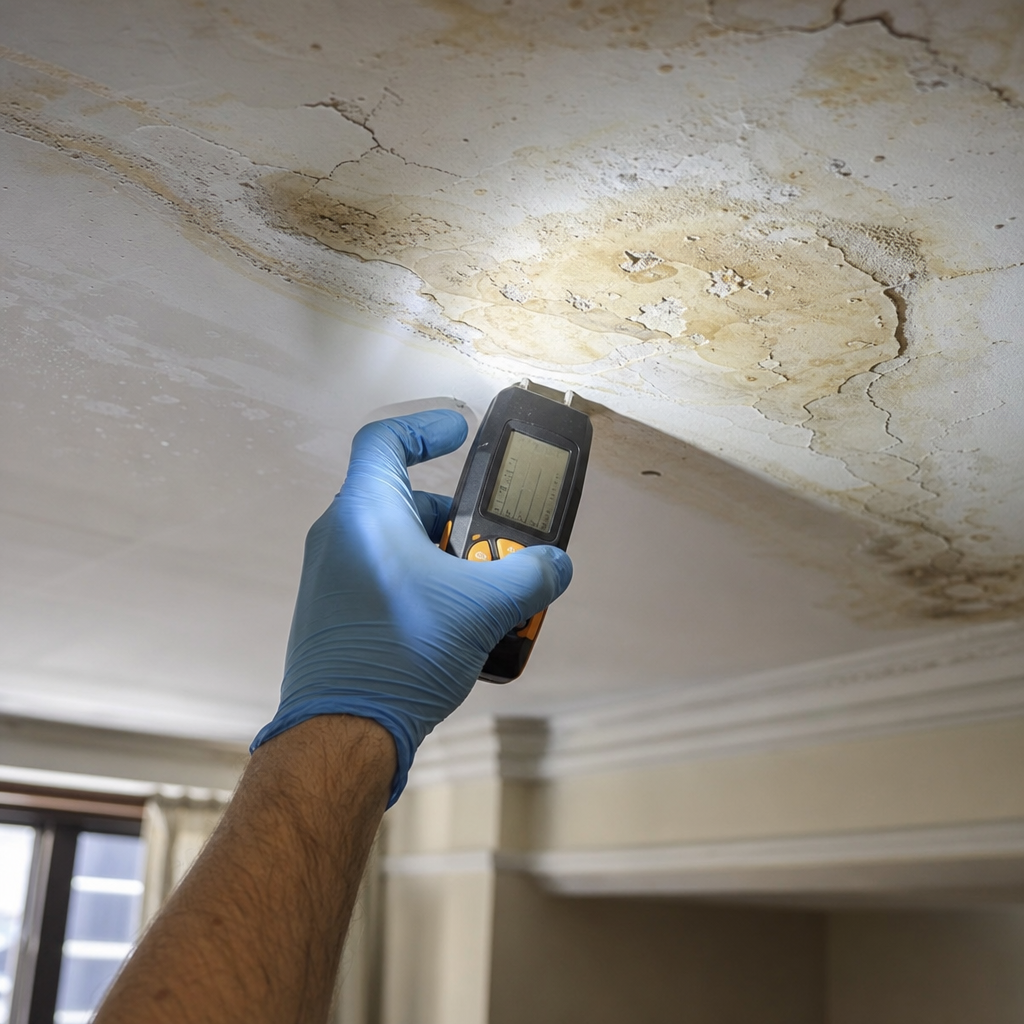
A sagging or bulging ceiling may indicate weakened materials and a collapse hazard. Keep people away, avoid electrical fixtures near the leak, and contact building management or emergency services if collapse appears imminent.
Immediate Safety Protocol
- Evacuate the Area: Keep people and pets away from the sagging or leaking ceiling.
- Avoid Electrical Fixtures: If water is near light fixtures, fans, or other electrical components, turn off power at the breaker panel if it is safe to do so.
- Avoid DIY Puncturing: Avoid DIY puncturing of the ceiling, especially with plaster materials, as this can increase collapse risks; wait for qualified professional assessment unless emergency responders direct otherwise.
- Notify Building Management: Contact building management, the superintendent, or the upstairs neighbor promptly to identify and stop the water source.
Water Migration in Multi-Family Buildings
In multi-family apartment buildings and lofts, water from an upstairs leak can travel horizontally across subfloors and framing joists before appearing in a ceiling below. Locating the source and full extent of moisture often requires professional inspection tools, as noted by Wade’s Restoration.[3]
Repairing Plaster vs. Drywall Ceilings After a Water Leak
Restoration approaches can vary depending on whether a ceiling is constructed from plaster or modern gypsum drywall.
| Feature | Plaster and Lath Ceilings | Modern Drywall Ceilings |
|---|---|---|
| Material Behavior | Absorbs moisture; plaster keys bonding to lath can soften and weaken. | Gypsum core softens when saturated and can sag under water weight. |
| Mitigation Method | Cavity drying with dehumidification and structural support bracing as needed. | Removal of saturated sections back to sound framing to facilitate drying. |
| Restoration Method | Plaster stabilization or re-anchoring where feasible, or surface patching. | Installation of replacement drywall panels, taping, compound, and repainting. |
Plaster Stabilization Considerations
When plaster has detached from lath but remains largely intact, repair specialists may evaluate whether specialized adhesives can re-anchor the plaster before considering full replacement.
Drywall Removal and Replacement
When gypsum drywall becomes heavily waterlogged and loses structural strength, practical repairs typically involve removing damaged sections beyond the water-affected area, drying exposed framing, and installing new drywall panels.[4]
How Fast Can Restoration Teams Arrive?
No reliable neutral source establishes a standard emergency arrival time for Lower Manhattan. Response depends on provider availability, traffic, building access, severity, and time of day. Confirm any promised arrival window directly.
Prompt drying can help limit additional water-related damage to ceiling materials and framing, though mold timelines vary based on temperature, moisture levels, and specific building conditions.
Containment and Dust Management
During drying or selective demolition, technicians from Wade’s Restoration may set up containment barriers and air filtration units to help capture dust and airborne particles from spreading to other areas of the home.
Frequently Asked Questions About Ceiling Water Damage in Lower Manhattan
How much does it cost to fix a water-damaged ceiling?
A reasonable NYC planning estimate is about $500-$1,700 for ceiling repair, but Lower Manhattan-specific pricing is not established by a neutral public source. Extensive damage, material replacement, mold, lead-paint concerns, or access requirements can raise the total. Authoritative public data does not isolate ceiling-water-damage repairs specifically for Lower Manhattan.
Does insurance cover ceiling water damage?
The building owner or landlord policy generally covers the building structure, including the ceiling, while a renter’s policy generally covers personal belongings. Coverage depends on the policy, water source, exclusions, deductibles, and negligence. Notify the landlord, building insurer, and personal insurer promptly.
How do I know if there is hidden mold inside my ceiling?
Potential indicators of hidden moisture or mold can include persistent musty odors, visible discoloration spreading on paint, and peeling or bubbling finishes. Professional moisture inspection from providers like Wade’s Restoration can help determine whether moisture remains inside the ceiling cavity.
What should you consider when choosing a restoration contractor?
When evaluating restoration contractors, consider verifying applicable state and local licensing, liability insurance coverage, and professional certifications. It is also helpful to confirm whether the contractor is familiar with local building access protocols and multi-unit residential requirements.
Need ceiling water damage repair in Lower Manhattan?
We’re available now - call for a fast, free estimate.
Sources
- DEPARTMENT OF ENVIRONMENTAL PROTECTION – nyc.gov (2026)
- SE25-076A – comptroller.nyc.gov (2025)
- Audit of the New York City Department of Environmental … – comptroller.nyc.gov (2025)
- NYCEM Copy to Edit_Ida Damage Analysis Report [SHAREDwithJP] – nyc.gov (2021)
- NYC CDBG-DR Draft Action Plan Post-Tropical Cyclone Ida – nyc.gov
Frequently Asked Questions
How does Wade's Restoration detect and dry water trapped between multi-family floors?
Specialists use moisture meters and specialized cavity-drying equipment to track hidden water traveling along shared joists and subfloors. This targeted approach allows Wade's Restoration to thoroughly dry inter-floor framing without causing unnecessary structural demolition to your ceiling.
Why is puncturing a sagging plaster ceiling dangerous during an overhead leak?
Puncturing waterlogged plaster can cause heavy sections to suddenly collapse and disturb hazardous materials or lead paint common in older Lower Manhattan buildings. Instead of attempting DIY draining, clear the area, shut off nearby electricity, and call Wade's Restoration for a rapid-response emergency stabilization.
What is the timeline for complete ceiling water damage repair and reconstruction?
The structural cavity drying phase generally takes several days to ensure underlying joists and subfloors are completely dry and mold-free. After moisture levels are certified safe, Wade's Restoration completes the full reconstruction by either stabilizing intact plaster or installing, taping, and repainting new drywall panels.
About the author
 |
Christopher Vance Christopher Vance is a property restoration specialist with over 10 years of experience in the disaster recovery industry. He holds a degree in Construction Management from Rutgers University and maintains certifications in structural drying and water damage restoration. Christopher focuses on creating practical guides that help Weehawken property owners navigate emergency mitigation and the complexities of insurance claims. |
Water damage, flood, or mold emergency?
We’re available now - call for a fast, free estimate.
Call Now - Free Estimate