
Quick Summary
Addressing hardwood floor water damage repair in Long Island City requires immediate intervention within 24 to 48 hours to extract trapped moisture from subfloors, prevent permanent cupping, and halt mold growth. As a full-service mitigation and rebuild specialist, Wade's Restoration utilizes advanced structural drying to salvage wood flooring or executes seamless flooring reconstruction when materials suffer irreversible deterioration. Readers will understand how site-specific subfloor conditions affect recovery and can contact the 24/7 live dispatch line for immediate emergency water extraction and a free on-site visual inspection.
Hardwood Floor Water Damage Repair in Long Island City: Assessment and Drying Guidance
When water affects a hardwood floor in Long Island City, prompt action is critical. Whether water enters a modern residential unit or an older Queens building, moisture can seep past the finish, penetrate plank seams, and reach the subfloor. Addressing the issue requires assessing water and moisture deterioration, beginning drying promptly, and drying flooring and subfloor materials thoroughly.[3]
Following severe regional weather events, such as the July 31, 2025 flooding across Queens where localized storm totals exceeded six inches in Oakland Gardens and Bayside (rainfall figures that were not measurements for Long Island City), New York City Emergency Management advised affected residents to remove wet porous materials and monitor closely for mold growth. No authoritative source provides a Long Island City-specific repair-cost average, repair-volume statistic, or verified percentage of floors that can be saved. According to Wade’s Restoration, exact restoration needs depend on an on-site professional inspection and the specific conditions of the property.[1]
Property owners should review their applicable property insurance policy and contact their insurer directly regarding coverage for water damage repair and drying services.[4]
Quick Answer
Quick answer in brief: Drying should begin immediately, and cleaning and drying within 24 to 48 hours can reduce mold risk, although salvageability depends on swelling, buckling, contamination, mold, and structural condition. No authoritative source provides a verified percentage of floors that can be saved or a specific local cost average. Thorough drying of both the surface flooring and the underlying subfloor is necessary to prevent long-term deterioration.
Prompt response helps limit the spread of moisture. Water and moisture damage should be evaluated by professionals such as Wade’s Restoration who can assess the condition of the floorboards and subfloor materials, remove wet porous materials where necessary, and ensure thorough drying throughout the structure.
According to the Department of Buildings, water and moisture damage, warping, swelling, rotting, mold or fungus growth, and failed moisture or vapor barriers are forms of construction-material deterioration. Proper remediation focuses on identifying these conditions promptly and drying affected building components thoroughly.[5]
Can Hardwood and Subfloors Be Saved After Water Damage in Long Island City?
Hardwood flooring and underlying subfloors may be salvageable if water is addressed quickly and materials are dried thoroughly. However, outcomes vary widely depending on the extent of water penetration, the type of construction, and the duration of moisture exposure.
Solid Hardwood vs Engineered Wood
Different flooring types may respond differently to water exposure, presenting general possibilities that require professional inspection on-site:
- Solid Hardwood: Solid wood planks can expand when exposed to moisture, which may result in cupping or swelling. In some cases, if the wood has not sustained permanent structural distortion or fungal growth, thorough drying may allow boards to stabilize.
- Engineered Hardwood: Engineered planks consist of layered construction. Prolonged exposure to moisture can cause core swelling or separation of plies. A professional assessment is required to determine whether engineered boards can be dried in place or need replacement.
Subfloor Moisture Saturation
Building assemblies across Long Island City and the wider Queens area vary, and their response to water depends on their construction:
- Flooring installed over concrete subfloors may trap moisture between the materials, making thorough drying essential.
- Flooring installed over wood joists or plywood subfloors may allow water to migrate into framing and adjacent wall cavities, increasing the need to remove wet porous materials and inspect for hidden moisture.
Because structural configurations differ, a professional on-site moisture assessment from Wade’s Restoration is necessary to identify the exact drying requirements for each specific floor and subfloor assembly.
The 24 to 48 Hour Mold Window
Drying should begin immediately, and cleaning and drying within 24 to 48 hours can reduce mold risk, although salvageability depends on swelling, buckling, contamination, mold, and structural condition. Prompt removal of standing water, elimination of unsalvageable wet porous materials, and thorough continuous drying help mitigate the risk of mold and fungus growth.
What Does Hardwood Floor Water Damage Repair Cost in Long Island City?
Need hardwood floor water damage repair in Long Island City?
We’re available now - call for a fast, free estimate.
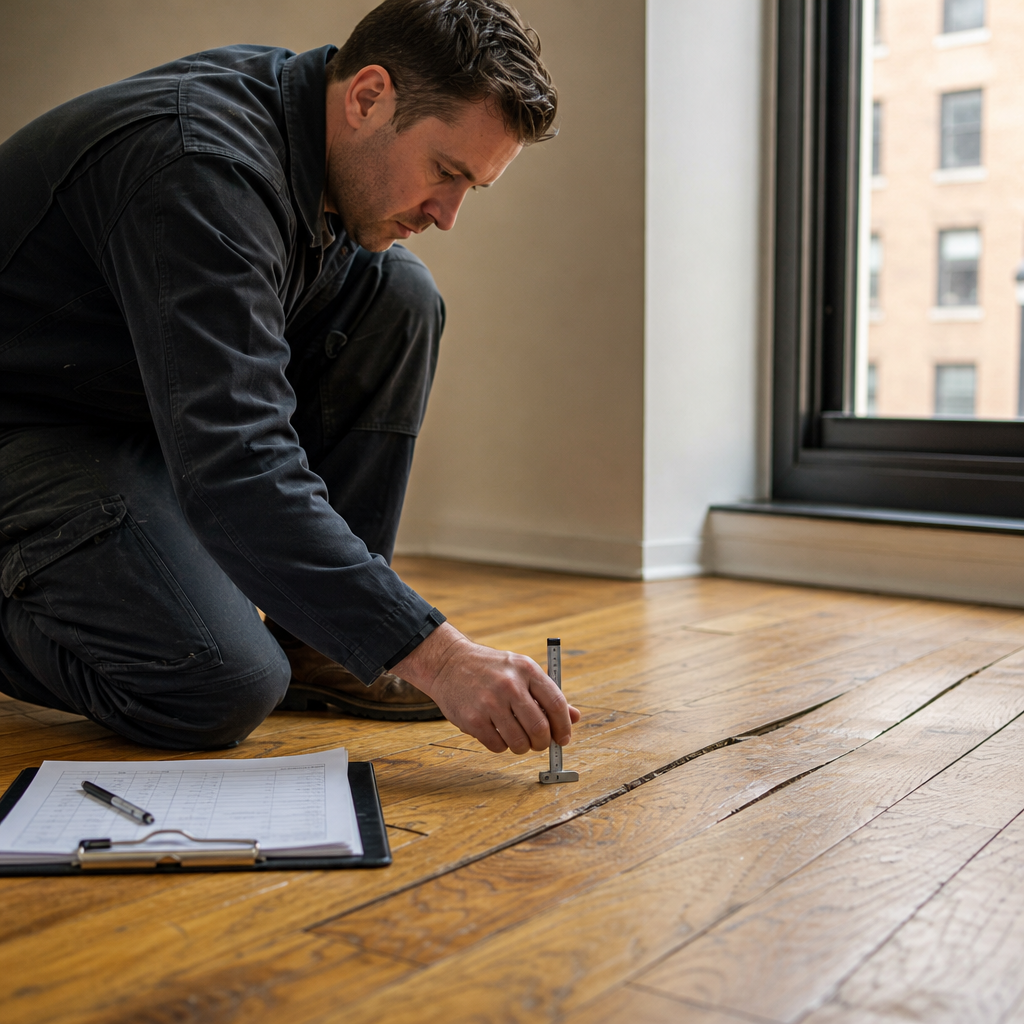
No authoritative source provides a Long Island City-specific repair-cost average, repair-volume statistic, or verified percentage of floors that can be saved. Costs vary based on the extent of damage, the materials involved, and the required scope of remediation.[2]
Key Factors That Influence Repair Scope
Pricing and repair scope depend on several site-specific factors determined during an inspection:
- Subfloor Assembly and Moisture Depth: The type of subfloor and the depth of moisture penetration influence the time and equipment required to dry the assembly thoroughly.
- Water Source and Contamination: Contaminated water or prolonged exposure may require removing affected porous materials rather than attempting in-place drying.
- Building Access and Logistics: Multi-family buildings and high-rise properties may have specific access rules and scheduling considerations that affect the project timeline.
- Extent of Material Deterioration: Visible warping, swelling, rotting, or buckling will dictate whether planks can be dried and restored or must be removed and replaced.
Insurance Coverage Considerations
Coverage for water damage varies by policy and the specific cause of the loss. Property owners should review their applicable insurance policy and contact their insurer to understand coverage terms, claim requirements, and documentation standards.
How Are Water-Damaged Floors Assessed and Dried?
Restoring water-damaged flooring requires a systematic approach focused on moisture detection, prompt extraction, and thorough drying of all affected layers.
Prompt Water Removal and Porous Material Assessment
Standing water must be removed promptly. Porous materials that are saturated, damaged, or contaminated should be assessed and removed if they cannot be effectively dried and cleaned in place.
Thorough Structural Drying and Mold Monitoring
Drying equipment should be deployed to dry both the visible flooring and the underlying subfloor thoroughly. Throughout the drying process, Wade’s Restoration technicians monitor moisture levels in the wood and surrounding materials while inspecting closely for any signs of mold or fungal growth.
Evaluation for Repair or Replacement
Once the flooring system and subfloor are thoroughly dried and moisture levels have stabilized, the materials are evaluated for physical deterioration:
- Moisture Assessment: Technicians confirm that the flooring and subfloor materials have reached appropriate dry conditions.
- Material Inspection: Boards that exhibit permanent swelling, warping, rotting, or structural failure are identified for replacement.
- Surface Repair: If the floorboards remain structurally sound without persistent cupping or mold damage, cosmetic repairs or refinishing may be considered.
Frequently Asked Questions About Hardwood Floor Water Damage Repair
How much does hardwood floor water damage repair cost?
No authoritative source provides a Long Island City-specific repair-cost average or repair-volume statistic. Total costs depend entirely on the square footage affected, the subfloor assembly, the degree of moisture deterioration, and whether materials can be dried or must be replaced. An on-site professional inspection is required to determine pricing.
Can cupped or buckled wood floors flatten out on their own?
Cupped or buckled floors rarely resolve on their own without proper drying. Water and moisture damage can cause ongoing warping, swelling, and deterioration. Immediate and thorough drying of both the surface wood and the underlying subfloor is needed, followed by a professional evaluation by Wade’s Restoration to see if the boards can be saved or require replacement.
How quickly should water damage remediation begin, and is it covered by insurance?
Drying should begin immediately, and cleaning and drying within 24 to 48 hours can reduce mold risk, although salvageability depends on swelling, buckling, contamination, mold, and structural condition. Regarding coverage, property owners should review their applicable policy and contact their insurer directly to determine whether the specific water damage event is covered.
Need hardwood floor water damage repair in Long Island City?
We’re available now - call for a fast, free estimate.
Sources
- July 31, 2025 Flash Flooding Across Portions of NYC metro, Northeast … – weather.gov (2025)
- DEPARTMENT OF ENVIRONMENTAL – nyc.gov (2025)
- REPORT FLOOD DAMAGE AND SUBMIT 311 SERVICE … – nyc.gov (2025)
- Severe Weather Events and Resiliency in New York State – osc.ny.gov (2024)
- NYS Tox Mold Task Force Final Report, December 2010 – health.ny.gov (2010)
Frequently Asked Questions
How does Wade's Restoration handle hardwood floor repairs if the wood cannot be salvaged through drying?
As a full-service mitigation and rebuild specialist, Wade's Restoration handles the entire restoration lifecycle under one roof. If hardwood suffers irreversible cupping, rotting, or ply separation, technicians remediate the subfloor and execute seamless flooring reconstruction to return your property to pre-loss condition.
How is trapped moisture removed from hardwood installed over concrete subfloors in Long Island City buildings?
Hardwood over concrete slabs often traps water beneath vapor barriers, which prevents standard air drying from reaching the moisture. Wade's Restoration uses advanced structural drying equipment and precision moisture meters to draw trapped water out of concrete assemblies before structural rot sets in.
What is the fastest way to arrange emergency hardwood water extraction in Long Island City?
Property owners can call Wade's Restoration's 24/7 live dispatch line to request immediate emergency water extraction and schedule a free on-site visual inspection. Prompt intervention within the critical 24- to 48-hour window halts subfloor deterioration and prevents dangerous mold growth.
About the author
 |
Christopher Vance Christopher Vance is a property restoration specialist with over 10 years of experience in the disaster recovery industry. He holds a degree in Construction Management from Rutgers University and maintains certifications in structural drying and water damage restoration. Christopher focuses on creating practical guides that help Weehawken property owners navigate emergency mitigation and the complexities of insurance claims. |
Water damage, flood, or mold emergency?
We’re available now - call for a fast, free estimate.
Call Now - Free Estimate