
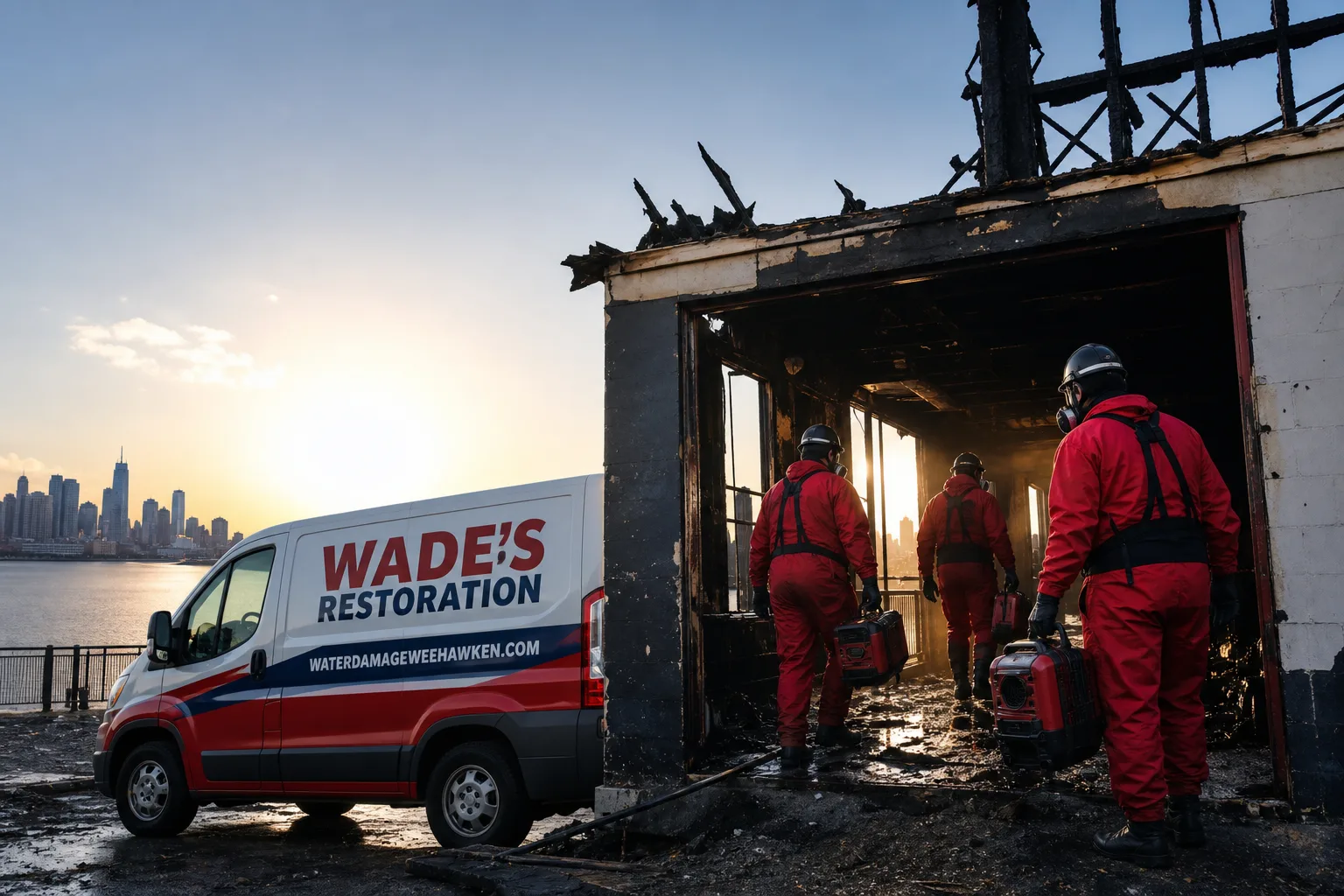
Free visual inspection and a written scope of work before any mitigation begins - photos, moisture readings, and drying logs go in your claim file
The scope we write is the scope we bill. Anything new gets shown to you, in writing, before we touch it.

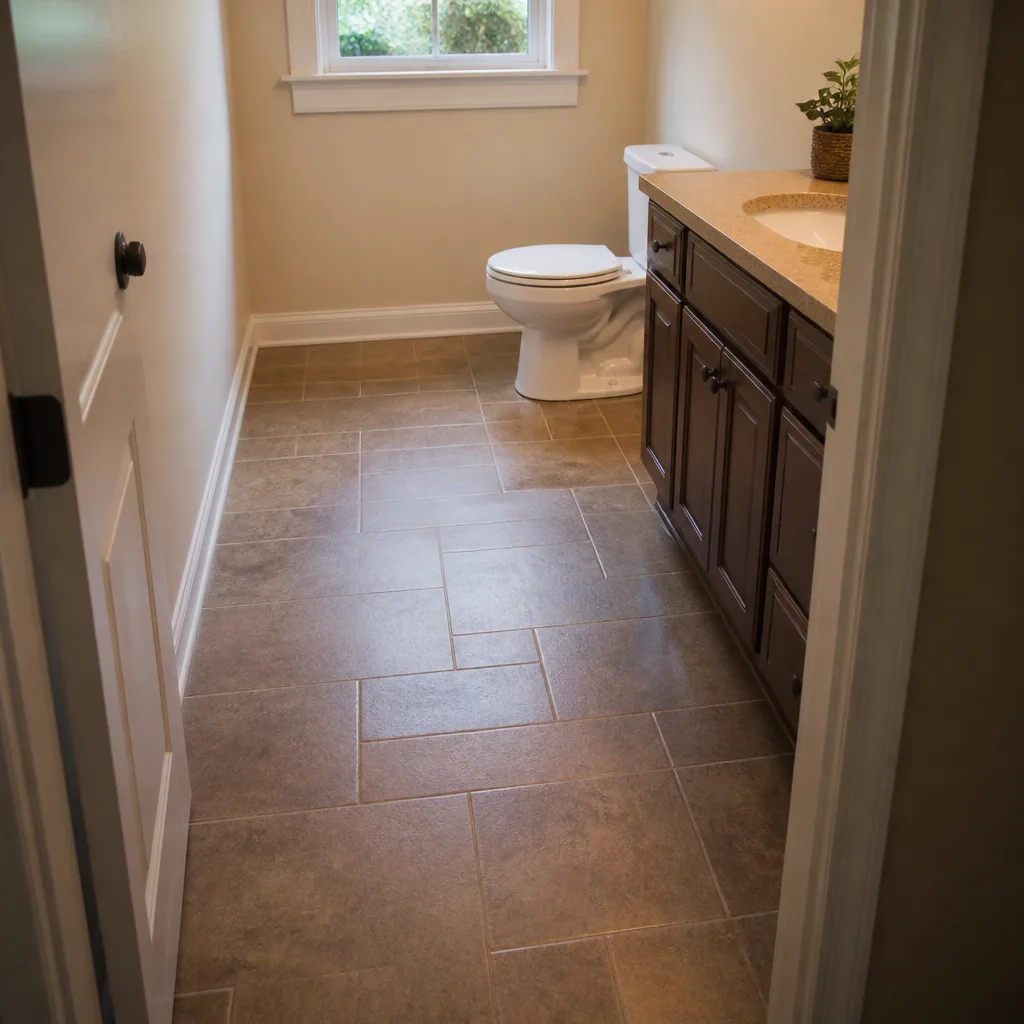

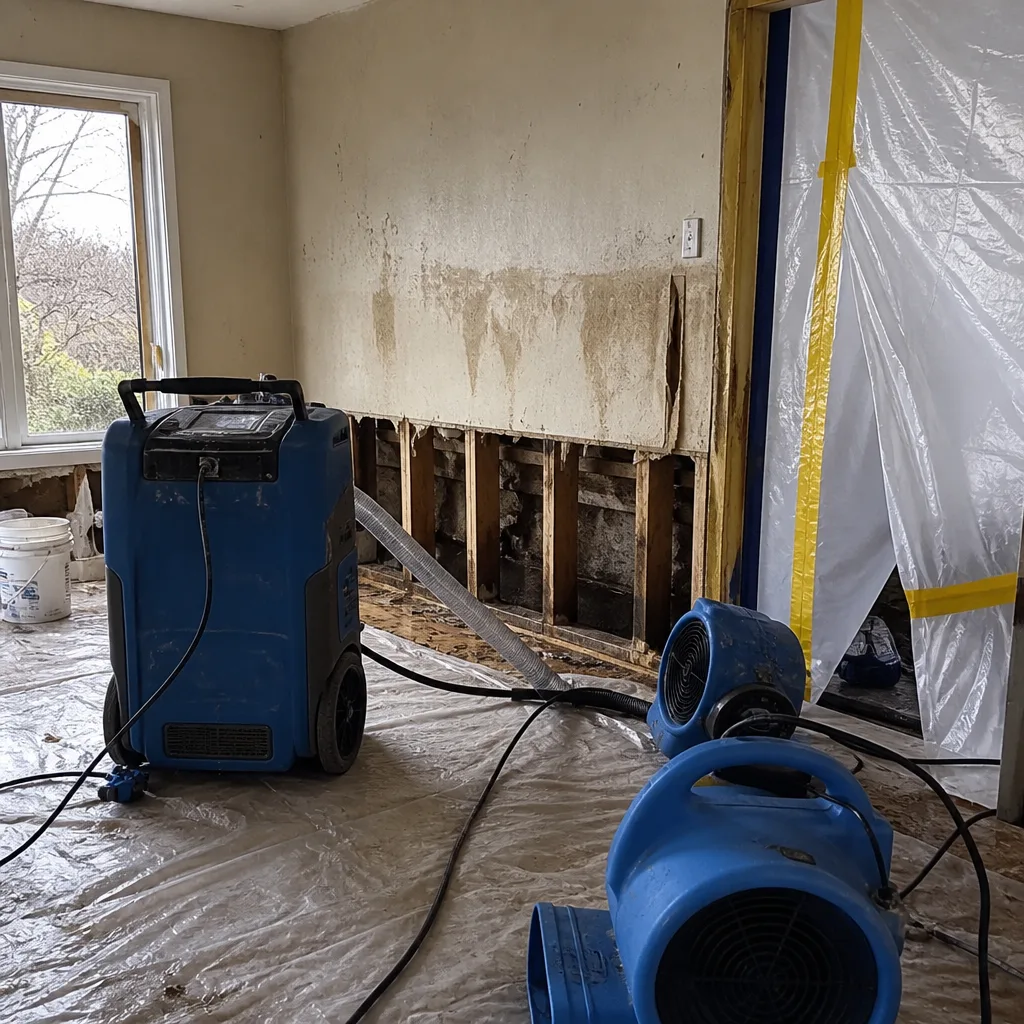 Before
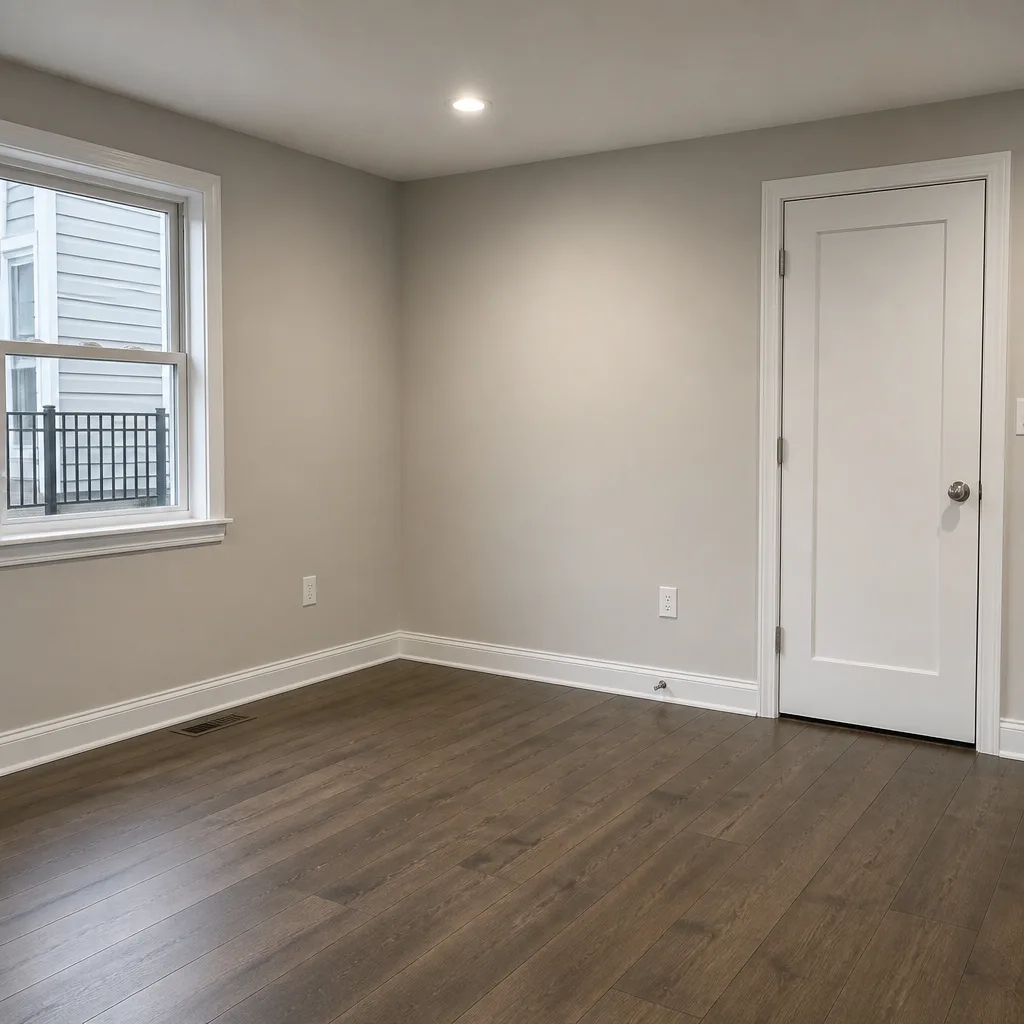 After
After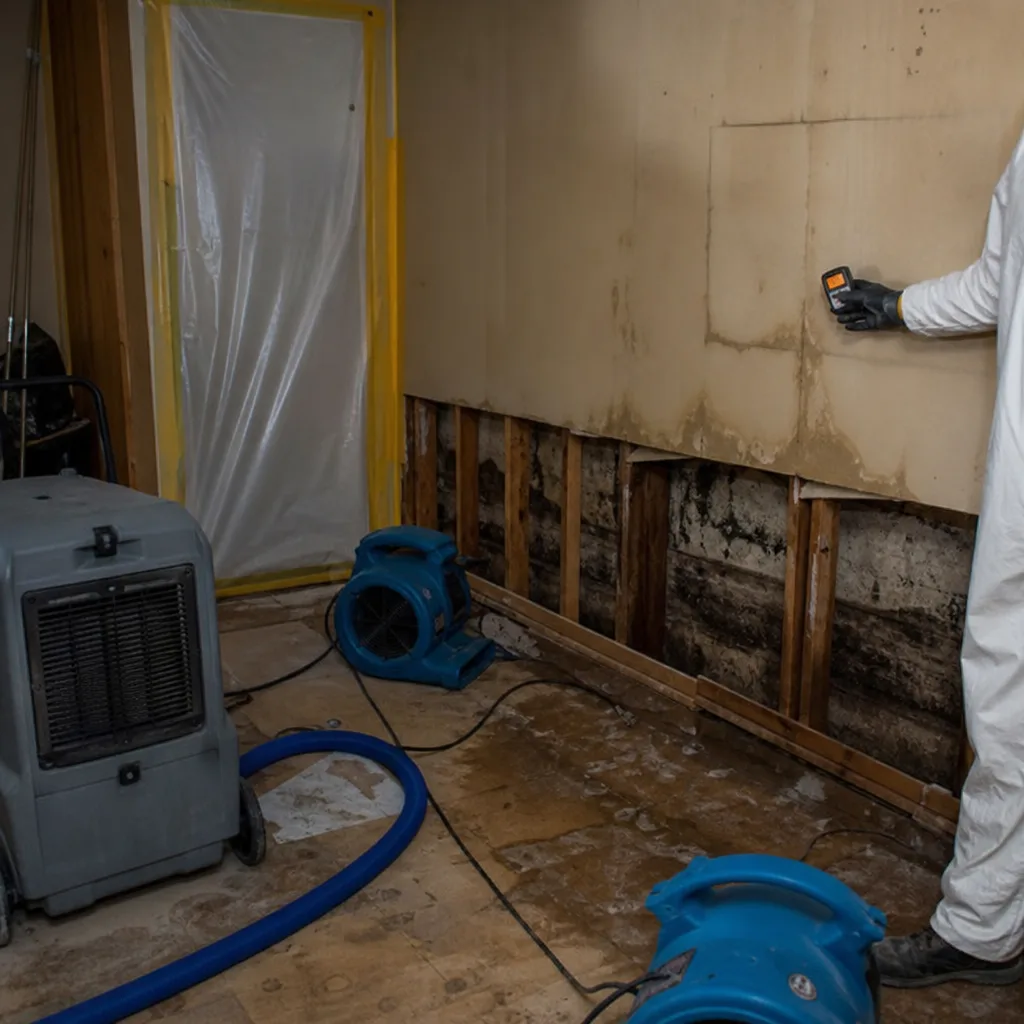 Before
 After
After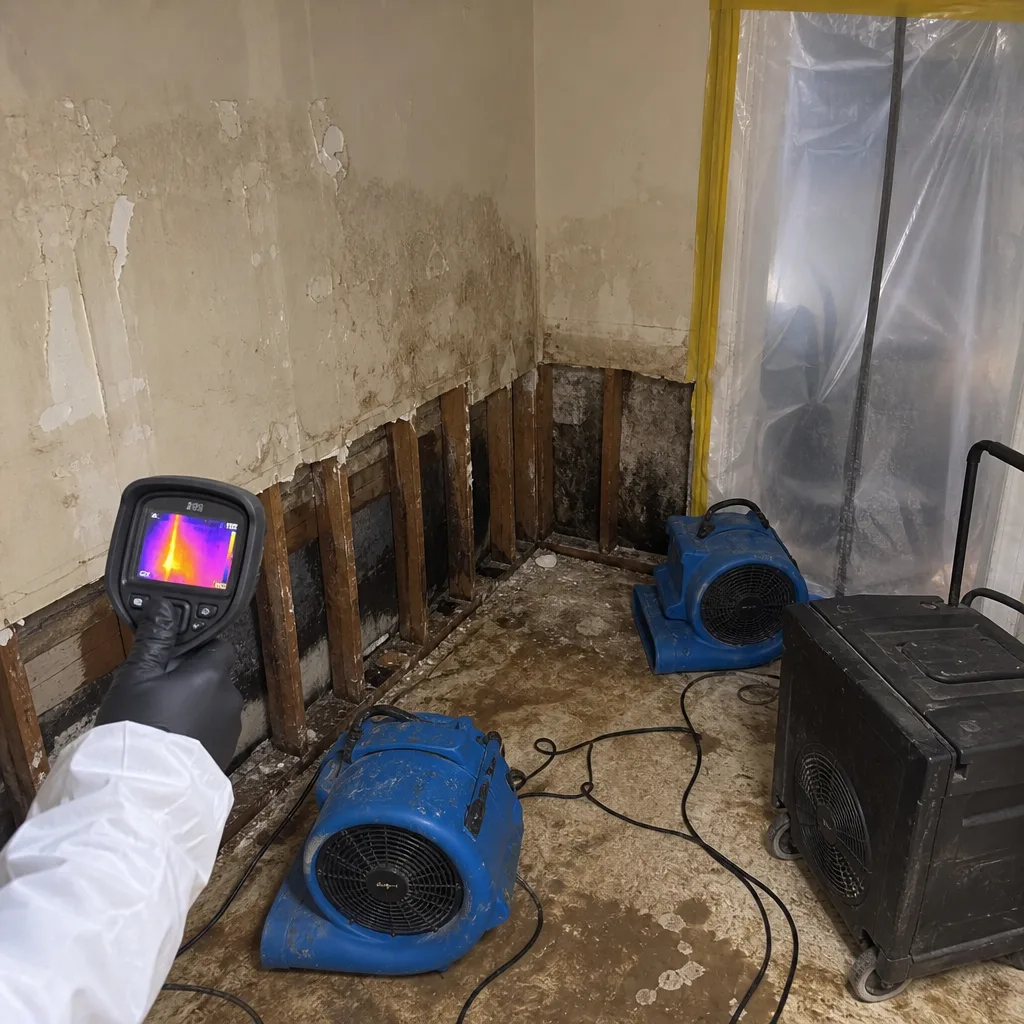 Before
 After
After24/7 Emergency Storm & Disaster Restoration in Jersey City
A storm hits Jersey City and within minutes you’ve got water pushing through a basement window on Greenville, or wind tearing shingles off a brownstone near Hamilton Park. We answer live, 24 hours a day. Call (201) 740-2235 and Wade’s crew heads out, with extraction equipment on the truck. The first hour decides whether you’re dealing with a cleanup or a rebuild. Saltwater from the Hudson River or Newark Bay starts corroding steel and wiring immediately. Standing water in a pre-war row house basement starts wicking into plaster and lath before you finish mopping. A live person picks up the phone, every time, and a free visual inspection gets you answers before the adjuster even returns your call.
Understanding Storm & Disaster Restoration Severity in Jersey City Properties
Storm water here is rarely simple. We classify every flood by IICRC water category before touching anything. Category 1 is clean rainwater. Category 2 carries significant contamination. Category 3 is grossly contaminated, meaning sewage, saltwater with harbor pollutants, or both. Here’s what this means for Jersey City specifically: a 1.5-inch rainstorm can push raw sewage up through floor drains in Bergen-Lafayette or Greenville because the city’s combined storm-sewer mains were built for Victorian-era runoff, not 2026 storm intensities. That “minor basement flood” you’re dealing with is Category 3 by the time we set up. And saltwater intrusion from storm surge along Paulus Hook or the waterfront adds a second problem: corrosion that keeps eating steel studs, electrical panels, and mechanical systems long after the drywall is dry. We document both. Most restoration crews trained on inland freshwater losses miss the corrosion entirely, close the job after drying, and leave a time bomb in your walls.
Why Jersey City Property Owners Choose Wade’s Restoration
- 45-minute response commitment. When storm water is spreading through a row house, every minute counts. Wade heads out immediately, not after a call center triage queue.
- 24/7 live answer, no automated system. You call, a person picks up. Often Wade himself. No voicemail, no “press 2 for emergencies.”
- IICRC-certified crews. Our techs hold WRT (Water Damage Restoration), FSRT (Fire & Smoke Restoration), and AMRT (Applied Microbial Remediation) certifications. They know what Category 3 water and saltwater corrosion look like.
- Free visual inspection. Before any work starts, we assess the damage, check the moisture mapping, and explain exactly what you’re facing. No charge for that.
- Direct insurance billing. We document everything from hour one, bill your carrier directly, and coordinate with your adjuster so you’re not relaying messages between two sides.
- One team from extraction to reconstruction. The same crew that pumps out your basement is the crew that rebuilds it. Nobody hands your house off to a subcontractor you’ve never met.
Our Storm & Disaster Restoration Process
Inspection & Assessment
We arrive, walk the property, and document everything. Thermal imaging shows water hidden in walls and under floors. Moisture meters map the affected areas. For storm damage in Jersey City, we check for saltwater intrusion and test for Category 3 contamination on every job where floor drains or combined sewers are involved.
Extraction & Stabilization
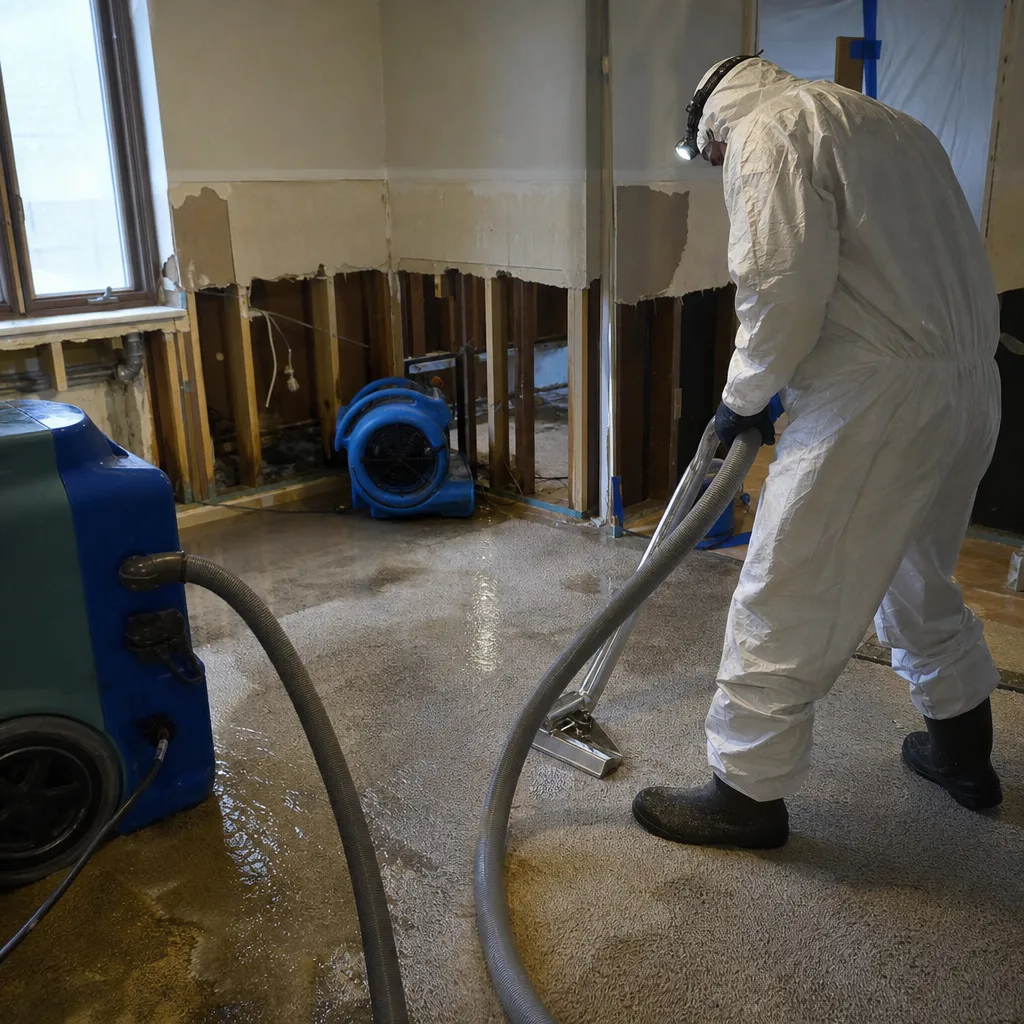
Submersible pumps and truck-mounted extractors pull standing water fast. We board up broken windows, tarp damaged roofs, and stop further intrusion. If a wall is compromised, we shore it. Emergency board-up in Jersey City means securing the house against looters, weather, and further structural damage the same night.
Drying & Dehumidification
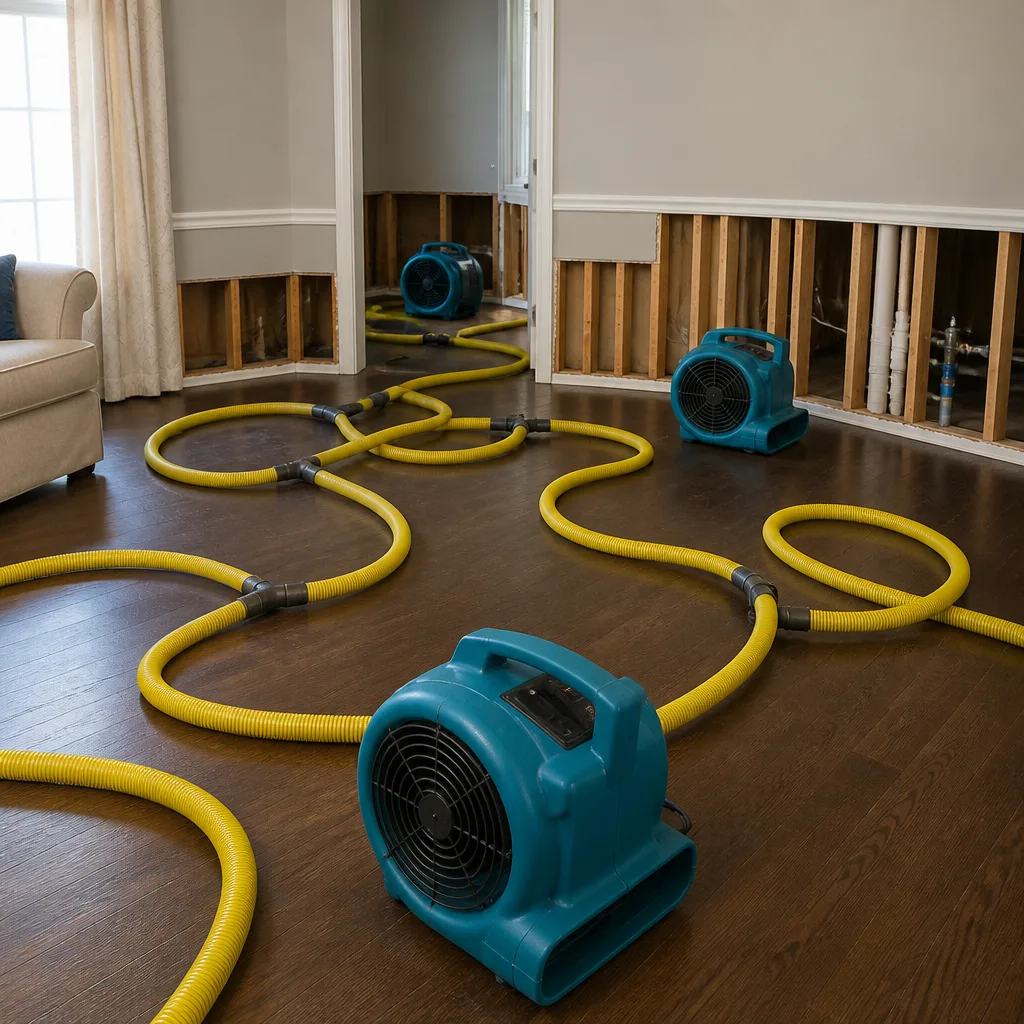
XPOWER air movers and Dri-Eaz dehumidifiers go in. In row houses, we place equipment on both sides of shared party walls because water migrates laterally from neighboring units. We take moisture readings every single day and hand you the full log when the job’s done. Almost nobody in this trade does that.
Cleaning & Sanitization
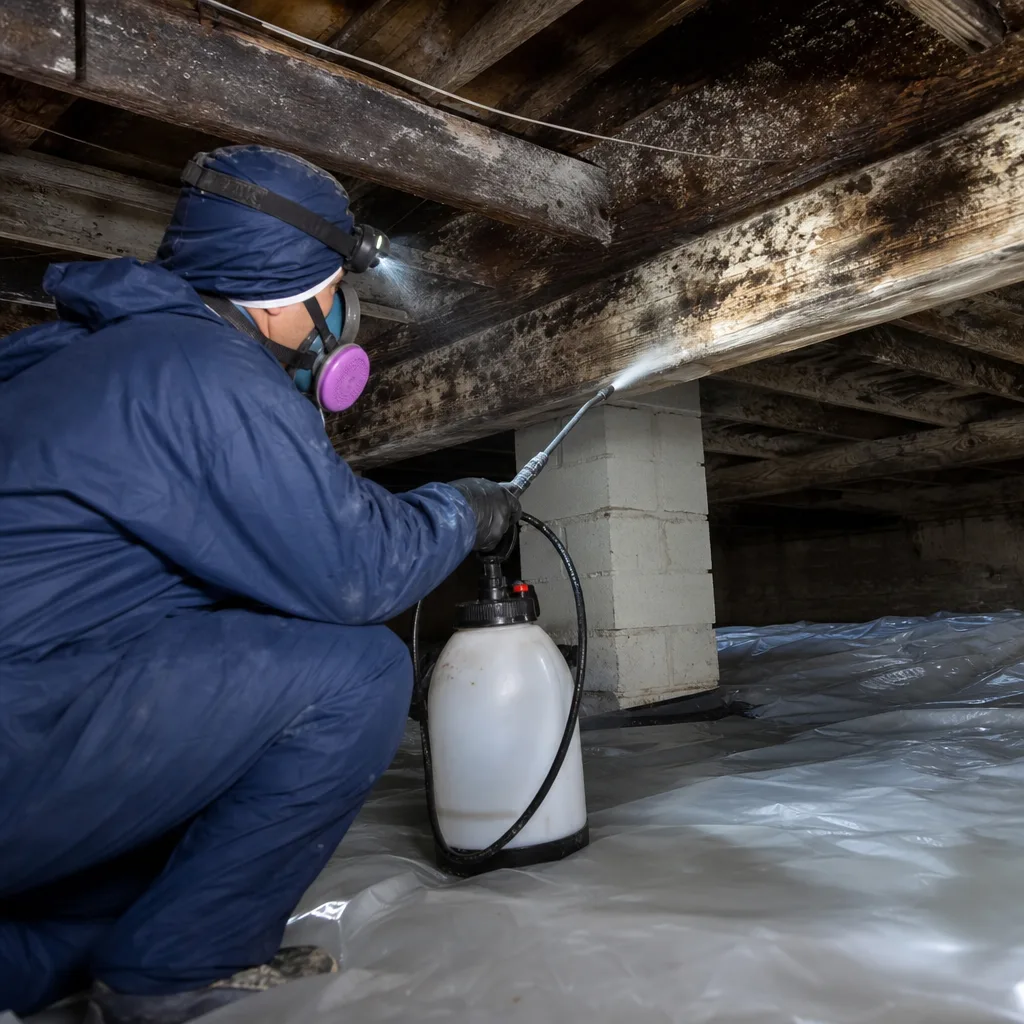
For Category 3 water, we don’t just dry. We remove affected materials, sanitize what’s salvageable, and apply antimicrobial treatments. HEPA scrubbers run during remediation. In pre-1930s brick row houses, we’re also watching for asbestos and lead, because original pipe insulation, floor tiles, and painted trim almost always contain both.
Corrosion Assessment & Specialty Treatment
This step is where Jersey City differs from inland markets. Saltwater surge demands we inspect steel framing, mechanical systems, and electrical infrastructure for corrosive damage. We document what we find, coordinate with licensed electricians, and treat affected metals before rebuilding. Skip this and failure shows up months later.
Repairs & Restoration
Drywall, flooring, trim, paint, and full reconstruction if needed. The same crew sees it through. Our 90-Day Done Right Promise is in writing on every storm restoration contract: if it’s not done right, Wade makes it right.
Need Emergency Storm & Disaster Restoration in Jersey City Now?
Crews minutes away, answering live 24 hours a day. The sooner we start, the less it costs.
Working With Your Insurance Company
Storm damage claims in Jersey City get complicated fast. Was it wind or flood? Surge or sewer backup? Homeowners policies, flood policies, and sewer riders all cover different things. We document from the first hour: photos room by room, moisture readings date-stamped, line-item scope of work, and a clear corrosion assessment if saltwater was involved. Wade deals with your adjuster directly, so you’re not the one stuck relaying information between two sides. We hand you the documentation your carrier needs and we bill directly. What we provide your insurer:
What We Provide Your Insurer
- Thorough documentation of the loss
- Photos of all damage, room by room
- Moisture readings and drying logs
- A detailed, line-item scope of work
- Direct coordination with your carrier
Built for Jersey City’s Loss Calendar
Storm season in Jersey City isn’t one season, it’s four. January deep freezes burst supply lines in unheated row house basements and behind poorly insulated party walls. Spring thaw and heavy rain saturate the fill marshland under Greenville and Bergen-Lafayette, pushing water through foundation cracks and floor drains. Summer thunderstorms dump two inches in an hour, overwhelming combined sewers and backing raw sewage into connected basements on the same block. Fall nor’easters drive Hudson River and Newark Bay surge through Paulus Hook and the eastern waterfront, flooding at or above FEMA base flood elevation. Each season produces a different loss pattern, and each demands a different immediate response. That’s why our Storm & Disaster Restoration team carries both extraction equipment and corrosion assessment tools on every truck. You can’t wait to see which season this is. You call. We come.
Storm & Disaster Restoration Across Jersey City’s Neighborhoods
Greenville’s row houses sit on some of the lowest, most surge-exposed fill in the city. Nor’easter storm water pours through basement windows and up through floor drains there, mixing seawater with whatever the combined sewer is carrying. Bergen-Lafayette responds to the same storm with a different failure: the sewers surcharge first, so sewage backs up before surface flooding even appears. Paulus Hook and the waterfront face direct Hudson River surge, meaning saltwater corrosion is the primary threat, not just water volume. Hamilton Park and Journal Square, further inland and uphill, see more wind and roof damage than flooding, though old brownstone roofs leak into shared wall cavities and migrate water laterally. Downtown high-rises bring their own complications: water travels vertically through mechanical chases, dripping into unit after unit below. Every neighborhood in Jersey City fails differently, and a crew that treats a Hamilton Park leak like a Greenville surge makes expensive mistakes. We’ve worked all of them.
Jersey City properties demand restoration crews who know the difference between a Liberty State Park wind gust and a Paulus Hook storm surge. We do.
Specialized Storm & Disaster Restoration Services We Offer in Jersey City
Storm Damage Cleanup
After a nor’easter or tropical system, Jersey City basements fill with water, mud, and whatever the combined sewers pushed back. We extract, remove debris, sanitize, and dry. For Category 3 water, full biohazard protocols apply. That’s what this city’s sewer system makes routine.
Flood Damage Restoration
Saltwater flooding along the Hudson River and Newark Bay demands more than drying. We map moisture, document corrosion, remove affected drywall and insulation, and coordinate electrical and mechanical inspections. Storm surge here touches every system, not just the floor.
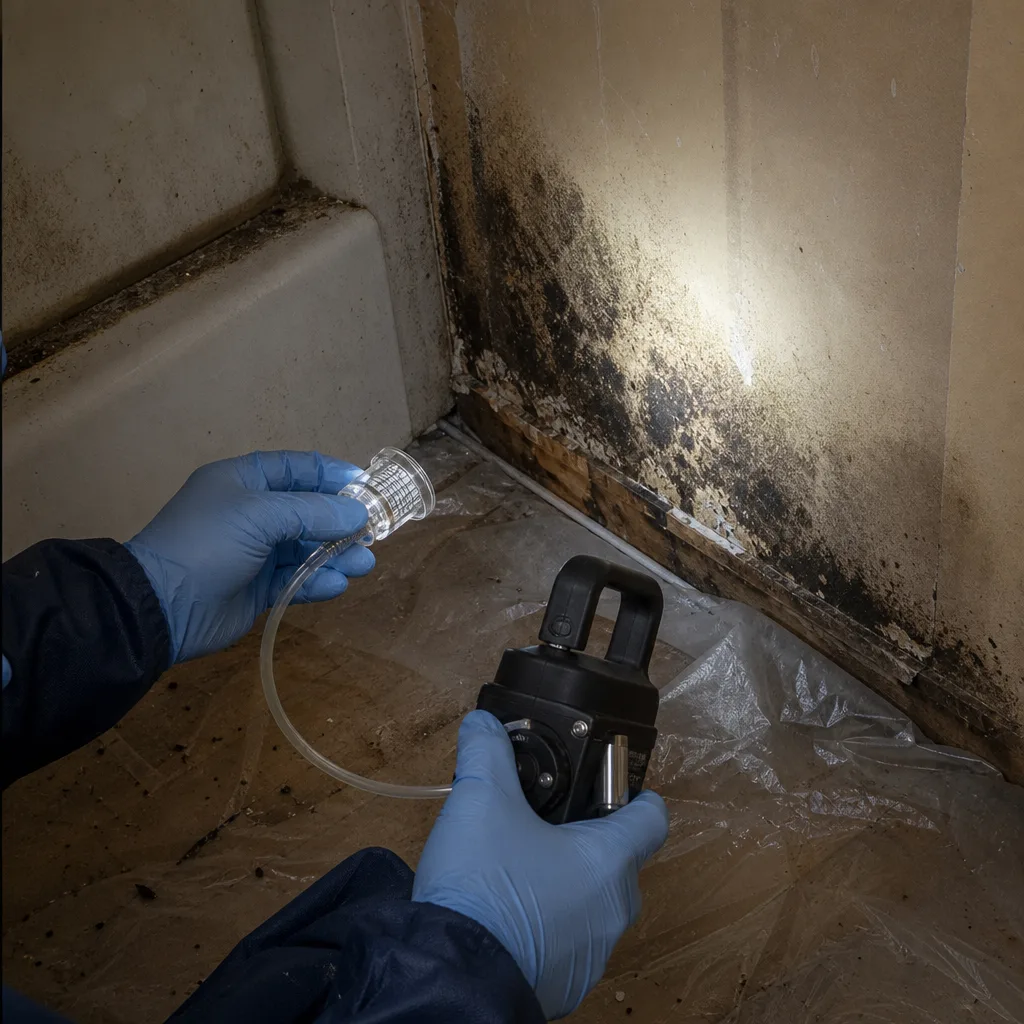
Emergency Board-Up
Broken windows, wind-damaged doors, compromised entryways. We secure the property the same night, typically with plywood and framing that satisfies Jersey City building officials. A house with an open window in Greenville attracts more than weather.
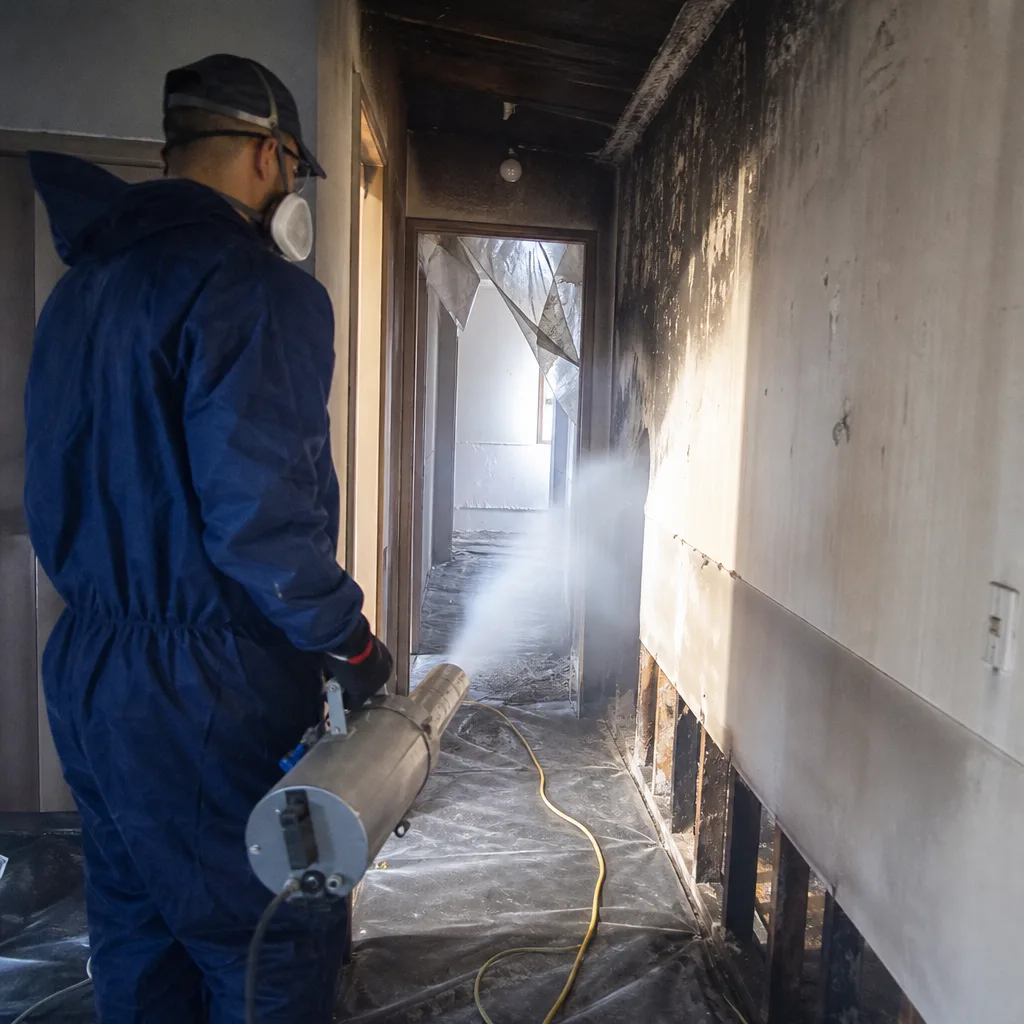
Roof Tarping
Wind tears shingles and membrane off row house roofs. We tarp immediately to stop water intrusion, then scope the permanent repair. In pre-war brownstones, the real problem is often water traveling from the roof down through shared wall cavities, so we inspect adjacent units before declaring the leak stopped.
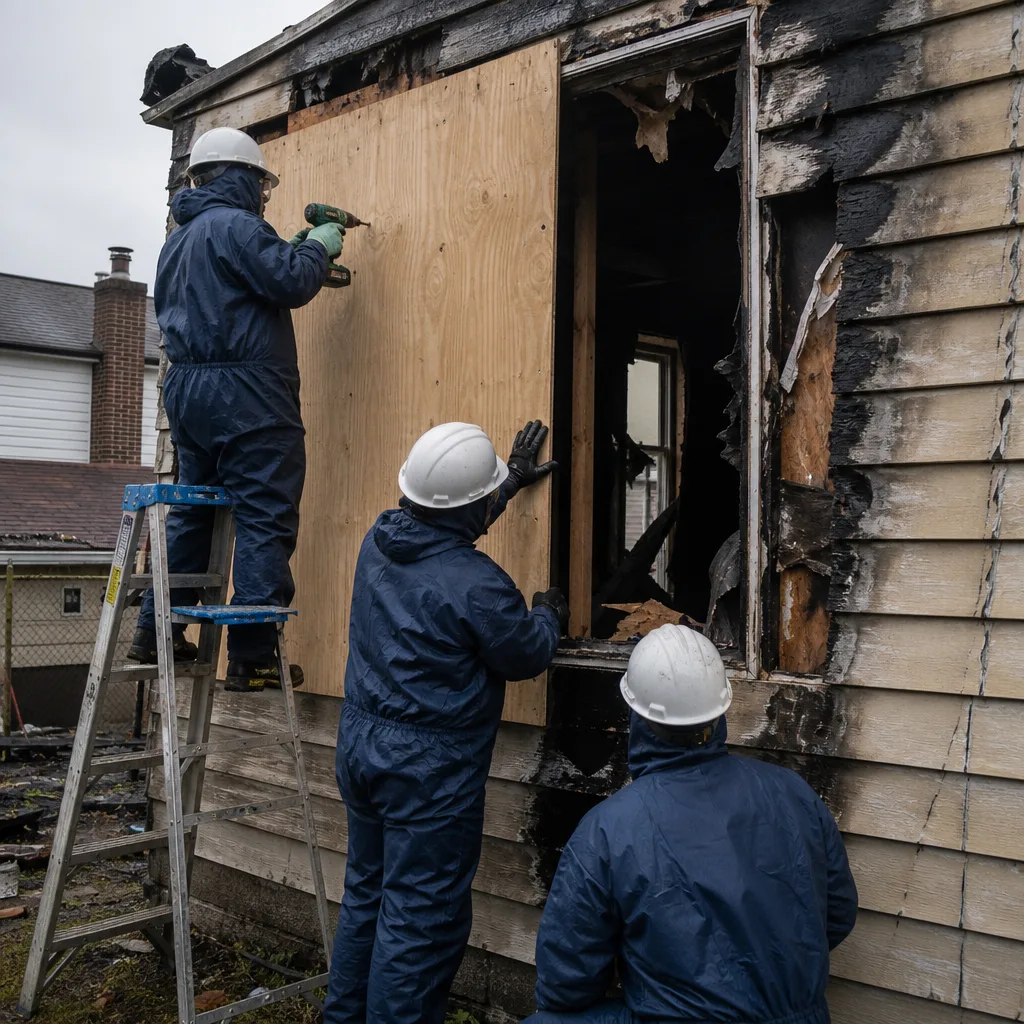
Debris Removal
Storm debris, downed limbs, wind-driven refuse. We haul it, document it for your insurer, and prepare the exterior for repairs. In Jersey City’s dense lots, debris removal often means navigating narrow side yards and alley access, which our crews do daily.
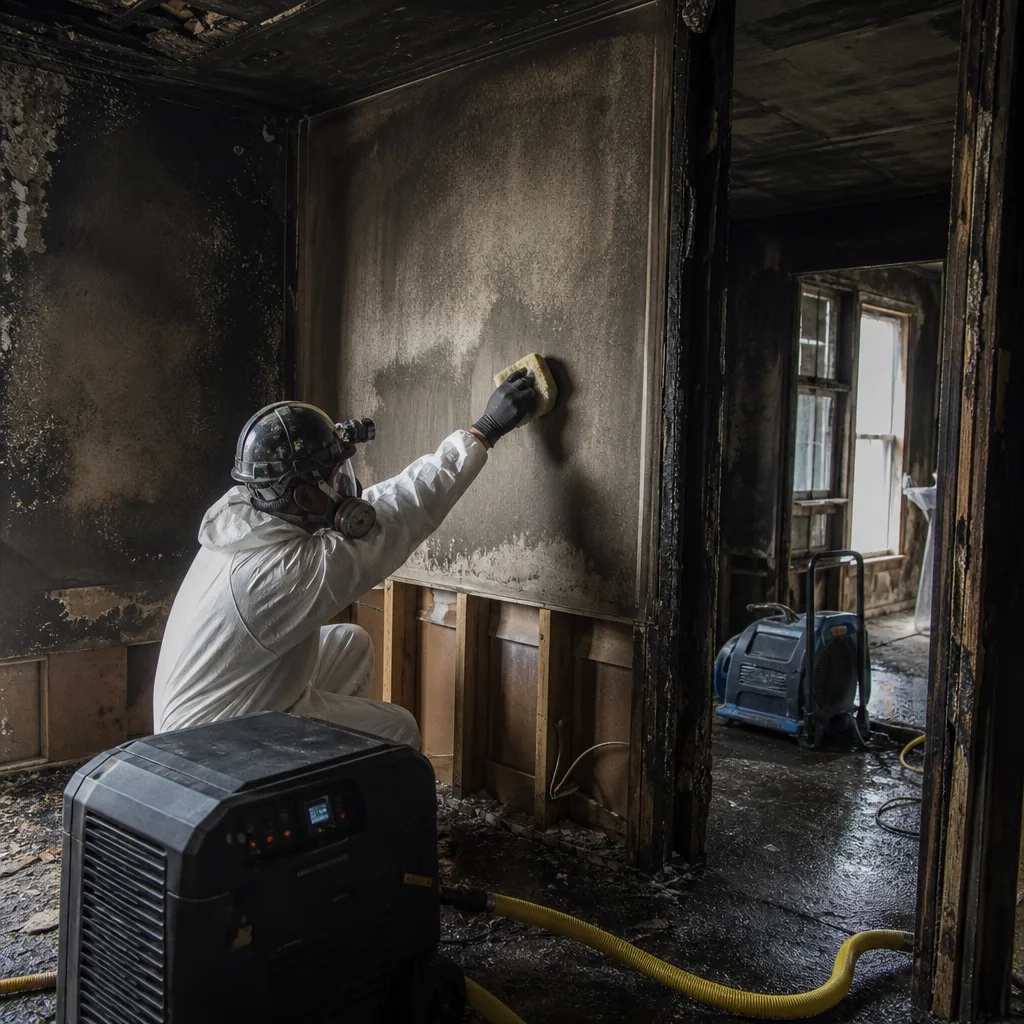
Wind Damage Repair
Wind-rated doors, impact-rated window glass, and structural reinforcement for the next storm. Jersey City code requires specific wind-load ratings for exterior openings. We restore compliant, reinforced openings so the next nor’easter doesn’t find the same weak point twice.
What happens when you call
- 1
A real person answersNo phone trees - you reach a local pro.
- 2
You get an upfront price rangeHonest numbers before anyone is dispatched.
- 3
A background-checked tech heads outLicensed & insured, dispatched right away.
- 4
You approve before work beginsNothing starts until you say go.
Storm & Disaster Restoration Costs in Jersey City, NJ
What does storm restoration actually cost here? A typical basement flood cleanup with extraction, drying, and sanitation in a Jersey City row house runs $2,800 to $6,500 depending on square footage and water category. Category 3 sewage backup cleanup adds $1,500 to $4,000 for removal, sanitization, and disposal. Emergency board-up runs $350 to $800 for a typical window or door. Roof tarping runs $400 to $1,200 depending on access, and Jersey City row houses with flat roofs and parapets cost more than pitched suburban roofs. Full wind damage repair, including code-compliant door replacement and reinforcement, typically lands between $3,000 and $12,000. Saltwater corrosion assessment and mitigation, which most crews never perform, adds $500 to $2,000 and saves far more down the road. We give you a written scope before any work starts, and the inspection is free. No trip charge inside our own county.
We Also Serve Cities Near Jersey City
Wade’s Restoration serves Jersey City and the surrounding Hudson County communities, including Hoboken, Union City, Weehawken, and Secaucus. The same live answer, the same 45-minute response, and the same written 90-Day Done Right Promise apply.
Serving Jersey City, NJ - Our Local Coverage Area
We’re based in the Jersey City area and know this community well. Use the map below to see our service coverage - if you’re nearby, we can almost certainly help.
Jersey City Storm & Disaster Restoration Questions, Answered
How do I know if my Jersey City basement flood is Category 3 water, and does it change how you handle my storm damage?
If water entered through a floor drain, a combined sewer backup, or harbor surge, treat it as Category 3 until proven otherwise. Jersey City’s combined sewers routinely push raw sewage into basements during 1.5-inch rainstorms. Category 3 means we remove affected drywall and insulation rather than drying them in place, sanitize all salvageable surfaces, and run full biohazard protocols. It changes everything about the job. Call (201) 740-2235 and we’ll test before we touch anything.
My row house in Paulus Hook took on storm water, but the wet drywall is only on one side of a shared wall. Why do you need to inspect the neighbor’s side?
In pre-war brick row houses, party walls are masonry with hollow cavities that act like channels. Water entering one unit migrates laterally into the adjacent unit behind the plaster. If we dry only your side and not the neighbor’s, mold grows in the cavity and re-wets your finished wall within weeks. We need access to the neighboring unit to map moisture correctly and place drying equipment on both sides. It’s not optional in attached housing.
After a saltwater surge from the Hudson River got into my mechanical room, what corrosion damage should I expect beyond just rust on metal?
Saltwater corrodes more than visible metal. Expect ground bars in electrical panels to pit and degrade, steel studs behind drywall to weaken, copper piping to develop pinhole leaks, and HVAC components to fail early. The corrosion often isn’t visible during initial drying. That’s why we document it with photos and moisture readings, coordinate with licensed electricians for any panel contact, and specify corrosion treatment on affected framing. Inland restoration crews don’t look for this. We do, because Jersey City storm damage demands it.
What does Jersey City’s local permit and code process require for replacing a wind-damaged exterior door or window after a storm?
Jersey City requires permits for exterior door and window replacement, and openings must meet current wind-load ratings for the exposure zone. In a row house, that often means impact-rated glass and reinforced door frames. A licensed contractor pulls the permit, the work gets inspected, and documentation goes to your insurer. We handle the permit process as part of the restoration scope, so you’re not navigating the building department alone.
If my basement flooded with raw sewage in Greenville, is it safe for your crew to just start dehumidifying, or do you have to remove the drywall?
No, dehumidifying raw sewage means spreading bacteria through your air. Category 3 water requires removing affected drywall, insulation, and carpet, sanitizing hard surfaces, and running HEPA air scrubbers during and after the work. In a Greenville row house, we also check for lateral migration into neighboring units before declaring the job contained. The drywall comes out. There’s no shortcut that’s safe.
How fast can you actually get to Jersey City when a storm hits?
We answer live, 24/7, and aim to have a crew on-site within 45 minutes across Jersey City. Wade himself often answers the phone. Extraction equipment goes on the truck immediately, not after a callback. During multi-storm events, priority goes to active water intrusion and structural instability. Call (201) 740-2235 and we’ll tell you exactly when we’re rolling.
Will my homeowners insurance cover storm damage from a nor’easter in Jersey City?
It depends on how the water got in. Wind-driven rain through a damaged roof or window is typically covered by homeowners insurance. Surge flooding from the Hudson River or Newark Bay requires a separate flood policy. Sewer backup requires a sewer backup rider. We document the source of the water precisely, which determines what your adjuster approves. We bill your carrier directly and deal with the adjuster ourselves.
Can my family stay in the house during storm restoration work?
If the damage is isolated to a basement or single room and we’ve contained it, often yes. If there’s Category 3 water, mold remediation, widespread drywall removal, or electrical panel corrosion, we recommend relocating until the affected areas are sanitized and dried. We’ll give you a straight answer, not a sales pitch. The same tooling and same documentation apply either way.
Written by Wade Ferris, Owner at Wade’s Restoration, serving Jersey City and surrounding Hudson County communities since 2007.